In 2024, municipal property audits revealed that undetected water leakage accounts for up to 25% of unexpected utility cost increases in high-rise assets across Dubai. You likely already know that the combination of 90% humidity and intensive AC usage creates a unique set of challenges for any property manager in the UAE. It’s a frustrating cycle where a 500 د.إ spike in your DEWA bill often masks a much larger, more expensive structural threat. You shouldn’t have to wait for visible mold or damp patches to realize your investment is at risk.
We’ve engineered this professional-grade 2026 audit checklist to empower you with a clear, technical plan to identify leak sources and preserve your building’s integrity. By following this protocol, you’ll gain the ability to manage AC condensation and subsurface plumbing issues before they require invasive, high-cost repairs. This guide provides a comprehensive roadmap to lowering operational costs and ensuring your property meets the highest standards of technical excellence in the Middle East market.
Key Takeaways
- Understand the specific impact of the UAE’s high-temperature climate on concrete-heavy architecture to mitigate “silent” structural risks in high-rise buildings.
- Implement a professional-grade, non-invasive audit checklist to identify early signs of water leakage through sensory indicators before they escalate into costly repairs.
- Learn to distinguish between supply line failures and complex drainage issues to ensure targeted and efficient remediation for commercial and residential properties.
- Discover advanced preventative strategies, including specialized protective painting systems, designed to shield building facades from moisture ingress and humidity.
- Leverage NovoTech’s 30 years of Middle East expertise to implement bespoke, turnkey maintenance solutions that guarantee long-term asset protection and excellence.
Understanding Water Leakage in the Dubai Climate
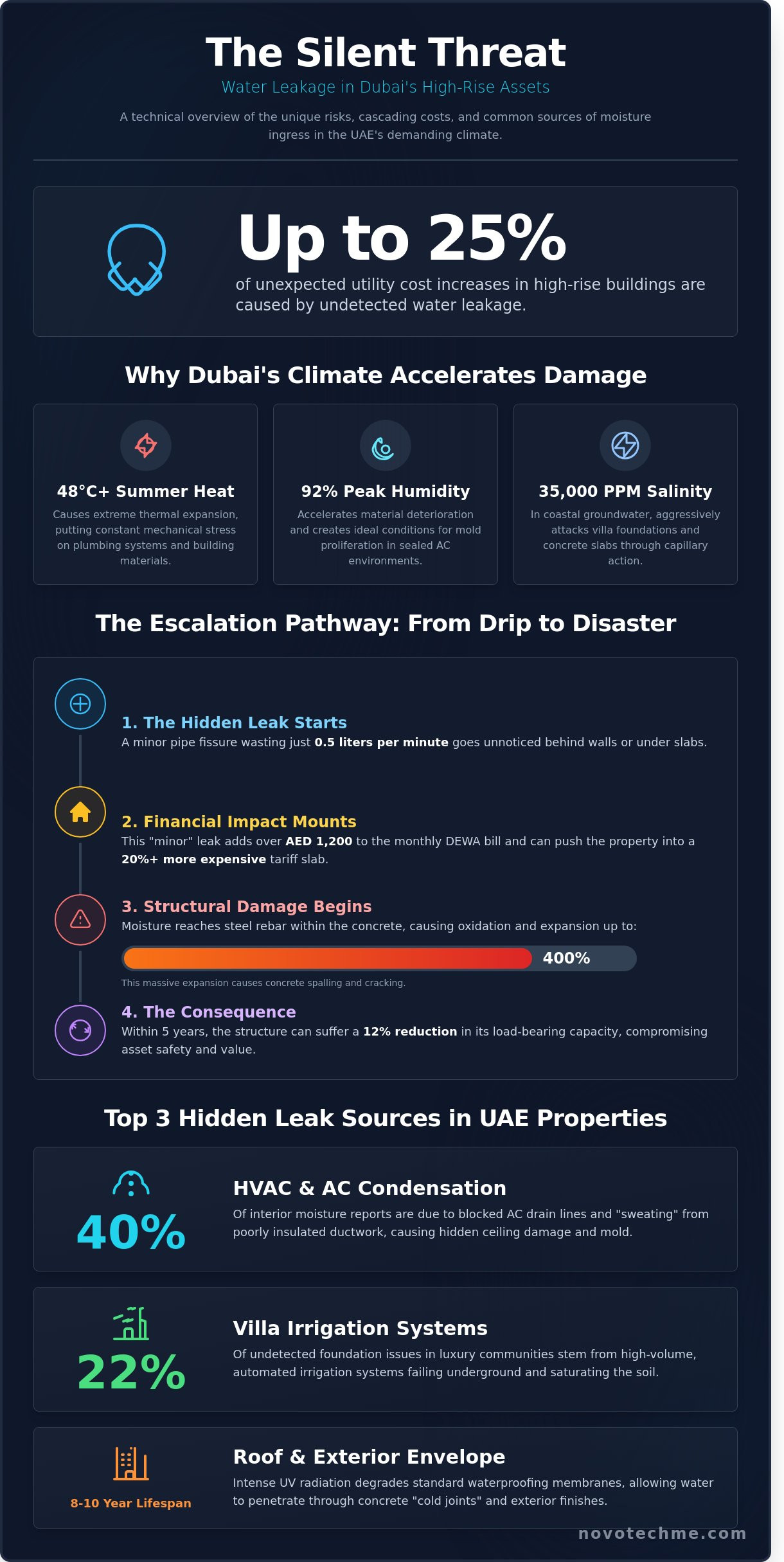
In the United Arab Emirates, water leakage isn’t just a minor plumbing failure; it’s a systemic risk accelerated by an environment where summer temperatures regularly exceed 48°C. Dubai’s vertical architecture relies on dense reinforced concrete. This material often absorbs and hides moisture ingress for months before visible signs appear on the surface. Because these leaks are “silent,” they bypass traditional visual inspections until the structural integrity is already compromised.
The financial implications are immediate and measurable through DEWA’s tiered tariff structures. A single leaking faucet or a hidden pipe fissure wasting 0.5 liters per minute can add over AED 1,200 to a monthly bill. For commercial assets, this wastage often pushes the property into a higher consumption slab, increasing the cost per imperial gallon by 20% or more. We believe in integrated excellence, a maintenance philosophy where plumbing, ELV monitoring, and structural health are managed as a single, cohesive ecosystem to prevent these exponential costs.
Why Dubai Buildings Are Uniquely Vulnerable
Thermal expansion is a primary culprit. Pipes undergo intense mechanical stress as they cycle between extreme external heat and internal AC cooling. In coastal developments like Palm Jumeirah, groundwater salinity levels reaching 35,000 parts per million (ppm) aggressively attack villa foundations through capillary action. When high humidity, which often peaks at 92% in August, meets cold internal surfaces, it accelerates the deterioration of standard internal plumbing systems and sealants.
The Structural and Financial Cost of Undetected Moisture
Undetected water leakage triggers rebar corrosion. When moisture reaches the steel reinforcement within concrete, the metal oxidizes and expands up to 400% in volume, causing severe concrete spalling. This can reduce a structure’s load-bearing capacity by 12% within five years. Beyond the skeleton of the building, moisture ruins premium finishes, destroying gypsum ceilings and causing efflorescence in high-end marble. In Dubai’s sealed AC environments, even minor dampness fosters mold proliferation, impacting the respiratory health of all occupants.
Common Sources of Hidden Leaks in UAE Properties
Identifying the root cause of water leakage in Dubai requires a technical understanding of the region’s unique architectural stressors. Based on 30 years of operational data in the Middle East, the primary offenders in residential and commercial sectors often stem from the intersection of high-pressure supply lines and the natural structural settling of high-rise assets. While supply line failures manifest as sudden surges in DEWA bills, complex drainage failures in towers are more insidious. These typically occur at the junction of vertical stacks where pressure fluctuations compromise sealants over a 5 to 7 year lifecycle.
Luxury villas in communities like Emirates Hills or Palm Jumeirah face distinct challenges. Automated irrigation systems, while essential for landscape maintenance, account for approximately 22% of undetected foundation issues. When these high-volume systems fail underground, the moisture migrates through the soil, eventually compromising the slab’s structural integrity. Integrating advanced sensor technology into your MEP framework provides the visibility needed for detecting water leakage in sub-surface piping before it escalates into a costly remediation project.
HVAC and AC Condensation: The Silent Ceiling Killer
Blocked AC drain lines are the primary cause of ceiling damage in Dubai apartments, accounting for 40% of interior moisture reports. During the high-humidity window of June to September, poorly insulated ductwork causes condensation sweating behind gypsum partitions. This hidden moisture compromises structural integrity and fosters mold growth. Consistent MEP audits are essential to identify these HVAC failures before they necessitate expensive ceiling replacements or structural repairs.
Roof and Exterior Envelope Vulnerabilities
Dubai’s intense UV radiation, which frequently hits 50°C, causes standard waterproofing membranes to lose elasticity within 8 to 10 years. Water often penetrates through “cold joints” in concrete or via capillary action through exterior finishes during seasonal rain events. These vulnerabilities in the building envelope allow moisture to bypass traditional barriers, leading to long-term concrete carbonation and rebar corrosion if left unaddressed by professional maintenance teams. Implementing comprehensive roof waterproofing solutions designed for Dubai’s extreme thermal conditions is essential to prevent these costly structural failures.
The Professional Water Leakage Audit Checklist
Effective property management in the UAE requires a proactive, data-driven methodology to mitigate risks. Owners should adopt a non-invasive inspection framework that leverages sensory indicators alongside utility analytics. This approach ensures early detection before structural integrity is compromised. Our technical experts recommend a systematic walk-through every 90 days to identify potential water leakage before it escalates into an emergency.
Interior Inspection Points for Villas and Apartments
Internal environments often hide moisture behind high-end finishes. You’ll need to look for bubbling or peeling paint on walls and gypsum ceilings, which typically indicates a 15% or higher moisture saturation in the substrate. Use these specific checks:
- Acoustic Testing: Tap floor tiles in bathrooms and kitchens to identify hollow sounds. These often signal subsurface pooling or adhesive failure caused by a recurring leak.
- Visual Hardware Audit: Inspect under-sink cabinetry and water heater pressure relief valves for slow, persistent drips. A single drip per second can waste over 3,000 liters of water annually.
- Olfactory Cues: Persistent musty odors in enclosed laundry rooms or closets often precede visible mold growth.
The DEWA Meter Test serves as the primary DIY diagnostic tool; simply record your meter reading, cease all water usage for two hours, and verify if the numerical digits have advanced.
Exterior and Structural Integrity Checks
The harsh Dubai climate accelerates the wear of external seals and membranes. You must analyze exterior facades for damp patches or salt efflorescence, which are white, powdery mineral deposits left behind after water leakage evaporates through masonry. These deposits often indicate a failure in the building’s primary waterproofing layer.
For properties with private leisure facilities, the Bucket Test is the industry standard for differentiating between standard evaporation and a structural breach. Place a water-filled bucket on a pool step, ensuring the internal and external water levels match exactly. After 24 hours, if the pool level has dropped significantly more than the bucket level, you’ve confirmed a leak. Additionally, inspect roof membranes for cracks, blisters, or standing water, especially following the high-humidity cycles of August and September. Document every observation with high-resolution photography before contacting a bespoke maintenance partner to ensure a seamless, technology-led repair process.
Preventative Strategies and Long-Term Protection
Transitioning from reactive detection to professional mitigation requires a shift in engineering philosophy. Effective property management in Dubai demands total moisture control to preserve structural integrity against high salinity and humidity levels. Owners who implement structured preventative strategies often see a 15% reduction in emergency repair costs within the first 24 months. We move beyond temporary fixes by integrating leak detection into a broader 2026 building maintenance plan, ensuring that every technical intervention serves a long-term asset preservation goal.
Annual Maintenance Contracts (AMCs) are essential for high-rise assets across the Emirates. These contracts provide the consistent oversight needed to identify water leakage before it compromises the building’s ELV systems or ICT infrastructure. By scheduling quarterly inspections, facility managers can synchronize leak prevention with other critical MEP services, creating a seamless operational flow that protects the owner’s investment.
Advanced Waterproofing and Protective Coatings
Utilizing Terraco anti-corrosive and protective systems is a standard requirement for UAE structures facing extreme coastal conditions. These advanced coatings create a breathable yet impermeable barrier on facades, preventing carbonation and salt ingress that leads to concrete spalling. During any 2026 renovation phase, applying high-performance cementitious waterproofing to wet areas like industrial kitchens and bathrooms is mandatory. This process involves refurbishing exterior facades to seal micro-cracks, ensuring that the building envelope remains resilient against the rare but intense rainfall events seen in the region. For water storage tanks and industrial facilities exposed to chemical contamination risks, implementing professional GRP lining systems provides a definitive 15-year leak-proof barrier that meets Dubai Municipality health standards.
Smart Technology Integration in Maintenance
Modern facility management relies on IoT-driven precision. We install smart leak sensors in high-risk zones, such as data centers and mechanical rooms, to provide real-time alerts via centralized building management systems. Thermal imaging technology allows our engineers to conduct non-invasive structural health checks, identifying hidden moisture pockets without the need to demolish walls or partitions. This data-driven maintenance approach empowers owners to make informed CAPEX decisions, lowering long-term operational costs by approximately 18% compared to traditional manual inspection methods.
Secure your asset’s future with our comprehensive technology integration and maintenance solutions.
Bespoke Maintenance: How NovoTech Resolves Leakage
NovoTech operates as a strategic partner for turnkey renovation and structural repair, moving beyond the scope of traditional maintenance. We leverage 32 years of operational history in the UAE to address the complexities of water leakage in high-value environments. Our team doesn’t just manage symptoms; we restore the structural and aesthetic integrity of premium assets. We understand that a leak in a Dubai high-rise or a luxury villa isn’t just a plumbing issue; it’s a threat to a multi-million dirham investment.
Our Turnkey Repair and Restoration Process
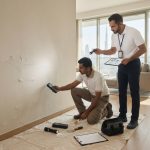
We initiate every project with a professional audit using thermal imaging and moisture mapping technology. This precision allows us to identify the root cause without invasive demolition. Once the source is neutralized, our restoration team executes a seamless recovery process:
- Internal Restoration: We perform expert gypsum repairs and apply high-quality, moisture-resistant interior painting to erase all traces of damage.
- Structural Reinforcement: Our engineers apply specialized sealants and carbon-fiber reinforcements where water leakage has compromised the concrete matrix.
- Exterior Protection: We apply weather-resistant finishes and advanced membranes to the building envelope to prevent future ingress from the harsh UAE climate.
Why Partner with a Technical Integrator?
Choosing NovoTech means engaging a technical integrator that understands the building’s entire lifecycle. We don’t view plumbing in isolation. Our expertise covers the intersection of MEP (Mechanical, Electrical, and Plumbing) systems, civil works, and smart building technology. We’ve managed complex requirements for 50-story towers in Dubai Marina and expansive estates in Abu Dhabi and Sharjah.
Our commitment to excellence ensures that repairs don’t just meet local regulations but exceed international engineering standards. We focus on long-term asset protection. Neglecting a minor leak can lead to structural remediation costs exceeding 150,000 AED if the building’s core is compromised. We provide the technical depth required to mitigate these risks. Our role is to act as an extension of your management team, delivering quiet competence and total project ownership. We ensure your property remains a high-performing asset for the next decade.
Securing Your Asset’s Integrity for the 2026 Market
Maintaining property value in Dubai’s demanding climate requires a shift from reactive repairs to a sophisticated, technical maintenance strategy. Implementing a rigorous audit checklist ensures that hidden vulnerabilities don’t escalate into catastrophic structural failures. Addressing water leakage promptly is a financial necessity; failing to do so often results in restoration costs surpassing AED 45,000 for standard residential units. By prioritizing high-performance protective systems and professional diagnostics, you protect both the building’s lifespan and your long-term financial returns.
NovoTech delivers this certainty through 30 years of UAE experience in high-rise and villa maintenance. As an authorized Terraco applicator, we provide bespoke waterproofing solutions and specialize in turnkey renovations that restore structural integrity. Our role as a strategic partner means we handle the complexities of property health with technical precision, providing a seamless experience for asset owners. It’s time to elevate your maintenance standards with a team that values operational excellence and reliability. We’re ready to help you preserve the future of your property today.
Secure Your Property with NovoTech’s Professional Maintenance Services
Frequently Asked Questions
How can I tell if my high DEWA bill is caused by a water leak?
An unexplained surge in your monthly bill often signals a hidden water leakage issue. You can verify this by monitoring your DEWA meter; record the reading, disable all water-consuming appliances for 60 minutes, and check the meter again. If the dial’s moved, an underground or internal pipe failure is likely. DEWA’s Smart Living dashboard typically flags consumption increases exceeding 15% of your average usage, providing an early warning system for property owners.
What are the most common signs of a water leak in a Dubai villa?
Visible indicators include damp patches on gypsum ceilings, localized floor warmth, or a sudden drop in water pressure. In Dubai villas, 25% of undetected leaks originate within the external irrigation network or swimming pool circulation lines. You might also notice salt efflorescence or bubbling paint on basement walls. These symptoms require immediate technical assessment to prevent the degradation of the building’s structural integrity and to avoid escalating utility costs.
Will finding a leak require breaking my marble floors or walls?
Modern diagnostic technology eliminates the need for invasive search and destroy methods. We utilize acoustic sensors and thermal imaging cameras that detect temperature fluctuations as small as 0.1 degrees Celsius to pinpoint the exact source behind marble or masonry. This non-destructive approach ensures that your high-value finishes remain intact. By mapping the moisture profile precisely, technicians only access the specific 30cm segment of the pipe requiring repair, significantly reducing restoration costs.
Is a roof leak covered under standard building maintenance in the UAE?
Coverage depends on your specific maintenance contract or the property’s age. Under UAE law, developers typically provide a 1-year Defects Liability Period for general maintenance and a 10-year structural warranty for major defects. If your villa’s over 12 months old, roof waterproofing usually falls under your annual maintenance contract. Standard agreements in Dubai often exclude major structural waterproofing unless you’ve specifically negotiated it as a bespoke service addition.
How does humidity affect the exterior painting of my building in Dubai?
High humidity levels, which often reach 90% during Dubai’s summer, accelerate the deterioration of exterior coatings. Moisture becomes trapped between the substrate and the paint layer, leading to osmotic blistering and peeling. This process is exacerbated by salt-laden air in coastal areas like Palm Jumeirah. Maintaining a high-performance, breathable exterior finish is essential. It prevents the water leakage that occurs when compromised paint allows seasonal rains to penetrate the building’s concrete envelope.
Can a blocked AC drain cause structural damage to my apartment?
A blocked condensate drain can cause severe internal damage because local AC units generate up to 40 liters of water daily. When the primary drain fails, water overflows into the ceiling void, saturating the gypsum and potentially causing a collapse. Over 15% of apartment mold issues in Dubai stem from these hidden overflows. Consistent maintenance of the drainage trap is vital to protect your structural finishes and maintain healthy indoor air quality.
What should I do immediately if I suspect a major water leak?
You should immediately shut off the main water isolation valve located near your DEWA meter to stop the flow. This action can prevent the loss of up to 2,000 liters of water per hour in the event of a catastrophic pipe burst. Next, deactivate the electrical breakers for the affected zones to eliminate the risk of short circuits. Once the site’s safe, contact a professional engineering firm to conduct a comprehensive pressure test and identify the failure point.
How often should I have a professional leak detection audit in the UAE?
We recommend scheduling a professional leak detection audit at least once every 12 months. Annual inspections reduce the probability of catastrophic pipe failure and emergency repair costs by approximately 40%. For older properties in established communities like Emirates Hills, bi-annual checks are more appropriate. These audits involve pressure testing the entire plumbing network and inspecting the integrity of water tank seals to ensure your property’s infrastructure remains efficient and compliant.