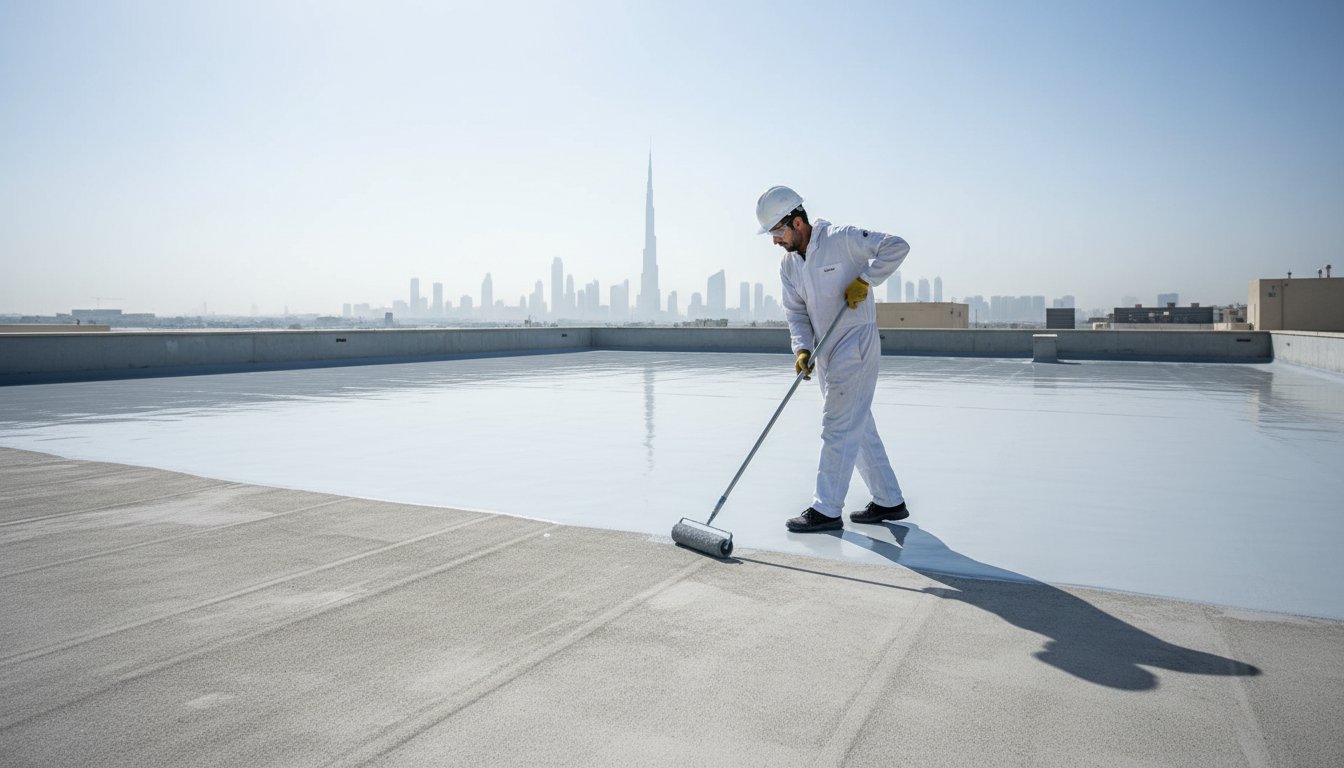
In Dubai, a roof isn’t just a structural component; it’s a thermal shield that must withstand surface temperatures exceeding 75°C during peak summer months. When extreme thermal expansion forces building materials to move by several millimeters every day, standard roof waterproofing solutions inevitably fail. You’ve likely dealt with the frustration of recurring leaks after a single night of rain or watched your DEWA bills climb as heat penetrates an uninsulated slab. These challenges are common, yet they shouldn’t be considered an unavoidable cost of doing business in the UAE.
This guide empowers property owners to master the technical requirements of high-performance systems, moving beyond temporary patches to long-term asset protection. We’ll show you how to secure a leak-free environment for 10 years or more while significantly reducing internal temperatures. By the end of this article, you’ll understand the advanced liquid membranes and hybrid systems necessary to achieve professional certification for insurance and resale. We’re moving from basic maintenance to a bespoke engineering approach that ensures your facility remains a high-value, climate-controlled asset.
Key Takeaways
- Understand the critical impact of 50°C summer temperatures on concrete structures and the necessity of specialized thermal expansion management.
- Compare the durability and technical performance of liquid versus sheet membranes to select the optimal system for high-heat environments.
- Identify the essential steps in a professional roof waterproofing framework, from high-pressure surface preparation to precision crack injection.
- Learn how advanced cementitious systems provide bespoke protection for water-retaining structures and complex Middle Eastern architectural designs.
- Discover the advantages of partnering with an authorized Terraco applicator to ensure long-term structural integrity for UAE high-rises and luxury villas.
Why Roof Waterproofing in Dubai Requires a Specialized Approach
Roof waterproofing in the UAE isn’t a simple maintenance task; it’s a critical engineering requirement for structural longevity. A comprehensive waterproofing system serves as a multi-layered barrier designed to prevent water ingress while simultaneously managing extreme thermal stress. In the Middle East, these systems must perform under conditions that would cause standard international solutions to fail within a single season. Effective protection requires a deep understanding of how local environmental variables interact with building materials.
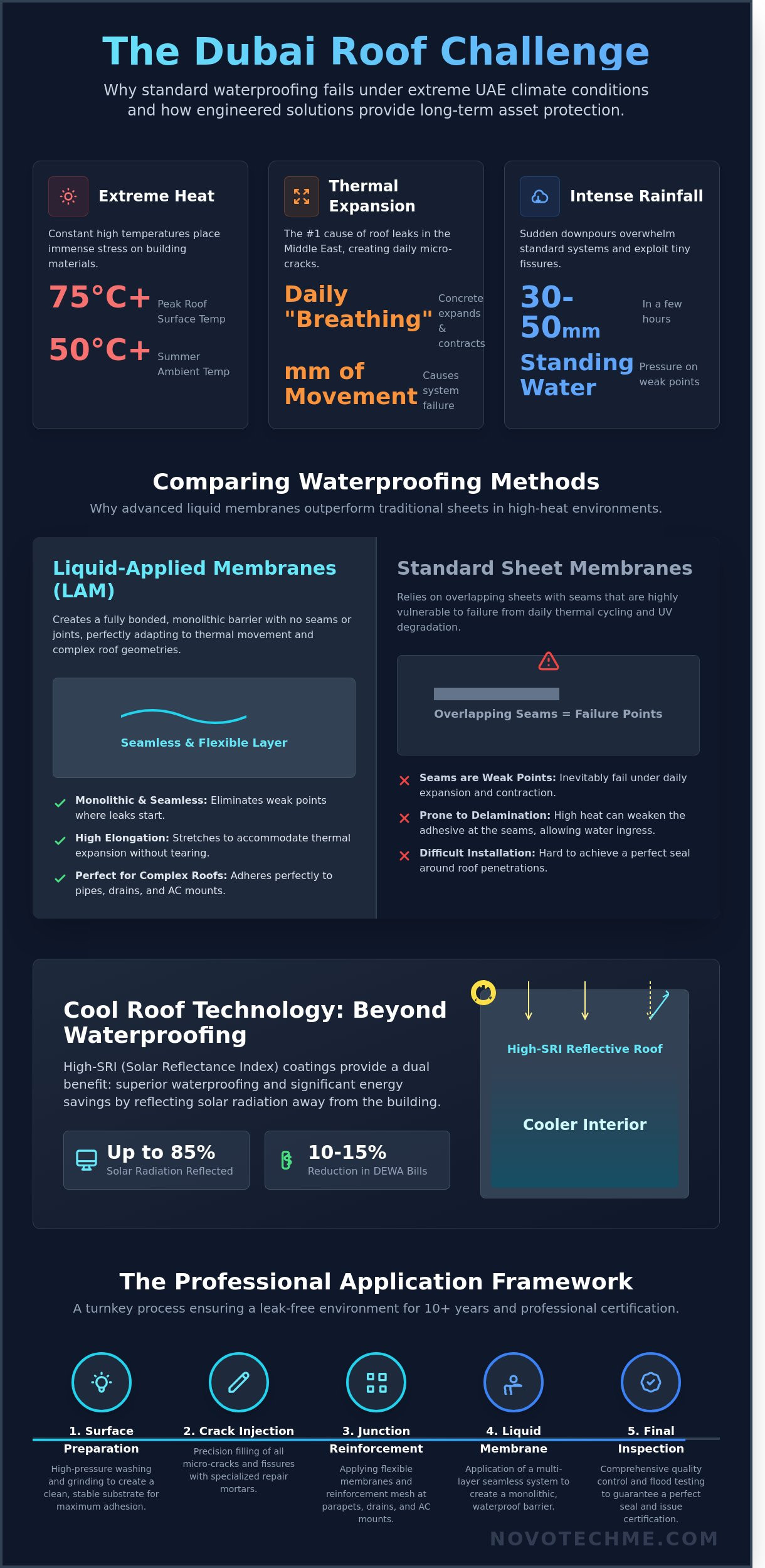
During peak summer months in Dubai, ambient temperatures often exceed 50°C, which forces concrete roof slabs to expand significantly. This physical expansion creates micro-cracks in the substrate. When temperatures drop at night, the concrete contracts, a process that repeats daily. This constant mechanical stress demands roof waterproofing membranes with high elongation properties that can stretch and recover without losing their structural integrity or adhesion to the concrete surface.
Specialized anti-carbonation coatings are essential because standard exterior paints cannot withstand the high UV radiation levels recorded in the region. Intense sunlight breaks down the chemical bonds in basic polymers, leading to chalking and peeling. Advanced coatings protect the concrete from carbon dioxide infiltration, which prevents the corrosion of internal steel reinforcement. This technical layer is vital for maintaining the load-bearing capacity of flat roofs over a 20 to 25-year lifecycle.
While the UAE is known for its arid climate, seasonal rains present a unique challenge. Intense, short-duration downpours often deliver 30mm to 50mm of water in a matter of hours, which can quickly overwhelm standard drainage systems. If the waterproofing layer isn’t perfectly seamless, standing water finds its way into the smallest fissures. Our approach ensures that every square centimeter of the roof remains impermeable, even during these high-pressure weather events.
The Impact of Thermal Expansion on UAE Structures
Concrete roofs in Dubai exhibit a “breathing” effect, expanding and contracting as they absorb and release solar heat. This movement is most aggressive at failure points like parapet walls, drain outlets, and AC mountings where different materials meet. Thermal movement is the #1 cause of roof leaks in the Middle East. Without bespoke joint treatments and flexible membranes, these transition zones become the primary entry points for moisture. We prioritize the reinforcement of these critical junctions using high-performance liquid membranes that bond permanently to the substrate.
Cool Roof Technology: Beyond Just Waterproofing
High-SRI (Solar Reflectance Index) coatings are a cornerstone of modern Dubai construction. These reflective surfaces mitigate the Urban Heat Island effect by bouncing solar energy away from the building rather than absorbing it. Utilizing products like Terraco Flexicoat Thermo provides a dual benefit of insulation and protection. By reflecting up to 85% of solar radiation, these systems can lead to a 10% to 15% reduction in annual DEWA cooling bills. This creates a sustainable, cost-effective solution that pays for itself through energy savings while ensuring the building remains watertight and structurally sound for decades.
Advanced Waterproofing Systems for Middle Eastern Architecture
The UAE’s extreme climate, where ambient temperatures often peak at 52°C, necessitates a sophisticated approach to building envelopes. Standard solutions often fail under the intense UV radiation and thermal cycling typical of the region. Professional applicators in Dubai and Abu Dhabi focus on three primary technologies to ensure long-term structural integrity. These systems aren’t merely coatings; they’re engineered barriers designed to withstand the unique hydrostatic pressures and expansion cycles of Middle Eastern construction. Selecting the right roof waterproofing technology requires a deep understanding of the substrate’s movement and the specific environmental stressors it will face over a 20-year lifecycle.
Liquid-Applied Membranes (LAM)
LAMs represent the premium choice for modern UAE developments featuring complex roof geometries. This technology creates a monolithic, seamless barrier that eliminates the joints and seams where traditional systems often fail. A critical advantage of this seamless nature is the prevention of water “tracking.” In traditional sheet systems, a single puncture allows water to travel underneath the membrane, making the actual leak source nearly impossible to locate. LAMs bond directly to the substrate, ensuring that any localized damage remains contained. For high-movement areas, such as joints between different structural elements, applicators integrate fiber reinforcement to increase tensile strength by up to 40%. The Terraco Weathercoat and Flexicoat series are frequently specified by consultants for their high solar reflectance index (SRI) and elasticity. These products don’t just block water; they reduce the thermal load on the building, which is essential for maintaining energy efficiency in regional HVAC systems. Implementing integrated technical solutions ensures these membranes perform optimally alongside other building management technologies.
Cementitious Waterproofing Solutions
Cementitious systems provide a robust, breathable barrier that’s particularly effective in wet areas and water-retaining structures. Applicators distinguish between rigid and flexible coatings based on the expected structural movement. Rigid coatings serve well in static environments like underground utility rooms, while flexible, two-component polymer-modified systems are necessary for balconies and podiums where thermal expansion is a factor. These systems are vital for underground tanks and swimming pools where negative side pressure is a concern. In many UAE projects, a cementitious slurry is the preferred choice for new construction prep because it creates a chemically compatible surface that enhances the bond of subsequent specialized finishes. For water-retaining structures that require chemical resistance and long-term durability, professional GRP lining systems provide superior protection against the high-salinity coastal environment. This technology remains a staple for 85% of the region’s sub-structure waterproofing due to its cost-efficiency and ease of application during the early stages of the building lifecycle.
While LAMs and cementitious systems handle specific architectural challenges, bituminous membranes continue to provide heavy-duty protection for foundations and large-scale flat roofs. These traditional systems utilize torch-applied or self-adhesive modified bitumen, often reinforced with polyester or fiberglass mats. In the UAE, 4mm thick SBS (Styrene-Butadiene-Styrene) modified membranes are the standard for high-performance requirements. They offer exceptional resistance to mechanical damage during the backfilling process of foundations. For roof waterproofing on expansive industrial warehouses, bituminous systems provide a reliable, time-tested shield that manages the intense heat of the Arabian Peninsula without losing structural cohesion. The choice between these technologies ultimately depends on the specific load-bearing requirements and the complexity of the roof’s architectural design.
Comparing Waterproofing Methods: Liquid vs. Sheet Membranes
Selecting the right roof waterproofing system in the UAE requires a technical understanding of how materials react to 50°C summer temperatures and high humidity. Asset owners must weigh the initial capital expenditure against long-term operational costs. Sheet membranes typically require an investment of AED 45 to AED 85 per square meter; liquid systems often range from AED 95 to AED 160 per square meter depending on the polymer grade. This cost delta reflects the difference between a mechanical barrier and a chemically bonded, seamless shield.
Thermal expansion remains the primary cause of system failure in Dubai. Lapped systems, such as sheets, create multiple points of vulnerability at every seam. Research indicates that 15% of sheet membrane failures occur at these overlaps due to the constant expansion and contraction cycles of the concrete substrate. Seamless liquid systems eliminate these joints entirely. They create a monolithic layer that moves with the building, providing a higher level of reliability for high-value assets where internal water damage could compromise expensive ELV systems or interior finishes.
Bituminous Sheet Membranes: Pros and Cons
Bituminous sheets, particularly 4mm torch-applied versions, offer exceptional puncture resistance for industrial applications. They withstand heavy foot traffic and the weight of industrial chillers better than thin-film coatings. However, the risk of seam failure is high if torching isn’t performed at the precise temperature required for fusion. These sheets serve as a dependable base layer in “inverted roof” systems, where the membrane sits beneath insulation and gravel. This configuration protects the bitumen from direct UV exposure, extending its lifecycle in harsh GCC climates.
The Liquid Advantage for Modern Dubai Villas
Liquid membranes provide a bespoke solution for contemporary villa architecture. These structures often feature complex geometry, including intricate AC ducting and solar panel mounting brackets that are difficult to seal with rigid sheets. Liquid coatings flow into every crevice, ensuring a 100% airtight seal around penetrations. High-grade aliphatic polyurethanes offer a Solar Reflectance Index (SRI) above 85, significantly reducing the thermal load on the building. This aesthetic flexibility allows owners to match the roof color with the villa’s exterior palette, maintaining architectural integrity while improving energy efficiency.
Maintenance profiles over a 10-year period differ significantly between the two technologies. High-rise commercial towers often favor sheet membranes for their initial speed of installation on large, flat areas. However, these systems require a full inspection every 24 months to check for seam delamination. Luxury villas benefit from liquid systems because maintenance is often restricted to a simple top-coat refresh after 7 or 8 years. This process restores the UV protection and color without the need for a full strip-down, ensuring the roof waterproofing remains intact for the full decade. The choice between these systems should be driven by the specific structural demands of the project:
- High-Rise Buildings: Sheet membranes are effective for large, unobstructed areas where speed and bulk cost-efficiency are paramount.
- Luxury Villas: Liquid systems are superior for roofs with complex MEP (Mechanical, Electrical, and Plumbing) layouts and high aesthetic requirements.
- Industrial Warehouses: Heavy-duty bituminous sheets provide the necessary durability for roofs supporting massive cooling plants.
NovoTech delivers these solutions with technical precision, ensuring that the selected method aligns with the building’s lifecycle goals. Whether securing a corporate headquarters or a private residence, our approach prioritizes structural longevity and operational excellence.
The Professional Application Process: A Turnkey Framework
Effective roof waterproofing in the UAE relies on a rigorous, multi-stage execution strategy that addresses the region’s specific environmental challenges. The process begins with aggressive surface preparation. We utilize industrial pressure washers at 3,500 PSI to eliminate dust, laitance, and previous coating residues that hinder adhesion. For structural integrity, any cracks wider than 2mm undergo high-pressure injection with hydrophobic polyurethane resins. This ensures the substrate is monolithic and stable before any membrane is applied.
Once the surface is clean, we apply a bespoke primer designed to penetrate deep into the concrete pores. This creates a chemical bond that prevents the membrane from blistering when surface temperatures hit 50°C during peak summer months. Detailing follows, which is the most technical phase of the framework. We reinforce all 90-degree angles, pipe penetrations, and drainage outlets with specialized liquid-applied flashing or reinforced polyester fleece. These areas account for 95% of future leak risks if they aren’t handled with extreme precision.
A standard turnkey installation involves a multi-layer application. We apply two or three coats of the selected membrane to achieve the specific dry film thickness required for warranty compliance. Each layer must cure correctly before the next is added to ensure a seamless finish. To finalize the integrity check, we conduct a 48-hour flood test. We block the drains and submerge the roof under 50mm of water. This physical verification ensures the system is 100% watertight before we hand over the project to the client.
Pre-Application Structural Inspection
Before any coating begins, our engineers perform a comprehensive structural audit. We use the tapping method or ultrasonic sensors to identify “hollow” screed areas where the cementitious topping has delaminated from the structural slab. These sections must be removed and reinstated with high-strength repair mortars. We also verify the gradient using laser levels. A minimum slope of 1.5% is necessary to ensure water flows efficiently toward the drains, as stagnant ponding water can degrade even the most robust membranes over time. The substrate moisture content must be below 5% to ensure maximum chemical adhesion for the roof waterproofing system.
Quality Control and Warranty Standards
Distinguishing between a product warranty and an applicator warranty is vital for UAE asset owners. While a manufacturer might guarantee the chemical properties of a liquid membrane, the applicator warranty covers the actual labor and execution. We provide full documentation, including thermal imaging reports and flood test certificates, to meet Dubai Municipality Circular 125 requirements. A standard 10-year waterproofing warranty in the UAE market provides comprehensive coverage against water ingress and material degradation, ensuring long-term protection for the building’s structural assets. 88% of insurance providers in the region now mandate these specific certificates for commercial property coverage.
NovoTech: 30 Years of Excellence in UAE Roof Protection
NovoTech has spent three decades refining building envelope protection across the Middle East. Since establishing our presence in 1994, we’ve served as a strategic partner for iconic Dubai high-rises and expansive luxury villa developments in communities like Emirates Hills and Palm Jumeirah. Our role goes beyond basic application; we operate as a technical integrator. As an authorized Terraco applicator, we guarantee that only genuine, high-performance materials are utilized for every project. This certification ensures that our work meets the manufacturer’s strict standards for durability, thermal resistance, and long-term adhesion.
We don’t just apply coatings. We deliver comprehensive protection. Our history in the region has allowed us to witness the long-term performance of various systems, giving us the data necessary to recommend solutions that actually last. Whether it’s a commercial tower in Business Bay or a private estate, our approach remains grounded in technical precision and operational transparency. We’ve built our reputation on the fact that we take total project ownership, ensuring that the structural integrity of your property is never compromised by environmental stressors.
Why Property Owners Trust Our Technical Depth
The UAE climate presents extreme challenges that standard solutions can’t handle. Coastal humidity in Dubai Marina and 50°C desert heat in the interior regions demand an engineering-led strategy. We address these conditions by leveraging our experience with high-rise building maintenance and complex structural renovations. Our team manages projects for buildings exceeding 40 stories, where wind loads and structural movement are critical factors in the success of any roof waterproofing system.
- Direct access to engineering support for complex industrial and commercial projects.
- Proven expertise in managing thermal expansion and contraction in reinforced concrete.
- Specialized knowledge in handling the high salinity levels found in UAE coastal environments.
- Strict adherence to Dubai Municipality and civil defense regulations for building safety.
We provide clients with direct access to technical specialists who understand the intersection of chemistry and construction. This depth of knowledge allows us to identify potential failure points before they become costly leaks. By focusing on the granular details of substrate preparation and material compatibility, we ensure that the protection we install today remains effective for decades.
Integrated Solutions and the Turnkey Promise
Efficiency is paramount for commercial asset managers and homeowners alike. We deliver integrated solutions that combine roof waterproofing with exterior building painting and structural repair. This turnkey approach eliminates the friction of managing multiple vendors. We handle everything from identifying micro-cracks in the concrete substrate to applying the final UV-resistant aesthetic finish. By consolidating these critical services, we’ve successfully reduced project timelines by approximately 20% for our clients while maintaining a unified warranty for the entire building exterior.
Schedule Your Professional Roof Audit
A generic patch is rarely a permanent fix for a leaking roof. Our on-site inspections involve a comprehensive analysis to identify underlying moisture traps and structural weaknesses. We don’t offer one-size-fits-all packages; we provide bespoke solutions tailored to the specific age, material, and usage of your roof. Our team delivers a detailed report and a transparent cost breakdown in AED, giving you the clarity needed to protect your assets effectively. Protect your investment with NovoTech’s professional roof waterproofing services today.
Future-Proof Your Structure with Technical Excellence
Protecting a commercial or residential asset in the UAE requires more than standard materials; it demands a technical understanding of thermal expansion and extreme UV exposure. Selecting the right roof waterproofing system, whether it’s a high-performance liquid membrane or a reinforced sheet system, determines the lifecycle of your entire building envelope. Mistakes in application lead to structural repairs that often cost five times more than the initial preventative measures. We’ve seen how Dubai’s climate degrades inferior products within just 24 months, making professional-grade specifications a necessity rather than an option.
NovoTech brings 30 years of operational history to every project as an Authorized Terraco Applicator. We provide turnkey solutions that eliminate the risks of multi-vendor coordination. Our team delivers precision-engineered protection backed by comprehensive 10-year warranty options, ensuring your property remains resilient against the region’s harshest conditions. It’s time to transition from reactive maintenance to a strategic, long-term asset protection plan that safeguards your capital investment. When selecting from the expert waterproofing companies in Dubai, ensuring proper technical vetting and specialized regional experience is essential for protecting your structure through 2026 and beyond.
Get a Professional Roof Waterproofing Quote for Your Dubai Property
We’re ready to help you fortify your investment with the technical excellence and regional expertise your project deserves.
Frequently Asked Questions
How much does roof waterproofing cost in Dubai per square meter?
Professional roof waterproofing in Dubai typically ranges from AED 35 to AED 90 per square meter. This price fluctuation depends on the specific system selected; for instance, a basic bituminous membrane starts at the lower end, while advanced polyurea coatings reach the higher bracket. These costs cover surface preparation, primer application, and the final membrane installation to ensure a turnkey solution for your commercial or residential asset.
How long does a professional waterproofing system last in the UAE?
A professionally installed waterproofing system in the UAE lasts between 10 and 25 years. High-performance liquid membranes often exceed 20 years of service life when maintained correctly under the region’s intense UV exposure. Our engineering teams specify materials that withstand surface temperatures reaching 80 degrees Celsius during peak summer months, ensuring long-term structural integrity for your facility and protecting your interior investments.
Can I apply waterproofing over my existing roof tiles?
You can apply specific liquid waterproofing systems directly over existing roof tiles provided the substrate is structurally sound. Technicians must first conduct a pull-off test to ensure adhesion levels meet the 1.5 N/mm² industry standard. This approach eliminates the need for costly demolition and reduces waste by 40%, offering a more efficient renovation path for established villas and commercial buildings without compromising on the quality of the seal.
What is the best time of year to waterproof my roof in Dubai?
The optimal window for roof waterproofing projects in Dubai is between October and April. During these months, ambient temperatures stay between 20 and 35 degrees Celsius, which is ideal for the curing cycles of most chemical membranes. Avoiding the high humidity of August ensures that moisture doesn’t get trapped beneath the layers, preventing future blistering or delamination of the system during the extreme summer heat.
Is liquid waterproofing better than bituminous membrane for villas?
Liquid waterproofing systems offer 100% seamless protection, making them superior to bituminous membranes for modern UAE villas with complex geometries. While bituminous sheets require heat-welded joints that can fail over time, liquid-applied resins create a monolithic barrier. This technology integrates perfectly with existing HVAC plinths and solar panel mounts, reducing the risk of joint-related leaks by 95% compared to traditional torch-on methods.
Does roof waterproofing help in reducing AC electricity consumption?
High-reflectivity roof waterproofing coatings can reduce AC electricity consumption by 15% to 20% in the Middle East. These “cool roof” systems feature a high Solar Reflectance Index (SRI) above 78, which minimizes heat transfer into the building interior. By lowering the roof surface temperature by up to 30 degrees Celsius, your cooling systems operate more efficiently, extending the lifecycle of your ICT and ELV infrastructure.
What should I do if my roof is already leaking during the rain?
If your roof leaks during a rain event, you must immediately deploy a temporary emergency sealant and clear any blocked drainage points. Once the surface dries, a technical team should perform an infrared thermography scan to locate trapped moisture. Addressing these 5mm cracks immediately prevents water from reaching the structural slab, which protects the sensitive electrical and automation systems housed within your property from expensive damage.
How often should I inspect my roof waterproofing in the Middle East?
You should schedule a professional inspection of your roof waterproofing twice a year, ideally in September and May. These biannual checks identify debris accumulation in scuppers and minor UV degradation before they escalate into structural failures. Regular audits ensure your asset remains compliant with local building codes and maintains its 25-year warranty through documented preventative maintenance, providing total project ownership and peace of mind.