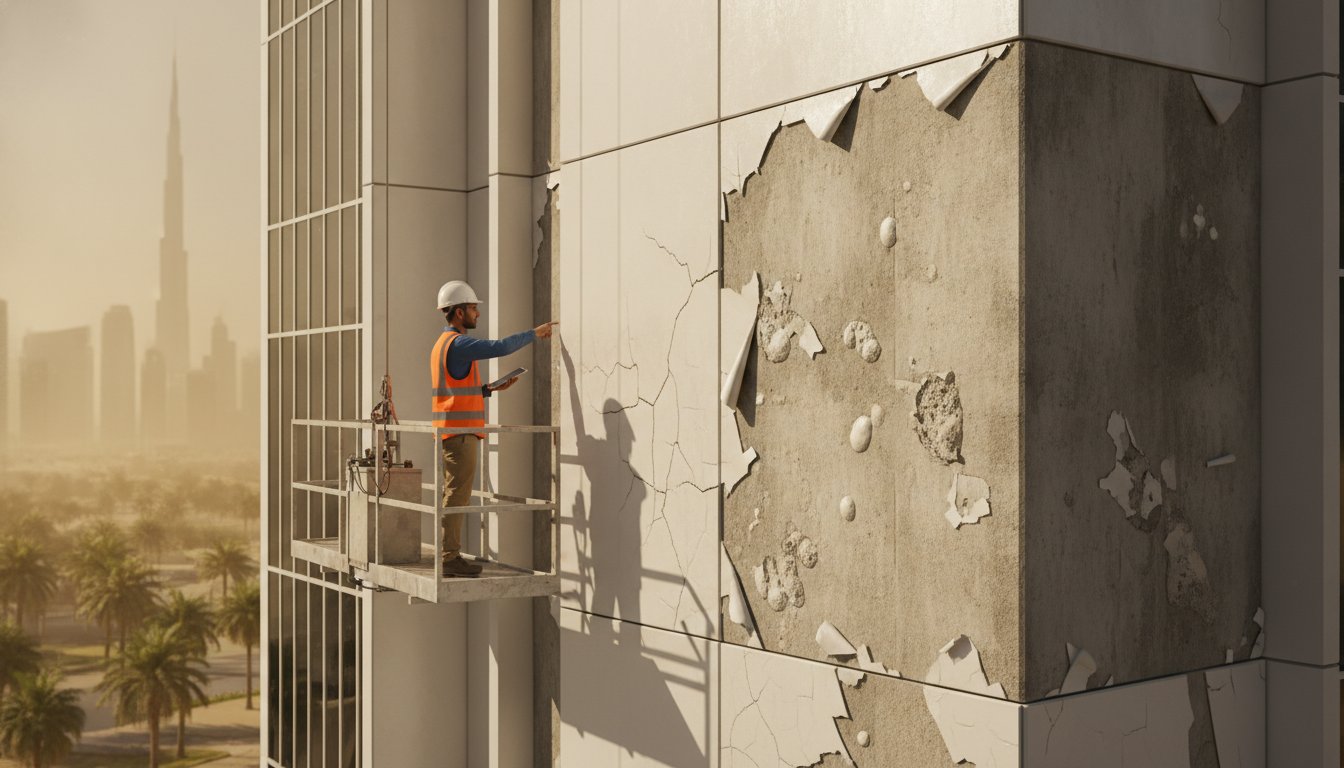
Did you know that approximately 70% of exterior paint failures in the UAE result from inadequate substrate preparation? In our extreme environment, identifying the signs your building exterior needs repainting in Dubai is critical for preventing thermal shock and UV degradation. You likely recognize the difficulty of maintaining a pristine facade amidst sand abrasion and high humidity. It’s often hard to tell if your property just needs a wash or if you’re facing a total system failure that threatens the underlying structure.
This 2026 guide outlines how to spot paint failure before it leads to severe issues like concrete carbonation or water ingress. With the implementation of Dubai Law No. (3) of 2026, building maintenance is no longer a discretionary business decision but a legal mandate for all owners. We’ll provide clear criteria for evaluating your building’s condition, explain the latest regulatory requirements for Quality and Safety Certificates, and preview the advanced elastomeric materials required for the UAE’s unique climate. By understanding these technical red flags, you can transition from reactive repairs to a strategic lifecycle management approach that protects your investment and ensures full compliance with municipal standards.
Key Takeaways
- Understand how 50°C+ temperatures and intense UV radiation accelerate the breakdown of paint binders, necessitating specialized protective systems designed for the UAE.
- Learn to distinguish between superficial surface dirt and critical signs your building exterior needs repainting in Dubai, such as chalking, blistering, and advanced peeling.
- Identify deeper structural threats like concrete spalling and efflorescence that occur when exterior coatings fail to provide a moisture-proof barrier for masonry.
- Discover why scheduling major facade works between October and April ensures optimal adhesion and longevity by avoiding extreme humidity and thermal shock.
- Gain insights into selecting authorized Terraco applicators who utilize engineered anti-corrosive systems tailored for the unique engineering challenges of high-rise structures.
The Dubai Climate Factor: Why Exterior Paint Fails Faster in the UAE
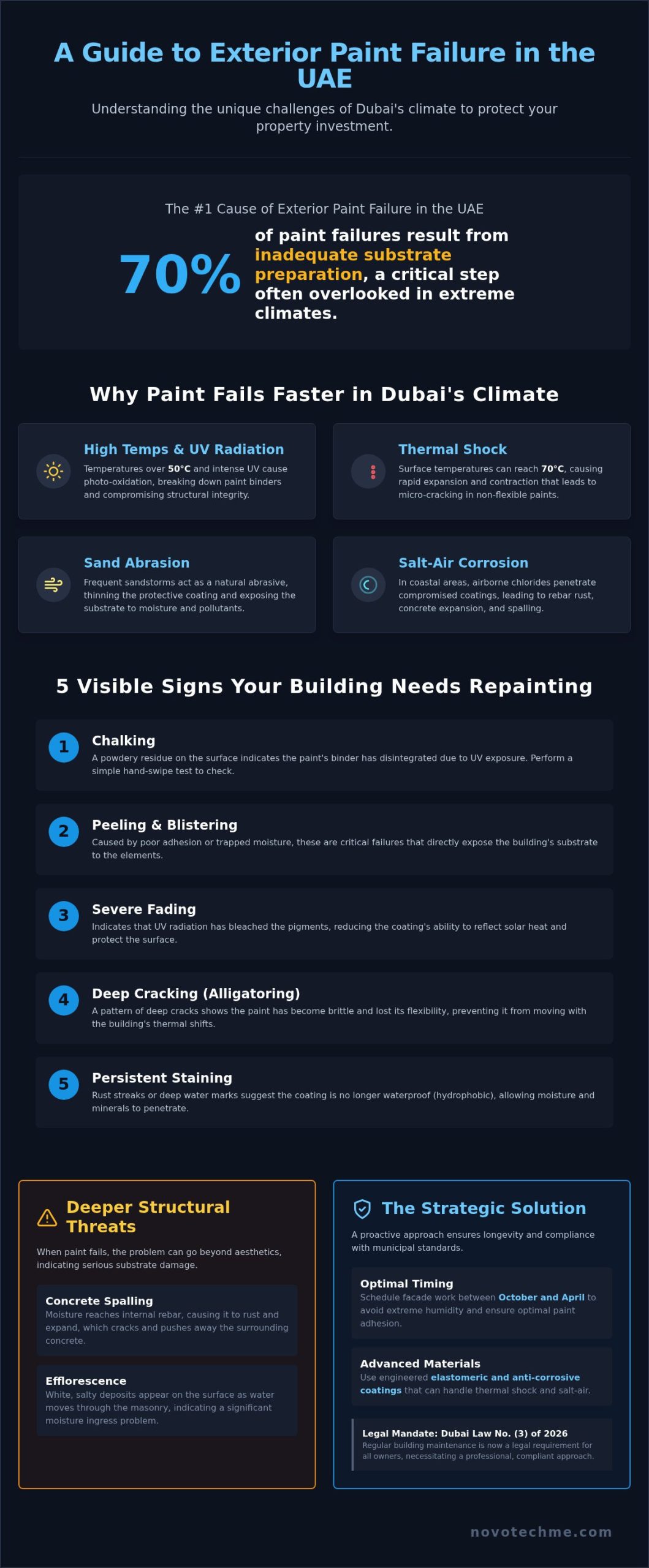
Dubai’s environment serves as one of the most punishing testing grounds for architectural coatings globally. To understand why maintenance cycles are shorter here than in temperate climates, we must look at what paint is at a molecular level: a complex matrix of pigments, solvents, and binders. In peak summer temperatures exceeding 50°C, these binders undergo a process called photo-oxidation. High UV radiation effectively shears the polymer chains that hold the coating together. When the binder fails, the paint loses its structural integrity. This chemical breakdown is one of the primary signs your building exterior needs repainting in Dubai, as the facade no longer provides a sealed shield against the elements.
Mechanical wear also plays a significant role in coating degradation. Frequent sandstorms act as high-velocity natural abrasives, literally sanding down the building’s finish over months of exposure. This erosion thins the protective film, making it easier for moisture and pollutants to penetrate the substrate. Without a robust, high-build coating, your building’s primary line of defense can be stripped away long before the manufacturer’s suggested expiration date.
Thermal Expansion and Contraction Cycles
The daily temperature fluctuations in the UAE create relentless kinetic stress on a building’s skin. Facades can reach surface temperatures of 70°C in direct sunlight before cooling rapidly during the night. This cycle causes the underlying masonry to expand and contract. Standard decorative paints often lack the necessary elongation properties to survive these shifts, leading to micro-cracking. Darker colors exacerbate this issue by absorbing more solar energy, which increases the intensity of “thermal shock.” We prioritize flexible, elastomeric coatings that can stretch and recover, preventing the brittle fractures that characterize failing paint systems.
Salt-Air Corrosion in Coastal Communities
Properties in coastal zones like Dubai Marina, JBR, and Palm Jumeirah face the added threat of airborne chlorides. High humidity levels transport salt particles deep into the porous masonry. If the exterior coating is compromised, these salts eventually reach the internal steel reinforcement. As the rebar rusts, it expands, exerting internal pressure that causes the concrete to flake off. This is why utilizing a specialized anti-corrosive paint uae system is vital for asset protection. Missing the early signs your building exterior needs repainting in Dubai in these high-salinity areas often results in spalling, which requires expensive structural remediation far beyond a simple aesthetic touch-up.
5 Visible Signs Your Building Exterior Needs Repainting
Visual inspections serve as a property manager’s first line of defense against escalating maintenance costs. While some aesthetic changes might seem minor, they often signal a deeper breakdown of the protective film. Identifying these signs your building exterior needs repainting in Dubai early can prevent the substrate from being exposed to the harsh desert environment. We categorize these indicators into five primary categories that demand immediate professional attention.
- Chalking: This occurs when the paint’s binder disintegrates, leaving a powdery residue on the surface.
- Peeling and Blistering: These are critical causes of premature paint failure, typically resulting from poor initial adhesion or moisture trapped behind the paint film.
- Severe Fading: When UV radiation bleaches the pigments, the coating is no longer effectively reflecting solar heat.
- Deep Cracking (Alligatoring): This pattern indicates the paint has become brittle and lost its ability to expand with the building.
- Persistent Staining: Rust streaks from internal reinforcement or deep water marks suggest the coating is no longer hydrophobic.
Identifying Chalking and Pigment Breakdown
Property managers can easily perform a “hand swipe test” by rubbing a finger across the facade. If a fine white powder transfers to your skin, the paint’s binder has failed. Chalking is the definitive precursor to total paint failure, as it means the protective resins have been eroded by UV exposure. Once this layer is gone, the pigments are no longer anchored, leaving the building’s render vulnerable to moisture absorption and sand abrasion. If you notice significant powdering, it’s a clear indication that the current system has reached the end of its functional lifecycle.
Distinguishing Between Hairline and Structural Cracks
It’s vital to determine if a crack is limited to the paint film or if it has penetrated the underlying render. Hairline cracks in the paint are common signs your building exterior needs repainting in Dubai, but they must be sealed to prevent water ingress during rare, intense rain events. When moisture enters these gaps, it can cause the render to detach from the masonry. Our exterior building painting dubai specialists prioritize substrate remediation, ensuring every crack is bridged with high-elongation fillers before applying the final protective system. If you’re unsure about the depth of facade damage, our team can provide a comprehensive technical assessment to determine the necessary scope of work.
Structural Indicators: When the Problem Is Deeper Than Paint
While cosmetic fading is easy to spot, structural indicators represent systemic threats to your asset’s long-term integrity. High-performance coatings act as an engineering shield against chemical attacks. When you conduct a thorough inspection of the building, you must look for evidence that this protective matrix has been breached. These structural red flags are the most critical signs your building exterior needs repainting in Dubai because they indicate that the substrate itself is now under assault from the environment.
- Efflorescence: White, crystalline salt deposits appearing on the surface of masonry or render.
- Concrete Spalling: Chunks of concrete breaking away from the facade, often exposing rusted steel reinforcement.
- Mold and Algae Growth: Biological colonization in high-humidity or shaded areas that traps moisture against the wall.
- Sealant Failure: Cracked, brittle, or detached caulking around expansion joints and window perimeters.
The Danger of Efflorescence and Moisture Ingress
Efflorescence occurs when moisture carries soluble salts through the porous concrete to the surface. As the water evaporates in the intense heat, it leaves behind white mineral deposits. Simply applying a new coat of paint over these crystals is a wasted investment. The pressure of the salt crystallization will push the new paint film off the wall within months. This condition often signals “rising damp” or internal leaks. For ground-level issues, partnering with specialized waterproofing companies in dubai is essential to stop the moisture source before a specialized protective painting system is applied.
Concrete Carbonation and Rebar Protection
Carbonation is a chemical reaction where atmospheric carbon dioxide penetrates the concrete, lowering its alkalinity. Once the pH level drops, the internal steel reinforcement loses its passivity and begins to corrode. Rust occupies significantly more volume than steel, creating massive internal pressure that leads to spalling. Modern anti-carbonation coatings are engineered to block CO2 diffusion while allowing the substrate to breathe. Identifying these structural signs your building exterior needs repainting in Dubai allows you to deploy protective systems that extend the building’s lifecycle by decades. We focus on these technical interventions to prevent the catastrophic failure of balconies and high-rise facades.
Timing Your Repainting Project for Maximum Longevity
Identifying the signs your building exterior needs repainting in Dubai is the essential first step. However, the technical success of the restoration depends heavily on when the work is executed. In the UAE’s climate, the window for optimal paint application is narrower than in most global markets. Applying high-performance coatings outside these environmental thresholds compromises the chemical bond and significantly reduces the system’s functional lifespan. We prioritize a data-driven approach to scheduling, ensuring ambient conditions align with the material’s curing requirements.
Seasonal Planning for Dubai Property Owners
The “Cool Month” advantage, spanning from October to April, remains the peak season for facade restoration. During the summer, ambient temperatures frequently exceed 45°C, leading to a phenomenon known as “flash drying.” This occurs when the solvent evaporates too rapidly, preventing the polymer chains from knitting together into a continuous, flexible film. The result is a brittle coating prone to early cracking. Humidity also presents a challenge. We monitor dew points closely, as high-humidity mornings can trap microscopic moisture layers under the primer. For high-rise projects, we also account for seasonal wind patterns to maintain the safety of rope access and cradle operations.
The 5-Step Professional Preparation Process
Even the most advanced protective systems will fail if the substrate isn’t properly engineered to receive them. Our methodology follows a strict sequence to ensure maximum adhesion. We don’t just paint; we restore the building’s envelope through a rigorous preparation cycle:
- Cleaning and Degreasing: We use high-pressure washing to remove the fine, abrasive desert dust and atmospheric pollutants that prevent the coating from “wetting” the surface.
- Mechanical Abrading: Our teams scrape away loose material and sand existing glossier finishes to create a physical profile for the new system.
- Structural Remediation: We address the structural indicators mentioned previously, using specialized mortars to repair spalling concrete and high-elongation fillers for cracks.
- Surface Neutralization: We ensure the substrate’s alkalinity is stable, preventing the chemical “burning” of the new paint film.
- Alkali-Resistant Priming: We apply a dedicated primer that acts as a bridge between the masonry and the topcoat, blocking salts and ensuring a uniform finish.
Selecting the right materials is only half the battle. The technical expertise to apply them under the correct environmental conditions determines whether your facade lasts three years or a decade. If you’ve observed the signs your building exterior needs repainting in Dubai, our technical team can help you plan a compliant, long-lasting restoration. Schedule a comprehensive site assessment for your high-rise or villa project today.
Professional Restoration: Why NovoTech is the Authority in UAE Exteriors
Selecting a partner for large-scale facade restoration requires more than just a painting contractor. It demands a technical integrator who understands the structural engineering of Dubai’s high-rises. With over 30 years of regional experience, we’ve refined a methodology that addresses the root causes of coating failure. When you identify the signs your building exterior needs repainting in Dubai, our role is to provide a comprehensive, end-to-end solution that restores both aesthetic value and structural integrity. We position ourselves as a collaborative ally, taking total project ownership to ensure your asset is protected against the UAE’s unique environmental stresses.
The Terraco Advantage for Extreme Climates
As authorized Terraco applicators, we utilize world-class coatings engineered specifically for the Arabian Peninsula. These high-build, flexible acrylic systems offer superior elongation, allowing the coating to move with the building during extreme thermal cycles without cracking. A critical advantage of these systems is Dirt-Pick-Up Resistance (DPUR). This technology prevents fine desert dust from embedding in the paint film, keeping facades cleaner for significantly longer periods. By partnering with authorized specialists, you secure not only a superior architectural finish but also the validation of long-term material warranties that standard contractors simply can’t provide.
NovoTech’s Comprehensive Maintenance Approach
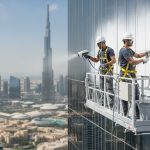
Our integrated service model goes beyond the surface. We manage the entire project lifecycle, from initial structural repairs to the final protective coat. For Dubai’s iconic towers, our high-rise specialization ensures safe and efficient execution through advanced rope access and cradle systems. We adhere to stringent international quality standards, providing corporate clients with the reassurance that their complex technical requirements are in expert hands. Our approach is defined by quiet competence and a focus on long-term efficiency.
We also facilitate holistic property refreshes by combining facade works with specialized epoxy floor coating uae for parking structures and technical areas. This all-encompassing service model reduces the administrative burden on property managers and ensures a consistent standard of excellence across the entire building envelope. If you’ve observed the signs your building exterior needs repainting in Dubai, don’t wait for minor issues to become structural liabilities. Request a professional facade assessment from NovoTech today to secure a climate-proof engineering shield for your property.
Strategizing Your Long-Term Facade Protection
Protecting your property from Dubai’s relentless thermal stress requires a transition from reactive repairs to a sophisticated lifecycle management model. We’ve established that high-performance paint serves as a critical engineering shield against UV degradation and coastal salinity. Recognizing the signs your building exterior needs repainting in Dubai before they escalate into systemic structural failure is the most effective way to control long-term operational costs and maintain compliance with 2026 building safety mandates.
NovoTech brings over 30 years of UAE experience to every project, operating as a dependable strategic partner for both high-rise developments and luxury villas. As authorized Terraco applicators, we deliver protective systems that meet the rigorous demands of the regional climate. Our team handles every detail with technical precision, from initial substrate analysis to the final protective coating. Secure your building’s future with a NovoTech exterior restoration quote and ensure your asset remains a benchmark of quality. We’re ready to help you maintain a resilient and professional building envelope.
Frequently Asked Questions
How often should I repaint my building’s exterior in Dubai?
Building exteriors in Dubai typically require repainting every 5 to 7 years. However, high-salinity coastal areas may require shorter intervals due to accelerated salt-air corrosion. Under Dubai Law No. (3) of 2026, structured maintenance is now a legal obligation for property owners. Regular inspections help you identify the signs your building exterior needs repainting in Dubai before structural degradation occurs, ensuring your asset remains compliant with municipal safety standards.
Can I paint my villa during the summer months in the UAE?
We strongly advise against exterior painting during the summer when temperatures exceed 45°C. High heat causes “flash drying,” where the paint’s solvent evaporates before the polymer binders can properly bond. This results in a brittle, low-quality finish that will likely peel within a year. For optimal adhesion and longevity, schedule your project during the cooler window between October and April when humidity and temperature levels are stable.
What is the best type of paint for Dubai’s extreme heat?
The most effective coatings for the UAE are high-build, elastomeric acrylic systems. These materials offer superior elongation to survive thermal expansion cycles and feature Dirt-Pick-Up Resistance (DPUR) to combat desert dust. We utilize authorized Terraco systems because they are specifically engineered for Middle Eastern UV levels. These coatings provide a robust engineering shield that far outperforms standard decorative paints in heat reflection and substrate protection.
Why is my exterior paint peeling only on the seaside of the building?
Seaside peeling is primarily caused by airborne chlorides and high humidity levels common in areas like JBR or the Palm. Salt particles penetrate the paint film and settle in the substrate, where they attract moisture and expand. This pressure eventually forces the paint to detach from the wall. Addressing these signs your building exterior needs repainting in Dubai requires specialized anti-corrosive systems and thorough substrate neutralization to prevent recurring failure.
Do I need a permit for exterior building painting in Dubai?
Yes, a formal permit-to-work from the Dubai Municipality is mandatory for all exterior building painting activities. Additionally, if your property is within a master-developed community like Emaar or Nakheel, you must obtain a No Objection Certificate (NOC) and adhere to specific color palette regulations. Licensed contractors ensure all legal documentation is logged in the city’s digital building management system to maintain the property’s auditable lifecycle record.
What is chalking, and is it dangerous for my building?
Chalking is the formation of a fine white powder on the surface, indicating that the paint’s binder has been destroyed by intense UV radiation. While it looks like simple dust, it’s a critical warning that the coating no longer protects the masonry. If left untreated, the exposed render will absorb moisture and sand, leading to more expensive structural repairs. It’s a definitive signal that the protective system has reached its functional end.
How long does a professional exterior painting project take for a villa?
A professional villa restoration typically spans 10 to 21 days depending on the structure’s built-up area and the required preparation. A significant portion of this timeline is dedicated to high-pressure washing, scraping, and structural remediation of cracks. We don’t rush the curing process for primers and mid-coats. This methodical approach ensures that the final protective system achieves the necessary chemical bond to withstand the local environment for several years.
What is the difference between standard paint and an anti-carbonation coating?
Standard paints are primarily decorative and offer limited protection against atmospheric chemicals. In contrast, anti-carbonation coatings are engineered barriers that block carbon dioxide from penetrating the concrete. This prevents the pH level of the masonry from dropping, which is the primary cause of internal rebar corrosion. While standard paint may look identical, only anti-carbonation systems provide the technical protection necessary to prevent concrete spalling and extend the building’s structural life.