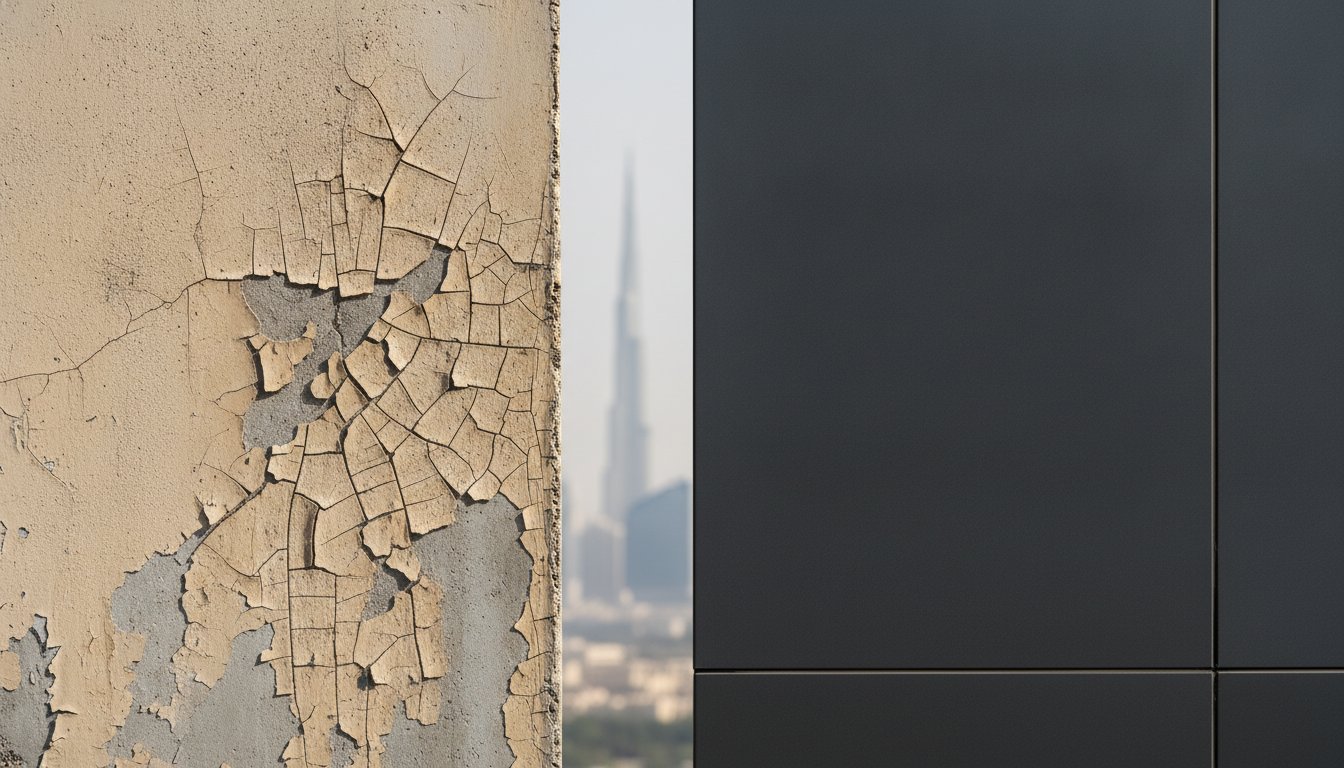
In the UAE, the most expensive paint choice you can make is often the one with the lowest price tag on the invoice. We understand the pressure to manage facility budgets, yet the 50°C summer heat and high humidity levels in Dubai quickly expose the limitations of economy-grade finishes. A comprehensive cost-benefit analysis of premium vs cheap paint in UAE reveals that material costs represent only a fraction of the total lifecycle expenditure. While standard paints might seem budget-friendly today, they often lead to peeling and carbonation within just 24 months.
Our 2026 investment guide provides a clear financial justification for choosing high-performance coatings over retail-grade alternatives. You’ll discover how advanced protective systems significantly lower the frequency of disruptive repainting and why the high cost of scaffolding for high-rise assets makes durability a non-negotiable requirement. We also detail how compliance with Al Sa’fat 2.0 and mandatory maintenance intervals under Dubai Law No. 3 of 2026 shifts the ROI in favor of premium systems. By the end of this analysis, you’ll have the technical data needed to protect your building’s structural integrity against the desert’s extreme corrosive forces.
Key Takeaways
- Understand how extreme UV radiation and 50°C temperatures degrade standard paint binders, leading to premature failure in coastal UAE environments.
- Evaluate the true financial impact of labor and access costs, such as scaffolding for high-rises, through a detailed cost-benefit analysis of premium vs cheap paint in UAE.
- Identify the technical differences between high-resin premium systems and filler-heavy economy paints, focusing on anti-carbonation and self-cleaning properties.
- Determine the correct coating grade based on substrate type and exposure levels to ensure structural integrity and compliance with Dubai’s 2026 maintenance regulations.
- Learn how professional application by authorized specialists extends the lifecycle of your asset and reduces long-term maintenance overheads.
The UAE Climate Challenge: Why Standard Paint Fails in 2026
The Arabian Peninsula presents a unique set of stressors that standard architectural coatings simply aren’t engineered to survive. When surface temperatures on a Dubai high-rise exceed 70°C during peak summer, the chemical bonds in economy binders begin to fail. A rigorous cost-benefit analysis of premium vs cheap paint in UAE must account for this accelerated degradation. Standard paints often rely on high volumes of extenders and low-grade resins that oxidize under intense UV radiation, leading to chalking and loss of protective integrity within two years.
In coastal regions like Dubai Marina or Sharjah’s Al Khan, the challenge intensifies. High humidity levels transport salt chlorides deep into porous concrete, where they trigger rebar corrosion and spalling. Without a specialized protective system, standard paint acts as a temporary cosmetic layer rather than a functional barrier. Constant sandstorms further complicate the situation, acting as an abrasive force that physically strips away thin, low-solids coatings. This environmental reality is why Dubai Law No. 7 of 2025 now enforces stricter building aesthetic and safety standards, requiring owners to maintain facades that are both structurally sound and visually compliant.
Thermal Expansion and Coating Elasticity
Buildings are dynamic structures. In the UAE heat, concrete and masonry undergo significant thermal movement every day. Cheap, rigid paints don’t have the internal flexibility to accommodate this expansion. As the substrate grows and contracts, the brittle paint film snaps, creating pathways for moisture and salts to enter the wall. Premium systems are formulated with high-elongation resins that stretch without tearing. Crack-bridging ability is the metric that defines a coating’s capacity to span across substrate fissures while maintaining a continuous, waterproof seal.
UV Degradation and Pigment Stability
Visual failure is often the first sign of a poor investment. Many economy paints lose 50% of their color vibrancy in less than 18 months because they utilize organic pigments that break down under high UV exposure. High-performance coatings use complex inorganic pigments that are chemically stable. When performing a technical breakdown of paint composition, the quality of these pigments determines the long-term ROI. For more details on selecting the right materials, consult our guide on choosing climate-proof paint for buildings in the UAE. This stability is a key factor in any cost-benefit analysis of premium vs cheap paint in UAE, as it directly impacts how often you must pay for expensive scaffolding and labor.
Technical Breakdown: Material Composition of Premium vs. Cheap Paint
The performance gap between economy and industrial-grade coatings is rooted in polymer chemistry. In a rigorous cost-benefit analysis of premium vs cheap paint in UAE, the most critical variable is binder volume. Binders, typically acrylic or silicone resins, are the components that adhere to the substrate and hold the pigment in place. Premium paints are high-solids systems, meaning they contain a higher concentration of these resins. In contrast, cheap alternatives rely on inexpensive fillers like calcium carbonate or clay. While these fillers provide bulk, they lack the tensile strength and UV stability required to survive the UAE’s thermal cycles.
Beyond the resin, specialized additives distinguish high-performance coatings. Anti-carbonation additives are vital for Dubai’s concrete structures; they create a barrier that prevents carbon dioxide from penetrating the substrate and corroding the steel reinforcement. Self-cleaning technologies, often found in premium silicone-based systems, reduce the adhesion of desert dust, ensuring facades remain clean with minimal maintenance. Professional integrated protective systems applied by authorized Terraco specialists ensure these chemical properties remain intact throughout the coating’s lifecycle, preventing the premature delamination common in budget applications.
Anti-Corrosive and Protective Systems
For high-rise assets, paint is the first line of defense against “concrete cancer.” Standard retail paints are often too permeable, allowing moisture and salt chlorides to reach the rebar. Utilizing specialized anti-corrosive paint in the UAE is a strategic necessity for structures near the coast. These industrial-grade systems provide a dense, hydrophobic shield that stops salt-induced corrosion before it compromises the building’s structural integrity. This level of protection is a cornerstone of any meaningful cost-benefit analysis of premium vs cheap paint in UAE, as it prevents multi-million Dirham structural repairs later.
Eco-Friendly and Reflective Technologies
Innovation in the 2026 market has shifted toward “smart” coatings that manage energy loads. High Solar Reflectance Index (SRI) paints reflect a larger portion of solar radiation, directly reducing the heat transfer into the building and lowering AC power consumption. Current UAE regulations, including Al Sa’fat 2.0, mandate strict VOC limits. Modern premium paints comply with these standards, typically keeping interior VOC levels between 50 and 100 g/L. These coatings don’t just protect the facade; they support sustainable building certifications and improve indoor air quality for residents.
Total Cost of Ownership (TCO): The 10-Year Financial Reality
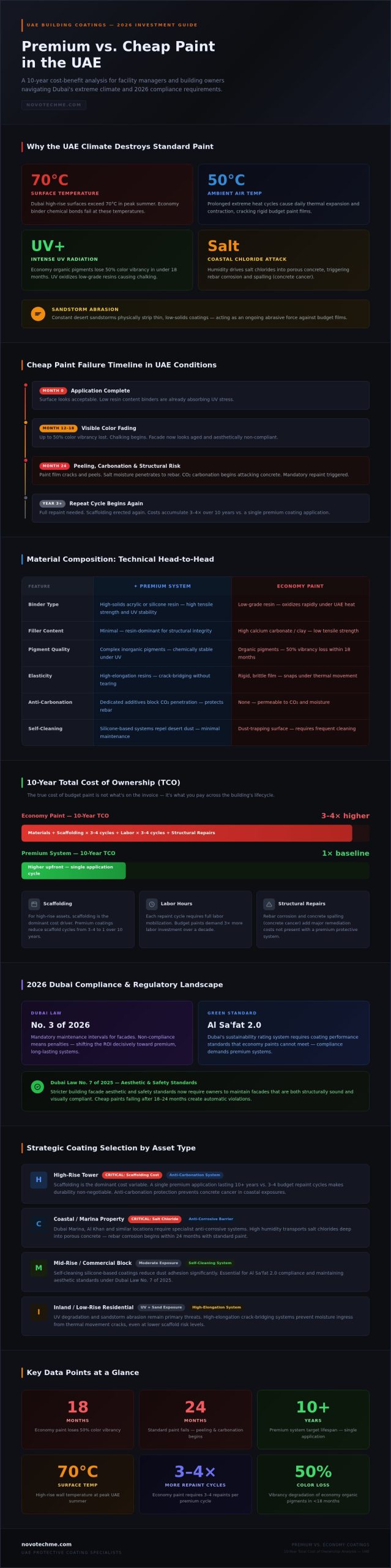
Financial modeling for UAE property assets often overlooks the critical ‘Labor-to-Material’ ratio. In a professional painting project, the coating itself typically represents only 20% of the total expenditure. The remaining 80% is consumed by labor, meticulous surface preparation, and the high cost of site access. When you perform a cost-benefit analysis of premium vs cheap paint in UAE, it’s clear that saving a small margin on material costs is a negligible gain when it forces you to repeat the 80% labor and access expenditure three times as often.
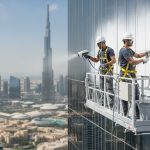
The hidden costs of access are particularly punishing for high-rise developments. Scaffolding rental, rope access technician fees, and the necessary municipal permits for facade work represent massive fixed costs that don’t change regardless of paint quality. Choosing a cheap system that fails in 24 to 36 months means paying these mobilization fees repeatedly. For commercial assets and luxury villa communities, the disruption to residents and tenants adds an intangible but significant burden to the balance sheet. Premium protective systems extend the maintenance cycle to 8 or 12 years, effectively amortizing those high access costs over a much longer period.
Comparing the Direct Costs
The initial investment for a premium system is higher, but the lifecycle savings are undeniable. Cheap paints often require more extensive surface preparation during the second and third cycles because they tend to peel and flake, leaving a compromised substrate that must be stripped back. A premium application remains bonded, often requiring only a simple wash and a single topcoat for refreshment a decade later.
| Expense Category (10-Year Horizon) | Cheap Paint (3 Cycles) | Premium System (1 Cycle) |
|---|---|---|
| Material Procurement | Low (Paid 3x) | High (Paid 1x) |
| Labor & Scaffolding | Paid 3x | Paid 1x |
| Surface Prep Complexity | Increases each cycle | Minimal |
| Total 10-Year Expenditure | ~250% higher | Baseline Investment |
Asset Value and Aesthetic ROI
In Dubai’s competitive luxury market, facade quality directly influences property valuation and rental yields. A building with visible chalking, fading, or salt-induced bubbling signals neglect to potential investors and facility managers. By reducing the maintenance burden through high-performance coatings, Homeowners’ Associations (HOAs) can maintain lower service charges while preserving the building’s aesthetic appeal. For private owners, investing in premium villa painting services in Sharjah ensures that the home remains a high-value asset that stands out in the regional market without the need for constant, disruptive touch-ups.
Strategic Selection: Choosing the Right Grade for Your Asset
Selecting the optimal coating system requires a technical assessment of the asset’s specific environment and substrate. A rigorous cost-benefit analysis of premium vs cheap paint in UAE should always begin with the property’s intended holding period and the material of the facade. Whether you are managing a concrete high-rise, a gypsum-partitioned office, or a metal-clad industrial facility, the chemical bond between the paint and the substrate determines the system’s lifespan. Applying a cheap, non-breathable coating over porous concrete is a common error that leads to trapped moisture and eventual delamination.
Strategic selection also involves analyzing exposure levels. A building in Dubai Marina faces aggressive salt-induced corrosion that an inland villa in Al Ain does not. Consulting with professional applicators allows for custom coating specifications that address these micro-climates. This proactive approach ensures that the chosen system provides the necessary protection without over-specifying in areas where standard premium finishes would suffice. Aligning the paint grade with the building’s lifecycle goals is the only way to ensure the investment remains sound over a ten-year horizon.
High-Rise vs. Villa Requirements
High-rise structures cannot afford the luxury of cheap paint. The logistics of rope access, scaffolding, and municipality permits for a 40-story tower are so complex that the material cost becomes secondary. In these environments, an industrial-grade protective system is mandatory to prevent carbonation and structural decay. Conversely, villa owners often prioritize aesthetics and washability. Garden-side walls are particularly susceptible to moisture from irrigation, requiring coatings with high fungal resistance and breathability to prevent bubbling. Use this checklist to determine your building’s exposure zone requirements:
- Coastal Zone (0-5km from sea): Requires high-build, salt-resistant acrylics with C5-M corrosion protection.
- Urban High-Rise Zone: Requires anti-carbonation properties and self-cleaning silicone binders to combat pollution and dust.
- Landscaped Villa Zone: Requires high-elongation elastomeric paints with advanced moisture-vapor permeability.
Specialized Flooring Solutions
The selection process extends beyond the walls to the surfaces underfoot. Standard floor paints are often the first point of failure in UAE properties, especially in residential garages or warehouses. Investing in an epoxy floor coating in the UAE provides the chemical resistance and impact durability that standard emulsions lack. For high-traffic zones, the cost-benefit of a protective floor system is immediate; it eliminates the need for annual touch-ups and protects the concrete slab from oil spills and tire marks. To ensure your asset receives the correct technical specification, you should consult with our specialized application team to align your coating system with the building’s specific exposure profile.
The NovoTech Advantage: Delivering Integrated Excellence
Selecting a high-performance coating system is a critical first step, yet the success of any capital expenditure hinges on the technical competence of the integrator. We leverage over 30 years of regional expertise to ensure that your material selection aligns perfectly with the building’s structural requirements. A professional cost-benefit analysis of premium vs cheap paint in UAE proves that the most sustainable path to asset preservation involves more than just purchasing the right bucket of paint. It requires a partner who understands the chemistry of the substrate and the unique environmental pressures of the Gulf.
Integrated excellence means addressing the building envelope as a single, cohesive system. Facade protection is inseparable from moisture management; therefore, the value provided by professional waterproofing companies in Dubai is essential for long-term paint performance. We take end-to-end responsibility for every project, from initial substrate testing to the final protective finish. As an authorized Terraco applicator, we provide clients with the assurance of manufacturer-backed warranties that are only available through certified professional channels.
Expert Application and Quality Control
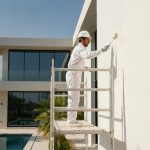
Technical failure in the UAE is rarely caused by the paint itself but rather by unskilled labor and inadequate surface preparation. Even the most advanced elastomeric system will delaminate if it’s applied over a contaminated or poorly primed surface. Our teams adhere to rigorous preparation standards, including high-pressure washing and mechanical abrasion where necessary, to ensure maximum chemical adhesion. This methodical approach to quality control is a core component of our cost-benefit analysis of premium vs cheap paint in UAE, as it eliminates the risk of premature system failure. We maintain strict compliance with regional safety regulations and Dubai’s evolving building standards to protect both the asset and the personnel on-site.
Partnering for Long-Term Maintenance
Proactive asset management is the most effective way to reduce annual maintenance overheads. We act as a collaborative ally for facility managers and Homeowners’ Associations, developing customized renovation plans that address the specific needs of aging structures. By specifying high-durability protective systems, we help our clients break the cycle of frequent, disruptive repainting. Our goal is to extend the lifecycle of your facade while maintaining the aesthetic standards required by Dubai Law No. 7 of 2025. This long-term perspective ensures that your property remains a high-value asset with predictable, lower operational costs over a 10-year horizon.
Contact NovoTech for a comprehensive building painting consultation to receive a technical assessment tailored to your property’s specific requirements.
Securing Your Asset’s Future with High-Performance Coatings
The evidence presented throughout this 2026 investment guide confirms that the upfront material price is a poor metric for evaluating long-term value. Our cost-benefit analysis of premium vs cheap paint in UAE demonstrates that high-performance systems effectively neutralize the corrosive impact of 50°C summer heat and coastal humidity. By extending repainting cycles from 24 months to over a decade, you significantly reduce the recurring financial burden of scaffolding, labor, and municipal permits.
Choosing the correct protective system isn’t just about aesthetics; it’s about structural preservation and compliance with Dubai’s evolving maintenance regulations. As an Authorized Terraco Specialist with 30+ years of regional experience, we ensure that every application meets the highest industrial standards. We provide a comprehensive warranty on protective systems, giving asset managers and villa owners the confidence that their investment is shielded against the desert’s harshest forces.
Ready to optimize your property’s maintenance lifecycle? Request a Professional Painting Audit for Your UAE Property. We look forward to helping you achieve integrated excellence for your building facade.
Frequently Asked Questions
Is premium paint really worth the extra cost in the Dubai heat?
Premium coatings are essential in Dubai because they utilize high-solids resins that don’t oxidize under extreme UV exposure. A cost-benefit analysis of premium vs cheap paint in UAE reveals that while the initial material price is higher, the durability prevents the need for repainting every two years. These systems maintain their protective barrier against carbonation, ensuring the building’s structural integrity remains intact during peak summer months.
How long does a professional exterior painting job last in the UAE?
A high-quality exterior painting system typically lasts between 8 and 12 years when applied by specialists. In contrast, economy-grade paints often begin to peel or chalk within 24 to 36 months due to the harsh climate. The longevity depends heavily on the use of industrial-grade binders and meticulous surface preparation. Investing in a premium system significantly reduces the frequency of expensive mobilization and scaffolding costs.
What are the common signs of paint failure on UAE buildings?
Common indicators include chalking, where the paint surface turns into a fine powder, and salt-induced bubbling known as efflorescence. You might also notice deep cracks caused by thermal expansion or significant pigment fading within 18 months. These signs suggest the existing coating has lost its protective properties. If left unaddressed, these failures allow moisture to reach the concrete, potentially leading to rebar corrosion and costly structural repairs.
Can I use interior paint for my villa’s exterior to save money?
You shouldn’t use interior paint for exterior surfaces as it lacks the UV stabilizers and weather-resistant binders required for the UAE climate. Interior emulsions are designed for aesthetic finish and washability, not for resisting 50°C heat or abrasive sandstorms. Using the wrong grade will result in rapid delamination and substrate damage. The cost of stripping failed interior paint often exceeds the savings made on the initial purchase.
What is the difference between a standard painter and an authorized Terraco applicator?
An authorized Terraco applicator is a certified specialist trained in the technical requirements of high-performance protective systems. Unlike standard painters, authorized applicators follow manufacturer-mandated protocols for surface preparation and film thickness. This certification ensures that the project is eligible for comprehensive manufacturer warranties. It guarantees that the application team has the expertise to handle complex structural challenges and industrial-grade materials.
Do I need a permit for repainting my building facade in Dubai?
Yes, facade repainting in Dubai typically requires a minor works permit from the Dubai Municipality or the relevant free zone authority like Trakhees. These regulations ensure that all work complies with safety standards and community aesthetic guidelines, such as those outlined in Dubai Law No. 7 of 2025. Your service provider should handle the permit application process to ensure full legal compliance before mobilizing scaffolding or rope access teams.
How much does professional building painting cost per square foot in 2026?
For standard weather-resistant exterior painting, rates generally range from AED 15 to AED 25 per square foot. However, high-performance elastomeric or heat-reflective systems typically cost between AED 20 and AED 30+ per square foot. These figures include extensive crack repair and surface preparation. A detailed cost-benefit analysis of premium vs cheap paint in UAE shows these premium rates are more economical over time due to longer maintenance intervals.
Will premium paint help reduce my AC bills during the summer?
High-performance paints with a high Solar Reflectance Index (SRI) can significantly reduce indoor cooling costs. These coatings reflect a larger portion of solar radiation away from the building, preventing heat from soaking into the concrete walls. By lowering the exterior surface temperature, the building’s thermal load decreases, allowing AC systems to operate more efficiently. This energy-saving feature is a key financial driver for modern sustainable building certifications in the UAE.