What if the first signs of fading or chalking are a prompt to inspect, not an automatic signal to repaint? In the UAE, extending the life of your building’s exterior paint starts with understanding what the surface is telling you. Intense sun, airborne sand and humidity can affect a façade, while small areas of peeling or cracking may point to issues that need attention before they spread.
Cleaning too aggressively or attempting repairs without assessing the coating can create further problems. A condition-led approach helps you spot changes early and choose maintenance that suits the surface, rather than relying on guesswork or waiting until deterioration is widespread.
This guide explains how to recognise early paint deterioration, carry out a practical visual inspection and maintain exterior surfaces safely. You’ll also learn when routine care may no longer be enough and a coating assessment or repainting plan may be appropriate. For buildings in Dubai, Sharjah and across the UAE, NovoTech provides exterior painting services when a façade needs more than basic upkeep.
Key Takeaways
- UAE sun, sand and humidity can affect exterior coatings. Base maintenance on each façade’s exposure and condition.
- Fading, chalkiness, peeling, cracking and blistering are useful signs to document, but appearance alone may not reveal the cause.
- Choose between cleaning, localised repairs and repainting according to the coating’s condition and the scope of the problem.
- A safe routine for extending the life of your building’s exterior paint starts with observing accessible areas, recording changes and avoiding unsafe façade access.
- When routine care is no longer enough, NovoTech provides Exterior Building Painting up to G+30 in Dubai, Sharjah and the UAE.
Why Your Building’s Exterior Paint Needs UAE-Specific Care
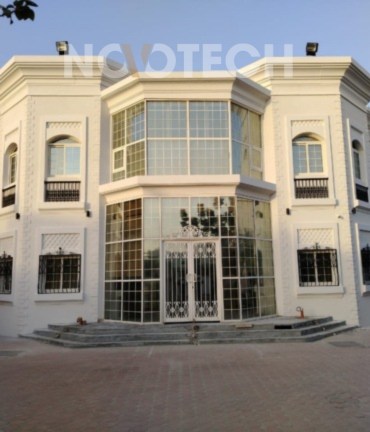
Exterior paint longevity means more than keeping a façade looking freshly painted. It is the coating’s ability to retain its appearance and protective function amid changing weather and day-to-day exposure. In Dubai and Sharjah, intense ultraviolet (UV) sunlight, airborne sand and dust, and high humidity are important conditions to consider when planning care. Their effects can vary across a building, so one faded wall does not necessarily mean every elevation needs the same treatment.
Exposure is only part of the picture. Façade orientation and shelter, the substrate beneath the coating, the coating’s type and condition, and previous maintenance can all influence what you see. A shaded section may look different from a sun-exposed one, while dust on a ledge may make the surface appear more worn. Compare areas with different exposure rather than relying on a fixed repainting timeline.
In the UAE, regular façade observation helps you respond to local climate exposure before small changes are overlooked. For background on paint composition and how its properties relate to durability, see Understanding Paint Composition and Durability. A coating’s performance depends on both its properties and the conditions it encounters.
How Dubai and Sharjah conditions affect painted façades
Sun exposure can make fading or other changes in surface appearance more noticeable, though effects are not necessarily uniform. Airborne sand and dust can settle on exposed walls, parapets, window surrounds and other horizontal surfaces. Humidity adds moisture exposure. Compare parts of the building with different levels of sun, shelter and exposure instead of treating every visible change as the same problem.
What exterior paint does beyond improving appearance
A coating is part of the building’s exterior surface protection as well as its colour and finish. A colour change may be cosmetic, but peeling, cracking, blistering or exposed substrate can warrant closer assessment. Appearance alone cannot establish the cause or reveal the full condition beneath the paint. Consider the location and extent of the change, then assess it alongside the substrate and façade exposure before deciding what to do.
That distinction matters when extending the life of your building’s exterior paint. A uniform colour change may call for monitoring or surface care, while localised coating failure or recurring deterioration may need a closer assessment. Treat visible signs as information, not a diagnosis. A condition-led approach helps property teams plan maintenance around the façade and its exposure, without assuming a fixed lifespan or that one treatment suits every surface.
Why Exterior Paint Deteriorates and What to Look For
Changes in exterior paint are useful clues, but they do not explain their own cause. A faded patch, peeling edge or crack may relate to coating wear, surface contamination, water entry or movement in the substrate. These conditions can call for different responses. Avoid treating every defect as a painting problem or assuming one symptom reveals what is happening behind the surface.
How to read common exterior paint warning signs
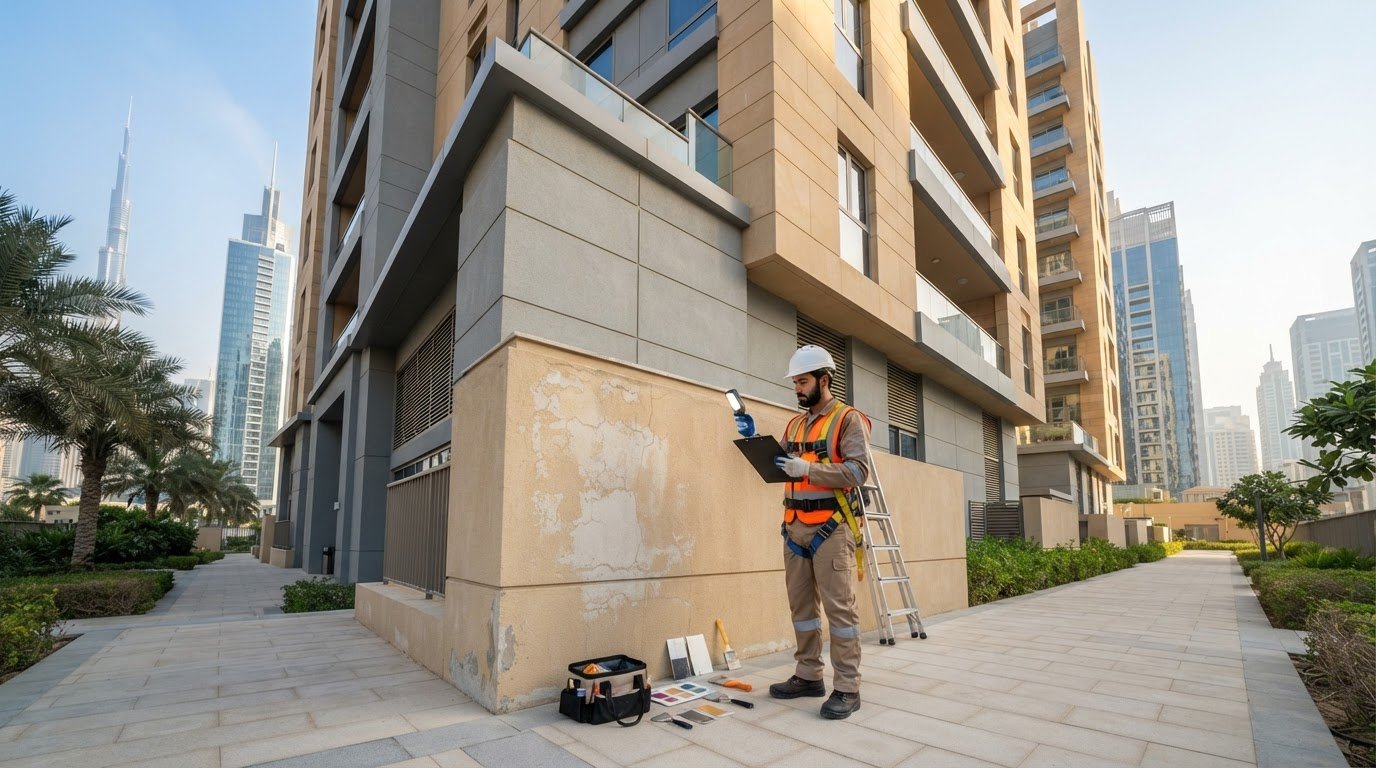
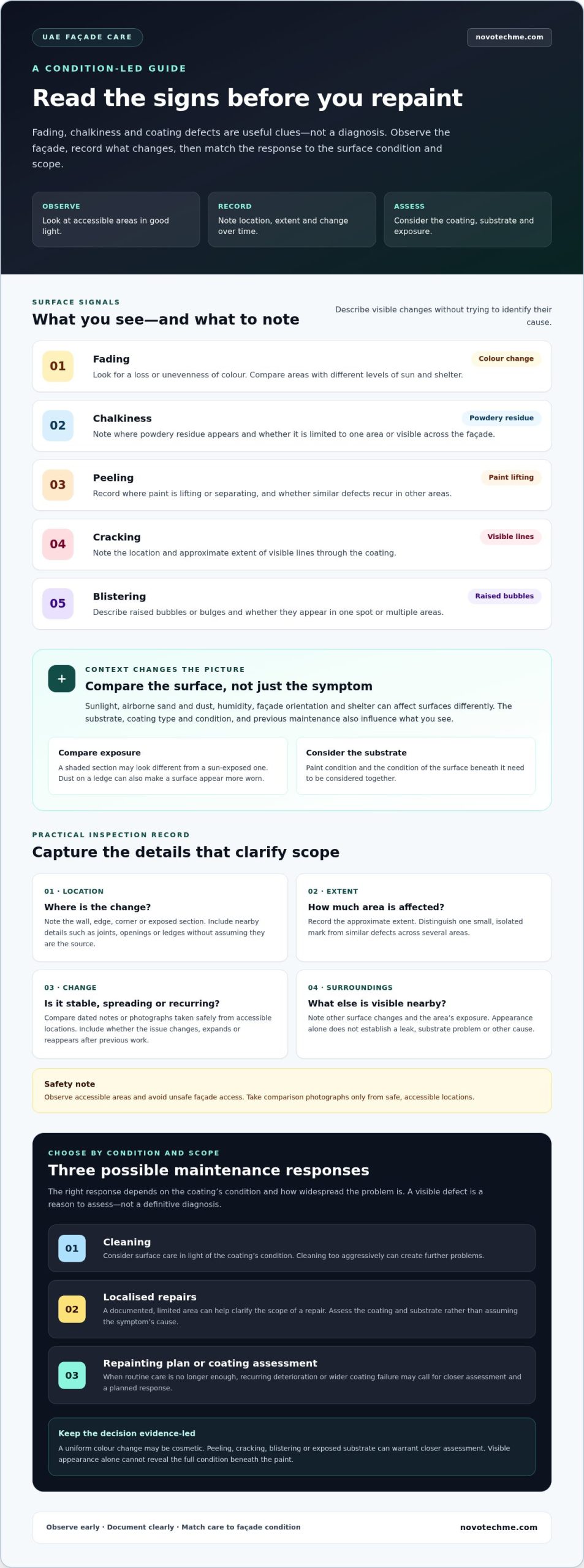
Look at the surface in good light and describe what you see without trying to diagnose it. Fading appears as a loss or unevenness of colour. Chalking leaves a powdery residue. Peeling means paint is lifting or separating, while cracks appear as visible lines through the coating. Blistering shows as raised bubbles or bulges. Record each area’s location, approximate extent and whether it appears to be changing.
Visible paint defects can indicate a need for assessment, not a definitive diagnosis. A small, isolated mark is different from recurring defects across an elevation. Note whether the issue is confined to one edge, corner or exposed section, or appears in several areas. Compare dated notes or photographs taken safely from accessible locations to see whether a change is stable, spreading or recurring.
Patterns provide context, not proof. Document a defect in one small area separately from similar peeling or cracking across several walls. Note nearby details, such as joints, openings or ledges, without assuming they are the source. If an area changes, expands or reappears after previous work, include that history in the record. This helps clarify the scope of any repair or assessment.
Why the surface beneath the paint matters
Paint condition and substrate condition need to be considered together. A coating sits on a surface whose stability and condition affect its performance. If the substrate is unstable or moisture remains unresolved, repainting alone may not address the concern. Conversely, a visible mark does not automatically mean the substrate is damaged. The location, extent and surrounding surface can help determine whether closer assessment is appropriate.
If observations suggest a moisture-management concern, the UAE building waterproofing guide provides related context. Record where the paint change occurs and whether it coincides with other visible surface changes, but do not infer a leak or structural issue from appearance alone. An assessment can help determine whether the coating, substrate or another condition should guide the next step.
For property teams planning extending the life of your building’s exterior paint, a clear record of symptoms is a practical starting point. When deterioration calls for a painting project rather than routine observation, NovoTech’s Exterior Building Painting can connect façade condition with a suitable project plan.
Cleaning, Spot Repairs, or Repainting: Which Response Fits?
The right response depends on the condition and spread of the change, not simply on how noticeable it looks. Surface dirt on otherwise intact paint may call for appropriate cleaning and observation. A confined defect may be suitable for localised repair after its cause and surrounding surface have been considered. Widespread, recurring or difficult-to-inspect deterioration may call for a broader coating assessment and repainting plan.
Use the scale of the observed issue to guide the next step, while remembering that appearance alone does not confirm its cause. Cleaning can improve visibility, but it will not resolve a coating defect. A small repair may address a limited area, while repeated failures across a façade may need a wider response. Assess the surface and scope before treating repainting as the default.
When routine cleaning and observation may be enough
If the coating appears intact and the main concern is accumulated dust or surface dirt, routine care may be a reasonable starting point. Choose a cleaning method suited to the façade material and paint finish. Aggressive cleaning can damage paint or the underlying surface, so a more forceful method is not necessarily better. Do not assume pressure washing is suitable without assessing the specific surface.
Keep the process measured. Record the area before cleaning, use an appropriate method, then document the surface afterwards. Comparing the two views may help distinguish removable dirt from a change in the coating, but it cannot establish the cause of a defect. If paint appears loose, cracked or blistered, avoid scrubbing it and consider whether closer assessment is needed.
- Cleaning: Consider for surface dirt when the coating appears intact and the method suits the façade.
- Localised repair: Consider for a confined defect after relevant causes and surface condition have been assessed.
- Repainting: Consider a broader scope when deterioration is widespread, recurring or no longer limited to isolated areas.
When repairs or repainting deserve consideration
A localised repair may suit a limited defect, but it should follow an assessment of the surrounding coating and possible causes. Treating only the visible spot may leave a wider issue unaddressed. If similar defects recur or appear across several sections, review the façade as a whole rather than assuming each patch is unrelated.
Broader repainting may be appropriate when deterioration is widespread or recurring, or when isolated repairs are unsuitable for the affected area. Base the decision on the observed condition and the work needed across the façade. NovoTech’s exterior building painting guide provides further context on professional painting scope. For difficult-to-inspect areas or extensive deterioration, an assessment can help connect what you observe with an appropriate project plan.
A condition-led choice supports extending the life of your building’s exterior paint by matching the response to what the façade needs, rather than applying the same treatment everywhere. When routine care is no longer enough, explore NovoTech’s exterior building painting services.
A Practical Exterior Paint Maintenance Routine for UAE Buildings
A useful maintenance routine turns casual observations into clear follow-up actions. In Dubai and across the UAE, dust and sun exposure can make façade changes easier to miss or misread. Keep the process consistent: observe from safe, accessible areas, record what you see, prioritise changes, address the relevant cause, then reassess. Do not climb, lean out of windows or access façades without suitable professional arrangements.
How to inspect and record paint condition
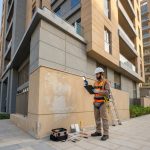
Begin with a ground-level visual review of accessible walls and façade details. Note the date, location, visible symptom and approximate extent of each change. A description such as “fading near the west-facing entrance” is more useful than a guess about its cause. Take photographs from consistent angles and distances where practical, so later comparisons help show whether an area appears stable or has changed.
Use a repeatable record rather than relying on memory. An observation log might include:
- Location: Identify the elevation or accessible feature, such as a wall beside an entrance.
- Appearance: Describe what is visible, such as chalkiness, cracking or peeling.
- Extent: Note whether it affects a small patch or a broader section.
- Comparison: Add a dated photograph from a similar viewpoint when you review the area again.
This record does not diagnose the coating or substrate. It gives a property team a clearer basis for deciding whether an observation is isolated, recurring or changing, and for communicating the location during a closer assessment.
How to prioritise follow-up without guesswork
Prioritise defects that appear widespread, recur after previous attention or visibly change between records. Keep observations separate from assumptions: write “paint blistering near the window” rather than “water is entering,” unless that cause has been established. If a façade area cannot be inspected safely from the ground, leave it to a professional assessment rather than trying to reach it.
Include exposed metal elements in the visual review. If you observe coating damage or other changes on metal, record the location and condition without assuming corrosion is present. NovoTech’s anti-corrosive painting guide offers context for painting needs involving metal surfaces.
Once a concern is documented, use the record to guide the next step: continue observing a stable, accessible area, or arrange a closer assessment if deterioration is spreading, recurring or beyond safe visual inspection. This measured approach supports extending the life of your building’s exterior paint by connecting maintenance decisions to observed conditions rather than an arbitrary schedule.
For a condition-led plan for your façade, discuss your exterior painting project with NovoTech.
How NovoTech Helps Extend the Life of Exterior Building Paint
When façade observations point to deterioration that routine care cannot address, connect the surface condition with a suitable painting scope. NovoTech provides Exterior Building Painting up to G+30 in Dubai, Sharjah and the UAE. A project assessment can help identify areas needing focused attention and those requiring a wider repainting plan, taking the coating condition and project requirements into account.
This condition-led approach helps property teams plan work around what the façade shows rather than assuming every elevation needs identical treatment. NovoTech brings 30+ years of experience, a team of 30 experts and tradespeople, and over 250 completed projects. The appropriate scope remains specific to the building’s condition and requirements.
A climate-aware approach to exterior painting
For exterior projects, NovoTech uses premium, UV-resistant, weather-proof, low-VOC paints and coatings specifically formulated for the UAE climate. Material selection reflects the exposure conditions buildings face in the region, without implying a fixed coating lifespan or maintenance interval. NovoTech is an Authorized Terraco applicator in Dubai, Sharjah and UAE, bringing its application expertise to relevant exterior painting projects.
Material selection is one part of the work. The condition of the existing surface and the required project scope also matter when planning a coating application. By relating façade condition to the painting work, NovoTech helps building owners move from general concern to a clearer project plan. The aim is a suitable response to the building, not an unsupported promise about how long its paint will last.
Plan the next step for your building’s façade
Before discussing project scope, organise your observations. Record affected locations, visible symptoms, approximate extent and any changes noted over time. Photographs taken safely from consistent viewpoints can help show which areas appear isolated and which may be recurring or widespread. This information gives an assessment a practical starting point, but does not replace a closer review where access or the cause of deterioration is uncertain.
With that record in hand, NovoTech can connect assessed deterioration with an appropriate exterior painting scope. This is a practical next step when routine cleaning and observation no longer seem sufficient, or when defects appear across multiple façade areas. The project can be planned around the building’s requirements rather than a one-size-fits-all repainting assumption.
For property owners focused on extending the life of your building’s exterior paint, a professional, condition-led painting plan can help clarify what work the façade needs. Explore NovoTech’s exterior building painting services to plan the next step for your building in Dubai, Sharjah or elsewhere in the UAE.
Make Your Next Façade Decision with Confidence
A well-maintained exterior starts with a clear decision, not an automatic repainting cycle. Use your observations to identify what needs attention, then match the next step to the building’s condition and project requirements. This gives your property team a practical basis for planning work and supports extending the life of your building’s exterior paint without assuming every surface needs the same treatment.
If deterioration has moved beyond routine care, a project assessment can help turn your observations into an appropriate painting scope. NovoTech provides exterior building painting for properties up to G+30, supported by 30+ years of experience, a team of 30 experts and tradespeople, and over 250 successful projects delivered.
Take the next step with a plan shaped around your façade. Explore NovoTech’s exterior building painting services and plan your project in Dubai, Sharjah or elsewhere in the UAE.
Frequently Asked Questions
How often should a building’s exterior paint be inspected in the UAE?
There is no single inspection interval that suits every building in the UAE. Set a practical review routine based on the façade’s exposure, previous coating condition and maintenance history. Bring reviews forward after an event or change that could affect the surface. For example, a property team might inspect after a sandstorm rather than wait for its next planned review. Keep dates and notes so you can compare changes.
Can sandstorms damage exterior paint?
Yes, sandstorms can affect painted façades by depositing dust and sand on exposed surfaces. The impact depends on the building’s exposure and coating condition, so a storm does not automatically mean damage has occurred. After dusty conditions, look from a safe, accessible position for new marks or changes. Avoid dry scrubbing, which can move grit across the finish. Record concerns before choosing a cleaning or repair response.
What causes exterior paint to peel or crack?
Peeling or cracking can have several possible causes, including coating wear, surface contamination, water entry or movement in the substrate. The visible sign alone cannot identify the cause. A crack near a joint and peeling on a separate wall, for example, may need different investigation. Note where the defect appears and whether it is isolated or recurring. Do not cover it with fresh paint before considering the underlying surface condition.
Is it better to repair exterior paint or repaint the whole building?
Choose the scope according to how far deterioration extends and whether defects recur. A limited, assessed defect may suit localised repair, while widespread or repeated deterioration can justify considering a broader repainting project. A patch may also look different from surrounding paint, depending on the existing finish and its condition. Compare affected areas across the façade and base the decision on the overall condition, not one conspicuous spot.
How should I clean a painted building façade without damaging it?
Use a cleaning approach suited to both the façade material and its coating. Avoid aggressive scrubbing, abrasive tools and untested chemicals. If the area is safely accessible, start cautiously on a small, inconspicuous section and observe how the finish responds before proceeding. Do not clean loose or blistered paint as though it were ordinary dirt. For high or hard-to-reach surfaces, avoid unsafe access and arrange an appropriate assessment.
What type of paint is suitable for buildings in Dubai’s climate?
For Dubai’s conditions, NovoTech uses premium, UV-resistant, weather-proof, low-VOC paints and coatings specifically formulated for the UAE climate. Suitability still depends on the project and surface being coated, so material choice should be considered alongside the façade’s condition and the intended scope. A coating selected for local exposure is one factor in extending the life of your building’s exterior paint, but it does not remove the need to assess and maintain the surface.
When should a property owner arrange a professional exterior paint assessment?
Arrange a professional assessment if defects are spreading, recurring after previous work, appearing across several façade areas or located where you cannot inspect safely. An assessment is also useful when the cause is unclear and cleaning or a small repair may not address it. Bring dated photographs and location notes, and mention any earlier repairs. This gives the project discussion a clearer starting point for determining an appropriate exterior painting scope.