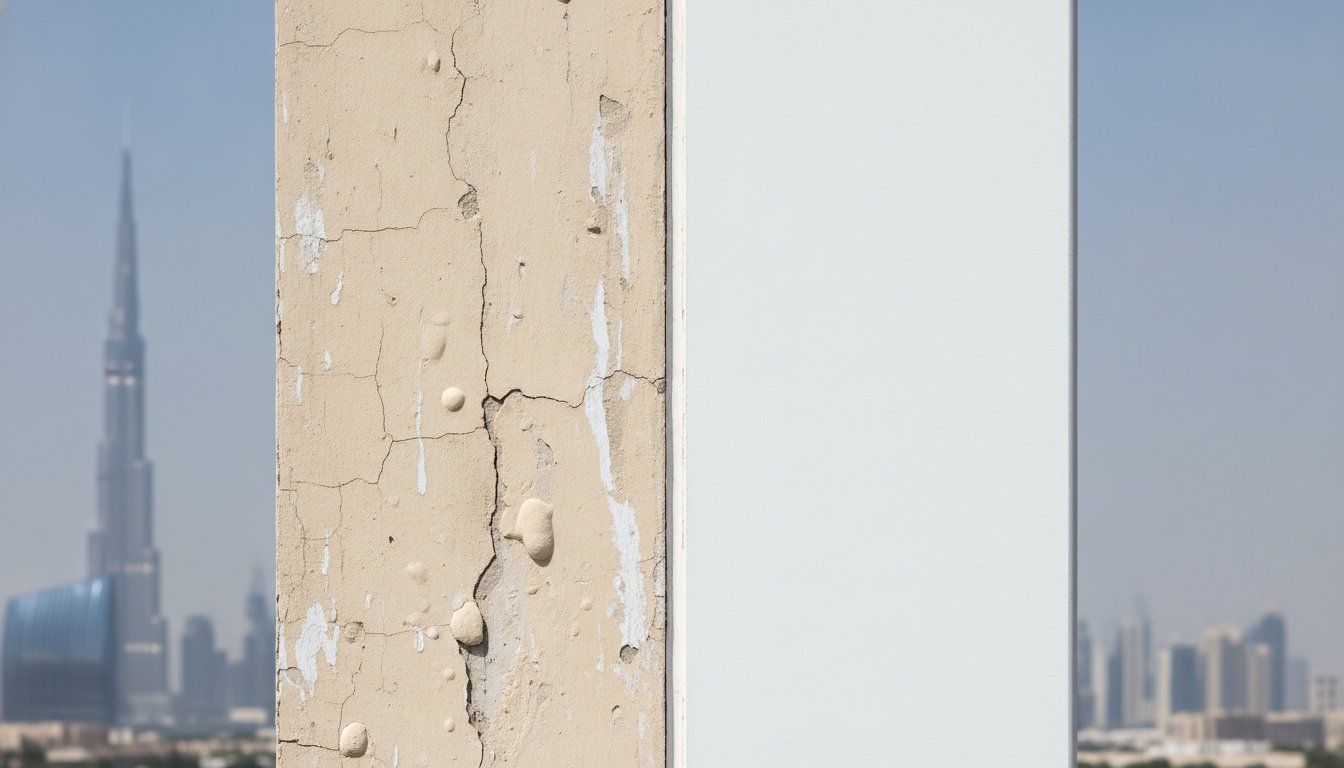
Did you know that unprotected exterior surfaces in Dubai degrade up to 40% faster than those in temperate climates due to intense UV bombardment? We recognize the significant financial burden that frequent repainting cycles and aesthetic degradation place on property valuations. It’s a challenge that requires more than a simple coat of paint; it demands a strategic understanding of the region’s unique environmental chemistry and structural demands.
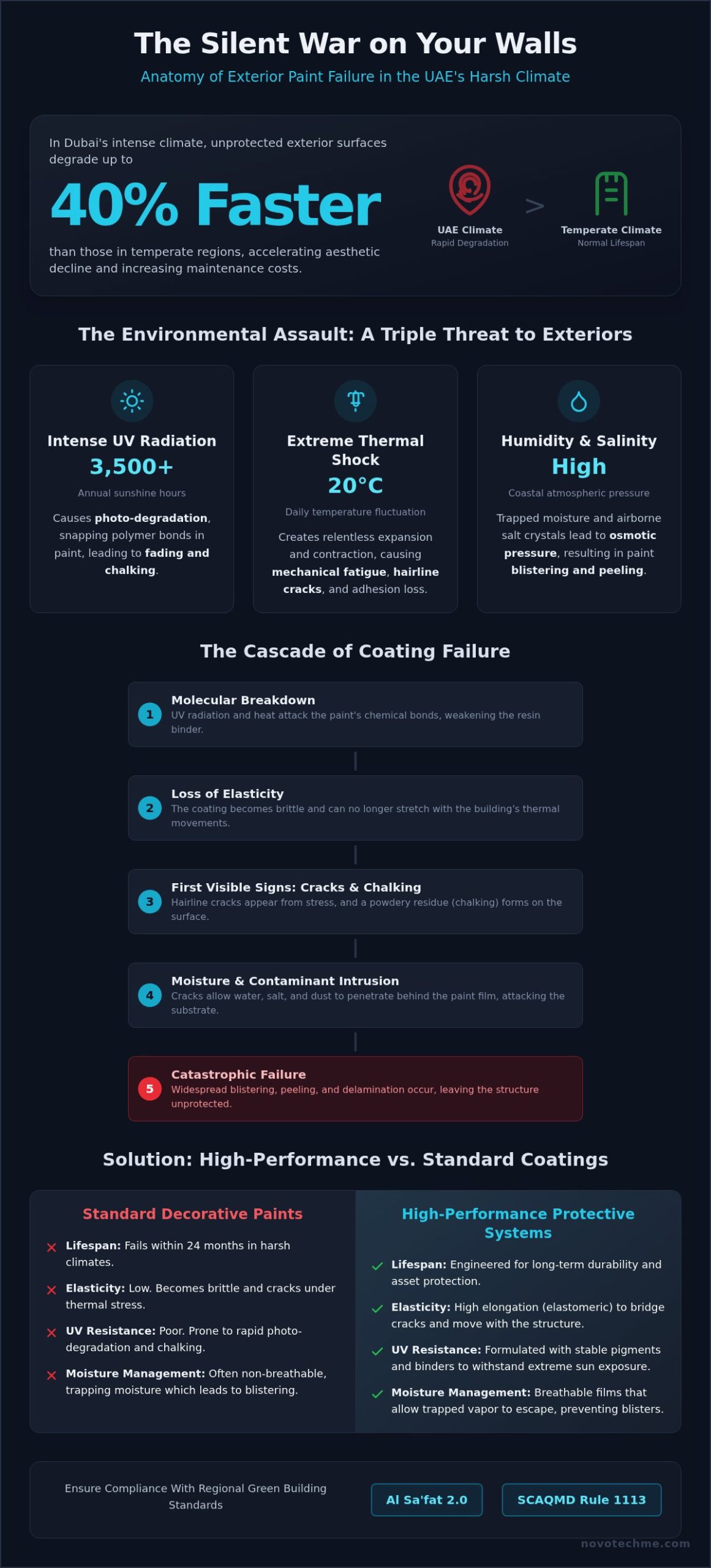
This technical analysis identifies the primary causes of exterior paint failure in UAE, ranging from the 3,500 annual hours of sunshine to the thermal shock triggered by 20°C daily temperature fluctuations. You’ll discover how to implement long-term protective solutions that align with the latest Al Sa’fat 2.0 green building regulations and SCAQMD Rule 1113 VOC standards. We’ll preview the high-performance elastomeric coatings and integrated protective systems that ensure your building remains a resilient, high-value asset. By the end of this guide, you’ll understand how to select an authorized applicator capable of delivering the technical precision your infrastructure requires.
Key Takeaways
- Analyze the synergistic impact of UV radiation and thermal shock, where 20°C daily temperature fluctuations cause significant physical stress to exterior coatings.
- Identify internal structural threats such as efflorescence and groundwater wicking that compromise paint adhesion from the substrate level.
- Discover why dust contamination is one of the leading causes of exterior paint failure in UAE and how professional surface preparation ensures long-term bonding.
- Evaluate the transition from standard decorative paints to specialized protective systems, including Terraco and anti-corrosive solutions for metal-clad structures.
- Implement strategic maintenance and coating selection to ensure compliance with regional green building regulations while protecting property value.
The UAE Climate: A Hostile Environment for Exterior Coatings
The UAE climate is not merely a backdrop; it’s an aggressive chemical catalyst that tests the limits of architectural materials. While standard decorative coatings might perform adequately in temperate zones, the Emirates’ environment requires a specialized technical approach. The “triple threat” of extreme UV exposure, high ambient temperatures, and fluctuating humidity levels creates a hostile baseline for any exterior finish. These environmental stressors accelerate the oxidation of paint binders, making them brittle and unable to accommodate the natural movement of the building structure.
In coastal developments like Dubai Marina or Palm Jumeirah, airborne salinity adds a layer of complexity. Salt particles penetrate the paint film and crystallize, leading to osmotic pressure that causes delamination. These factors are primary common causes of paint failure, explaining why standard international formulations frequently degrade within just 24 months and highlighting the specific causes of exterior paint failure in UAE.
UV Radiation and Photo-Degradation
Dubai’s 3,500 annual sunshine hours deliver intense ultraviolet radiation that physically snaps the chemical bonds within paint polymers. This molecular breakdown, known as photo-degradation, destroys the resin matrix that holds pigments in place. We’ve observed that organic pigments, often used for vibrant blues and reds, succumb to this process much faster than stable inorganic oxides. Photo-degradation is the primary cause of chalking, where the eroded binder leaves a white, powdery film on the building exterior.
The Role of High Relative Humidity
Relative humidity in coastal UAE often spikes during the cooling cycle of the evening, which can disrupt the curing process of freshly applied coatings. If moisture is sealed behind a non-breathable paint film, it creates hydrostatic pressure that leads to blistering and peeling. There’s a notable difference between the humidity profiles of coastal Dubai and inland desert regions, yet both environments contribute to the causes of exterior paint failure in UAE. Proper system selection must account for these variations to prevent moisture from becoming trapped within the masonry, ensuring the protective layer remains intact despite the external atmospheric pressure.
Thermal Expansion and the ‘Thermal Shock’ Phenomenon
Every building in the UAE is a dynamic structure that breathes with the sun. The engineering challenge begins with the coefficient of thermal expansion, a metric that defines how much a material expands or contracts in response to temperature changes. In the Emirates, exterior surfaces often endure 20°C fluctuations within a single 24-hour cycle. This repetitive movement creates relentless physical stress on the coating. If the paint film lacks high elongation properties, it cannot bridge the movement of the underlying masonry. This mechanical fatigue is one of the most critical causes of exterior paint failure in UAE, yet it’s often overlooked during the procurement phase.
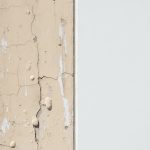
We’ve observed that the formation of hairline cracks is the first sign of a failing system. These minute fractures are more than aesthetic flaws; they’re precursors to total coating failure. They allow moisture and pollutants to bypass the protective layer, compromising the structural integrity of the building. To mitigate these risks, property managers should prioritize Protective Painting Systems that emphasize elasticity over simple color coverage.
Substrate Stress and Adhesion Loss
Concrete and paint rarely share the same expansion rate, leading to significant shear stress at the bond line. When exterior surface temperatures reach 70°C or higher during peak summer hours, the substrate expands considerably. Rigid, low-grade coatings aren’t engineered for this level of movement. They quickly become brittle and lose their grip on the surface, eventually leading to delamination. High-rise structures face even greater stress due to the combination of thermal expansion and structural sway. Utilizing High-Performance Coating Systems designed for extreme environments is the only way to ensure the paint film remains bonded to the substrate through thousands of expansion cycles.
Thermal Shock and Paint Blistering
Thermal shock occurs when the rapid heating of the building envelope causes trapped air or moisture pockets to expand against the paint film. This internal pressure manifests as blistering. We distinguish between non-osmotic blistering, caused by expanding vapors or air, and osmotic blistering, which involves liquid moisture. In both cases, the midday sun acts as a catalyst, forcing the paint to stretch beyond its elastic limit. Preventive strategies require high-build elastomeric coatings that can absorb this internal pressure without rupturing. These systems act as a flexible membrane, maintaining a seamless barrier even when the building undergoes significant thermal shifts.
Internal and Structural Causes: Moisture and Efflorescence
While atmospheric conditions act as visible catalysts, structural deficiencies often represent the primary underlying causes of exterior paint failure in UAE. Moisture ingress from within the substrate is a silent destroyer of paint adhesion, operating long before visible symptoms appear on the facade. It’s not simply a surface issue; it’s a matter of the masonry’s internal health and chemical stability. When waterproofing companies in dubai fail to provide adequate subterranean or positive-side protection, buildings become vulnerable to capillary action. This process, known as groundwater wicking, allows moisture to travel through porous concrete, carrying dissolved minerals that eventually disrupt the coating from the inside out.
The Chemistry of Efflorescence in the UAE
Efflorescence is the migration of soluble salts to the surface of a porous material, where they form a distinct white, powdery residue as the water evaporates. In the Emirates, the historical use of salt-laden sand or brackish water in concrete mixes can exacerbate this phenomenon when exposed to the environment. Identifying this residue is critical, as it signals a fundamental substrate failure rather than a mere cosmetic defect. Salt crystals physically push the paint film off the wall through the immense pressure generated during their crystallization process beneath the surface. Without neutralizing these salts, any subsequent repainting is destined to fail within months.
AC Condensation and Hidden Leaks
The extreme cooling demand in the UAE creates unique moisture challenges through AC condensation and drainage failure. Poorly insulated refrigerant lines or blocked internal drains often lead to “sweating” pipes behind exterior facades. This localized moisture accumulation causes paint to bubble and blister in specific patterns, typically around AC units or along vertical drainage paths. These failures are frequently misdiagnosed as solar damage, yet they stem entirely from internal moisture management issues.
Property owners must adopt a proactive engineering perspective to maintain building integrity. We recommend integrating moisture detection and drainage inspection into your property maintenance checklist uae to identify hidden leaks before they manifest as costly facade failures. Addressing the root source of moisture is the only effective way to prevent recurring causes of exterior paint failure in UAE and ensure the longevity of your protective systems.
Application Errors: The Silent Killers of Exterior Paint
While environmental stressors are formidable, process-driven mistakes remain leading causes of exterior paint failure in UAE. The most pervasive issue is dust contamination. Dubai’s fine desert sand isn’t just a nuisance; it’s a structural antagonist that creates a microscopic barrier between the substrate and the coating. If this layer isn’t completely removed, the paint bonds to the dust rather than the masonry, leading to catastrophic adhesion failure.
True surface preparation requires a distinction between basic cleaning and technical de-greasing. Many contractors omit the removal of atmospheric pollutants and oily residues that accumulate on building facades. Similarly, the danger of over-thinning cannot be overstated. Adding excessive solvents to improve flow might save time, but it fundamentally weakens the final dry film, leaving it vulnerable to the region’s harsh elements. Selecting the correct primer is also non-negotiable. Using a standard primer on highly porous masonry often results in starved films where the substrate absorbs the binder, leaving the pigment unsupported.
Surface Preparation Standards
High-performance outcomes depend on rigorous protocols. For older structures, we mandate a multi-stage approach to ensure substrate integrity:
- Pressure Washing: Removal of surface salts and loose debris.
- Mechanical Abrasion: Creating a profile for the primer to bite into.
- Moisture Testing: Verifying the substrate is dry enough to prevent trapped vapor.
As authorized applicators, our team adheres to manufacturer-specific prep standards that generic contractors often ignore. This technical discipline ensures the protective system functions as an integrated unit. For results that last beyond the standard 24-month failure cycle, it’s essential to partner with Professional Exterior Building Painting Services that prioritize these engineering fundamentals.
The Importance of Film Thickness (DFT)
Dry Film Thickness (DFT) is a critical engineering metric in the Middle East. A single thin coat cannot withstand the abrasive impact of UAE sandstorms or the relentless UV exposure discussed in previous sections. Insufficient DFT is one of the preventable causes of exterior paint failure in UAE, directly linked to premature chalking and erosion. We ensure every application meets the specified thickness to provide a robust barrier. This precision prevents the coating from becoming a sacrificial layer that wears away before its intended lifecycle ends.
Preventive Strategies: Implementing High-Performance Systems
Mitigating the causes of exterior paint failure in UAE requires a transition from reactive repainting to a model of proactive asset protection. We approach the building envelope as a complex technical system where every component must function in integrated excellence. For metal-clad commercial assets or industrial facilities, the deployment of anti-corrosive paint uae is a strategic necessity. These high-performance coatings provide a resilient barrier against the oxidation cycles triggered by coastal salinity and the thermal shifts we’ve analyzed in previous sections.
Sustainable property management depends on selecting systems that offer long-term durability rather than temporary aesthetic fixes. By implementing protective painting systems designed for the Middle East, property owners can extend maintenance intervals and maximize their return on investment. We focus on delivering solutions that understand the engineering behind the paint, ensuring that your building remains a high-value asset despite the region’s hostile climate.
Terraco Coatings: Engineered for the Gulf
We frequently recommend Terraco systems because they’re specifically engineered for the high UV and humidity levels unique to the Gulf. These advanced coatings offer superior anti-carbonation properties, which prevent CO2 from penetrating the concrete and causing structural decay. Our status as an authorized applicator ensures that every project adheres to strict manufacturer-backed quality protocols. High-build textured coatings from Terraco provide an additional layer of functional value by bridging substrate imperfections and maintaining a seamless finish that resists the typical causes of exterior paint failure in UAE.
Long-Term Maintenance and Inspection
Reliability in the corporate sector is built on predictability and methodical maintenance. We advocate for a 5-year technical inspection cycle to identify and repair hairline cracks before they evolve into systemic coating failures. For comprehensive facility protection, integrating specialized epoxy floor coating uae at the ground level ensures that structural columns and parking areas receive the same technical attention as the facade.
Selecting the right exterior building painting dubai partner is a critical decision for any stakeholder. We leverage our 30 plus years of regional expertise to act as a collaborative ally in your maintenance strategy. Contact NovoTech for a professional building exterior assessment today to secure your infrastructure with a proven protective system.
Securing Your Infrastructure Against the Emirates’ Climate
Building resilience into your property’s facade requires a shift from standard maintenance to a technical, engineering-led approach. We’ve analyzed how environmental stressors and structural moisture act as the primary causes of exterior paint failure in UAE, but identifying these risks is only the first step. Success lies in deploying integrated protective systems that can withstand 70°C surface temperatures and extreme thermal shock.
As an authorized Terraco applicator with 30 plus years of UAE expertise, we specialize in high-rise and villa protection that exceeds regional standards. Our team understands the chemistry of the Gulf climate and the precision required for high-performance application. We don’t just apply paint; we engineer long-term durability into your infrastructure. It’s time to protect your investment with a partner who understands the science of the facade.
Request a Professional Exterior Painting Consultation to ensure your building remains a high-value asset for years to come. We look forward to securing your structure’s future.
Frequently Asked Questions
Why is the paint on my Dubai villa fading after only one summer?
Paint fading is primarily caused by intense ultraviolet radiation, which breaks down the chemical bonds in paint pigments. Dubai receives approximately 3,500 hours of sunshine annually, leading to rapid photo-degradation if the coating isn’t specifically engineered for high UV resistance. This environmental stress is one of the leading causes of exterior paint failure in UAE. We recommend using inorganic pigments and high-performance binders that are chemically stable under extreme solar bombardment.
Can high humidity during application cause paint to peel later?
High relative humidity significantly disrupts the curing process of exterior coatings. If moisture is present on the substrate or in the air during application, it can become trapped beneath the paint film. As temperatures rise, this moisture expands, creating hydrostatic pressure that results in blistering and eventual peeling. Proper application requires monitoring atmospheric conditions to ensure the coating achieves a full chemical bond with the underlying masonry surface.
What is the white powder appearing under my building’s paint?
This white residue is known as efflorescence, which occurs when soluble salts migrate from the masonry to the surface. As water evaporates, these salts crystallize and physically push the paint film away from the substrate. This phenomenon often indicates subterranean moisture ingress or poor waterproofing. Addressing efflorescence requires neutralizing the salts and identifying the moisture source before any remedial painting can be successfully executed.
Is it better to use oil-based or water-based paint for UAE exteriors?
Modern water-based acrylic and elastomeric systems are generally superior for the UAE climate due to their breathability and flexibility. Unlike rigid oil-based paints, these systems allow internal moisture vapor to escape while accommodating the building’s thermal expansion. This elasticity is crucial for preventing the hairline cracks that often serve as the primary causes of exterior paint failure in UAE. We prioritize these high-performance polymers for their long-term structural resilience.
How often should a commercial building in Dubai be repainted?
A commercial building utilizing high-performance protective systems typically requires repainting every five to seven years. However, buildings using standard decorative paints often show signs of failure within 24 months. We advocate for a methodical five-year inspection cycle to identify minor issues like hairline cracks before they escalate into systemic failures. Consistent maintenance and the use of engineered coatings like Terraco significantly extend the lifecycle of your building’s exterior facade.
What are the signs that my building’s paint failure is structural rather than cosmetic?
Structural failure often manifests as deep cracking, persistent efflorescence, or localized bubbling near AC drainage points. If the paint is peeling away in large sheets along with bits of the substrate, it indicates an adhesion or moisture issue deep within the masonry. Cosmetic failure is usually limited to surface chalking or uniform fading. Our technical assessments help distinguish between these modes to ensure the underlying structural integrity is preserved.
Does the color of the paint affect its longevity in the UAE heat?
Color choice directly impacts a coating’s thermal performance and lifespan. Lighter shades like pearl white or warm greige reflect a higher percentage of solar energy, keeping surface temperatures lower and reducing thermal shock. Darker colors absorb heat, often reaching temperatures above 70°C, which accelerates the oxidation of the paint binder. This heat absorption leads to faster brittle failure and more frequent maintenance cycles for buildings with dark exterior palettes.
What is the benefit of hiring an authorized Terraco applicator like NovoTech?
Hiring an authorized applicator ensures that your project follows strict manufacturer-backed protocols for surface preparation and film thickness. NovoTech provides a technical partnership grounded in 30 plus years of regional experience. This status guarantees access to specialized Terraco systems engineered for the Gulf’s extreme conditions. Our expertise ensures that every layer of the protective system is applied with the precision required to prevent premature degradation and maximize your asset’s value.