With the enforcement of Dubai Law No. (3) of 2026, maintaining a building’s facade is no longer a matter of simple aesthetics; it’s a mandatory regulatory requirement for obtaining a Quality and Safety Certificate. We recognize that the UAE’s extreme climate, characterized by intense UV radiation and abrasive sandstorms, presents a constant challenge for property owners. You’ve likely experienced the frustration of watching premium finishes dull and fade within months, often leading to the high cost of premature repainting. Understanding exactly how to maintain painted exterior walls is essential to protecting your capital investment and ensuring long-term structural integrity.
This professional guide outlines the technical protocols necessary to preserve your building’s exterior against the region’s unique environmental stressors. We’ll provide a clear roadmap for extending the life of your coatings, from specialized cleaning cycles to the application of high-performance protective systems. By following these industry-validated standards, you’ll maintain peak curb appeal and comply with the latest Abu Dhabi and Dubai building regulations while preventing moisture-related damage to your asset’s core structure.
Key Takeaways
- Understand the technical mechanics of UV photodegradation and thermal expansion to better predict and mitigate facade deterioration.
- Implement professional soft washing protocols during low-sun hours to remove abrasive sand without compromising coating adhesion.
- Establish bi-annual inspection schedules to detect early signs of failure, such as chalking, before they require structural repairs.
- Master how to maintain painted exterior walls using a strategic 3-year maintenance cycle that maximizes ROI over reactive repainting.
- Leverage advanced heat-reflective and anti-corrosive painting systems to provide long-term protection against the UAE’s extreme coastal and desert conditions.
Environmental Stressors: Why UAE Exterior Walls Deteriorate Faster
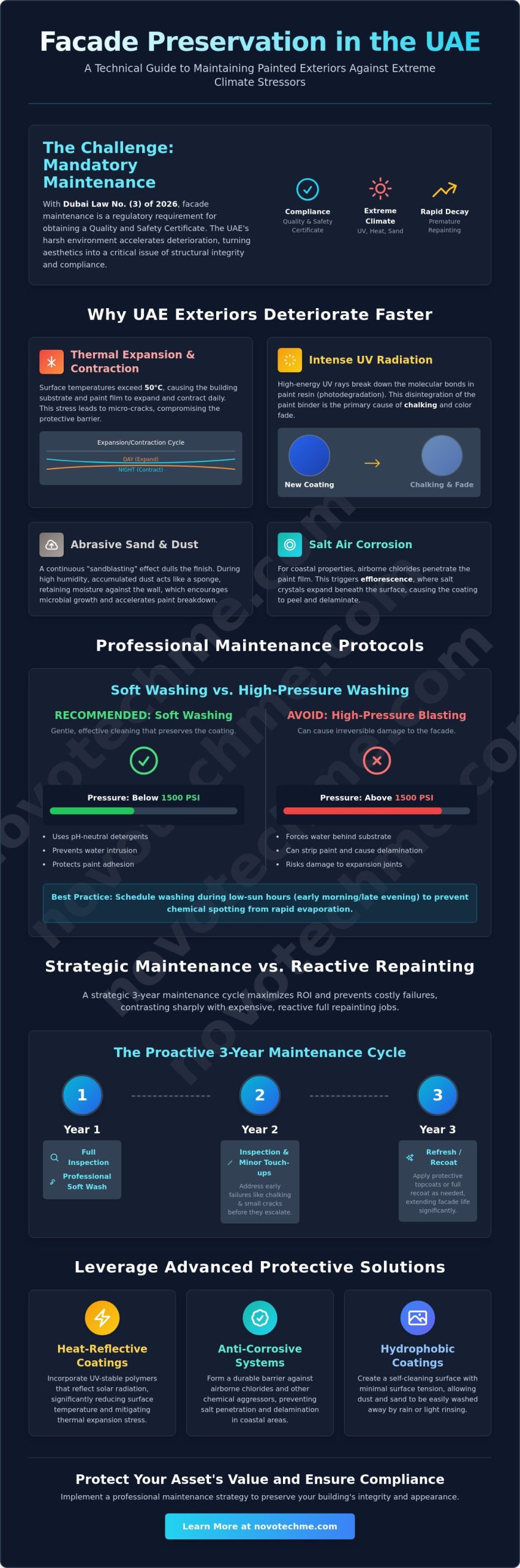
In the UAE, the environment acts as a relentless catalyst for architectural degradation. We observe surface temperatures frequently exceeding 50°C, which initiates a destructive cycle of thermal expansion and contraction. As the building substrate and the paint film expand during the day and contract at night, the resulting mechanical stress often exceeds the coating’s elongation capacity. This leads to the formation of micro-cracks that compromise the facade’s protective barrier. Understanding paint properties is essential to recognize why standard materials fail under such kinetic pressure.
Coastal properties in Dubai and Sharjah face the additional burden of salt air corrosion. Airborne chlorides settle on the wall surface and penetrate the paint film through capillary action. This process triggers efflorescence, where salt crystals expand beneath the surface, causing the coating to delaminate. Learning how to maintain painted exterior walls involves addressing these chemical and mechanical stresses before they manifest as visible structural failure.
The Impact of Intense UV Radiation
High-energy ultraviolet radiation is the most aggressive factor in pigment failure. UV rays penetrate the coating to break down the molecular bonds of the resin, which is the component responsible for adhesion and sheen. While standard acrylics may suffice in temperate climates, they lack the high-performance binders required for the Middle East’s high UV index. We recommend utilizing specialized anti-corrosive paint uae systems that incorporate UV-stable polymers to ensure long-term color retention. Photodegradation is the primary cause of chalking in the Middle East, a process where the paint binder disintegrates into a powdery residue.
Sand and Dust Accumulation
The prevailing winds in the UAE create a continuous “sandblasting” effect on building exteriors. Fine particulate matter doesn’t just dull the finish; it embeds itself into the microscopic texture of the paint. During the high-humidity months of late summer, this dust layer acts as a sponge, retaining moisture against the wall surface. This sustained dampness encourages the growth of microbial spores and accelerates the breakdown of the paint film. We are seeing a significant shift toward the adoption of hydrophobic, self-cleaning coatings as a regional standard. These advanced finishes minimize surface tension, allowing dust to be easily displaced by light rinsing, which is a critical component of how to maintain painted exterior walls in desert environments.
Professional Cleaning Protocols for Painted Facades
Implementing a structured cleaning regimen is a fundamental pillar of how to maintain painted exterior walls in high-dust environments like Dubai. Cleaning isn’t merely a cosmetic exercise; it’s a technical necessity to remove corrosive salts and abrasive particulates that accelerate binder breakdown. We recommend a top-down cleaning approach to manage runoff effectively, ensuring that contaminants from upper levels don’t streak across previously cleaned lower sections. This systematic method prevents the re-deposition of dirt and ensures a uniform finish across the entire building envelope.
Timing is as critical as technique. Building owners should schedule washing during cooler months or low-sun hours, such as early morning or late evening. In the UAE’s high-heat conditions, water and detergents evaporate rapidly on sun-drenched surfaces, leading to chemical spotting and unsightly streaks that can be difficult to remove without abrasive intervention. Selecting pH-neutral, biodegradable detergents is essential. These solutions effectively break down surface tension and lift grime without stripping the protective topcoats or compromising the chemical stability of the paint film. For complex commercial structures, integrating these steps into a broader building maintenance and renovation strategy ensures the facade remains a high-value asset.
Soft Washing vs. Pressure Washing
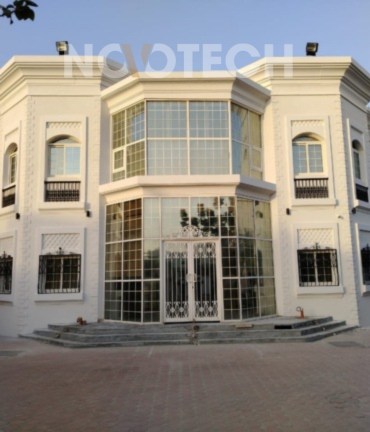
While pressure washing is a common industry term, it’s vital to distinguish between high-pressure blasting and professional soft washing. We advise keeping equipment below 1500 PSI for most painted surfaces. High-pressure streams can force water behind the substrate or into expansion joints, leading to internal moisture traps and eventual delamination. This risk is particularly high for villa exteriors featuring intricate gypsum work or decorative moldings, where excessive force can cause immediate physical damage. Utilizing a wide-angle fan tip (typically 25 to 40 degrees) allows for a gentle rinse that preserves the coating’s integrity while successfully dislodging desert silt.
Tackling Regional Stains: Mold and Mildew
Despite the arid climate, coastal humidity and shaded building elevations often facilitate biological growth. Mold and mildew thrive in the micro-climates created by HVAC runoff or architectural shadows. Addressing these biological stressors requires specific chemical ratios, typically a mild bleach-to-water solution or specialized fungicidal washes that don’t damage the paint binder. It’s imperative to rinse the surface thoroughly after treatment to prevent chemical residue buildup. Residual cleaners can become sticky over time, attracting more dust and defeating the purpose of the initial cleaning. Consistent monitoring ensures these organic threats don’t gain a foothold in the paint’s texture.
Technical Inspection: Identifying Early Signs of Failure
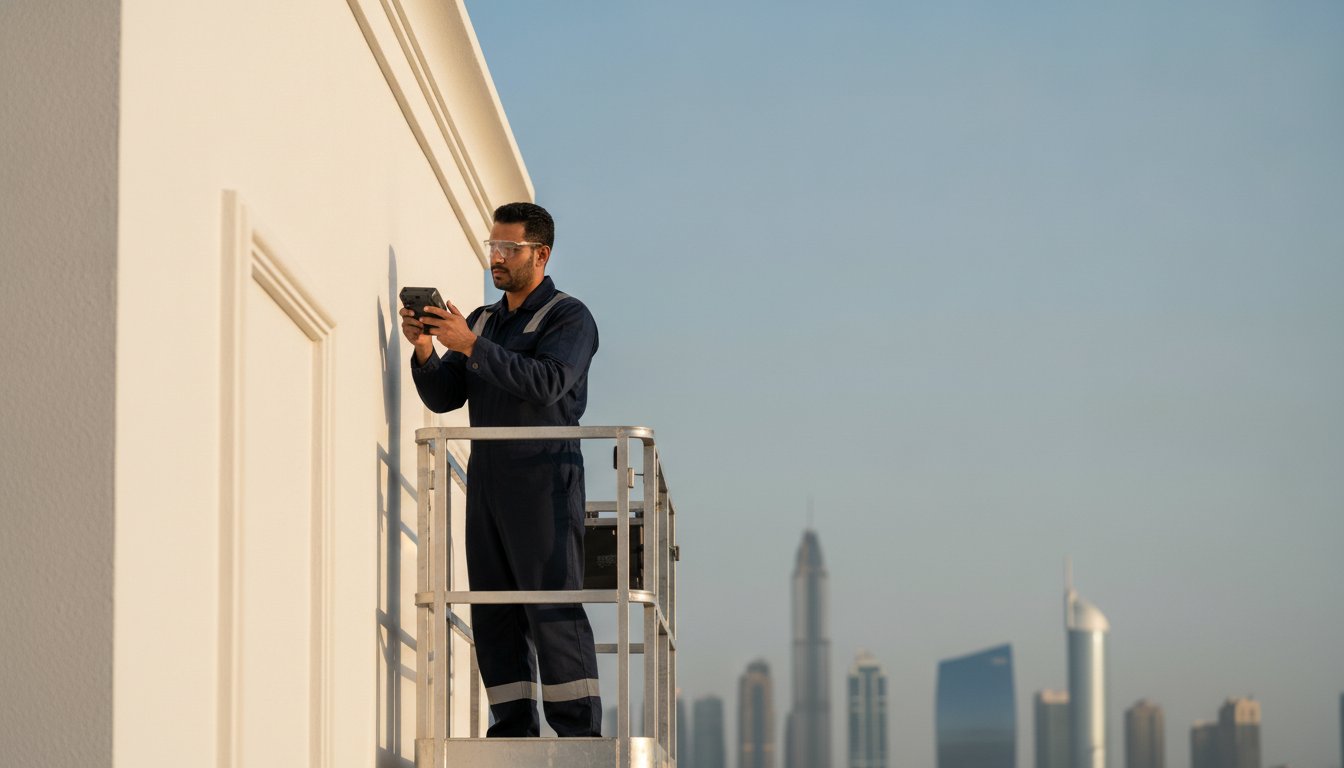
Effective building management requires moving beyond visual aesthetics to a technical assessment of the facade’s condition. We recommend conducting comprehensive bi-annual inspections specifically following the summer and winter transitions. These periods of peak thermal shift reveal the most significant stress on building envelopes. Establishing a rigorous inspection routine is the most cost-effective way to master how to maintain painted exterior walls over a decades-long lifecycle, as it allows for minor interventions before they escalate into structural restorations.
One of the most common indicators of binder degradation in the UAE is “chalking.” This is the presence of a fine, powdery residue on the surface of the paint film. While it might appear as mere dust, it actually signals that the UV radiation has successfully broken down the paint’s resin, leaving the pigment unsupported. Beyond chalking, inspectors must prioritize identifying hairline cracks. Even a fracture less than 1mm wide can facilitate moisture ingress, leading to concrete carbonation and eventual spalling. We also look for efflorescence, which manifests as white, salty deposits. These deposits are a critical warning sign that water is moving through the masonry, carrying soluble salts to the surface as it evaporates.
Detecting Coating Failures
To quantify adhesion levels, we utilize a standardized “tape test.” By applying a pressure-sensitive adhesive tape to a small cross-hatched area of the paint and removing it quickly, we can determine if the coating’s bond to the substrate remains intact. It’s vital to distinguish between aesthetic fading, which is often a surface-level pigment issue, and functional coating failure where the protective barrier is compromised. Chalking is a sacrificial failure mode of low-quality paints that lack the robust chemical binders found in professional-grade systems. If the tape shows significant coating removal, the facade’s integrity is officially compromised.
Structural Vulnerabilities in UAE Buildings
Inspections should extend beyond the flat wall surfaces to focus on high-risk transition points. In high-rise structures, expansion joints are frequently the first point of seal failure due to constant kinetic movement. We also monitor for corrosion around metal fixtures, railings, and balconies, as rust can bleed into the paint and cause permanent staining. If you detect recurring damp spots or complex moisture patterns, consulting with expert waterproofing companies in dubai is a necessary step for deep-tier leak detection. Ensuring these structural vulnerabilities are sealed prevents the “bubble” effect often seen in failed exterior coatings.
Strategic Maintenance vs. Reactive Repainting
Transitioning from reactive repairs to a proactive asset management model is a strategic necessity for UAE property owners. While many stakeholders wait for visible peeling—typically a 7-year cycle—this approach often results in total coating failure and significant substrate damage. Implementing a 3-year maintenance cycle offers a superior return on investment. By focusing on localized repairs and professional cleaning, you extend the functional life of the base coating and avoid the massive capital expenditure of a full-scale repaint. Understanding how to maintain painted exterior walls through consistent micro-interventions preserves the building’s aesthetic and structural value simultaneously.
High-traffic zones and South-facing elevations require specific attention. These areas experience the highest UV and mechanical stress, making localized touch-up protocols vital to prevent the spread of delamination. For premium properties, we frequently recommend the application of clear, high-performance topcoats. These sacrificial layers lock in pigments and provide an additional barrier against sand abrasion. As properties age, transitioning from basic decorative finishes to professional exterior building painting dubai standards ensures compliance with the 2026 building safety mandates and maintains the property’s market position.
Creating a Maintenance Schedule
Effective schedules balance quarterly cleaning cycles with annual technical audits. Commercial property managers should prioritize annual inspections following the peak summer heat to identify thermal stress fractures. We recommend keeping a detailed paint log that includes specific product codes, batch numbers, and application dates. This documentation is crucial for accurate color matching, as UV exposure causes even the highest quality pigments to shift over time. Budgeting for these preventive measures is significantly lower than the cost of structural renovations required after moisture penetrates a neglected facade.
When to Call a Professional Contractor
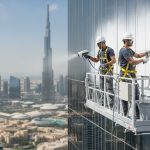
Surface-level maintenance has its limits. If you observe deep-seated cracking, widespread efflorescence, or if the substrate feels hollow when tapped, professional intervention is mandatory. High-rise structures present unique challenges, requiring specialized access equipment like cradles or industrial rope access teams that adhere to strict safety protocols. Evaluating contractor expertise in UAE-specific coating systems ensures that the materials used are chemically compatible with the existing substrate. For comprehensive facade management, we recommend engaging professional exterior building painting services to ensure technical precision and long-term asset protection.
Advanced Protective Solutions: The NovoTech Advantage
We represent a synthesis of engineering precision and decorative excellence. With over three decades of operational history in the UAE, we understand that the question of how to maintain painted exterior walls is ultimately a question of chemical engineering. We don’t just apply paint; we integrate protective painting systems designed to withstand the massive thermal loads and corrosive humidity of the Gulf. Our status as an authorized Terraco applicator allows us to provide facade solutions that go beyond the capabilities of standard retail coatings, ensuring your property remains a high-value asset in an increasingly regulated market.
Terraco Coating Systems for Extreme Environments
Terraco is the preferred choice for Middle Eastern architectural protection because its formulations are specifically engineered for high-alkalinity substrates and extreme UV exposure. These systems utilize advanced binders that maintain elasticity even under the 50°C+ conditions we analyzed in earlier sections. One significant benefit of these specialized textured coatings is their ability to mask minor substrate imperfections and hairline cracks, providing a seamless finish that resists the “sandblasting” effect of desert winds.
We utilize heat-reflective painting systems that significantly reduce the surface temperature of the facade. This reduction in thermal gain lowers the cooling load on the building’s HVAC systems, providing a strategic energy-saving benefit for commercial clients. Our anti-corrosive paint solutions are particularly critical for high-rise structures near the coast, where salt-laden air can penetrate standard coatings. By applying these industrial-grade systems, we ensure the underlying reinforcement bars are protected from carbonation and rust, maximizing the structural lifespan of the building.
End-to-End Building Care
Our methodology extends beyond the facade to encompass the entire building envelope. We provide an integrated service model that includes gypsum partition and ceiling work, ensuring that interior moisture barriers remain intact to protect the exterior finish. This holistic approach prevents internal leaks from compromising your villa painting or high-rise building painting projects. We don’t believe in surface-level fixes; we address the root causes of deterioration through comprehensive building maintenance and renovations.
Whether managing a large-scale high-rise project or a private villa renovation, our team acts as a collaborative ally to your facility management department. We take total project ownership, from the initial technical audit to the final application of protective coatings. This end-to-end responsibility is essential for property owners who prioritize precision and long-term reliability. Secure your property’s future with a professional building maintenance consultation to establish a technical protocol tailored to your asset’s specific environmental exposure and ensure you remain compliant with the latest UAE building safety standards.
Securing Your Architectural Investment
Mastering how to maintain painted exterior walls requires a transition from reactive repairs to a data-driven maintenance lifecycle. By implementing bi-annual technical inspections and utilizing specialized soft-washing protocols, property owners can effectively mitigate the chemical stresses of UV photodegradation and salt air corrosion. These proactive measures ensure your building remains compliant with the latest UAE safety regulations while significantly extending the interval between major repainting projects.
As an authorized Terraco applicator with over 30 years of UAE construction experience, we provide the technical depth required for high-rise and luxury villa maintenance. Our integrated service model ensures that every aspect of your facade’s integrity is managed with professional precision. We invite you to Request a Professional Facade Maintenance Quote from NovoTech to secure your asset’s long-term value. Protecting your building’s exterior is an investment in both durability and prestige. We’re ready to help you maintain excellence.
Frequently Asked Questions
How often should I wash my building’s exterior walls in Dubai?
You should wash your building’s exterior walls at least twice a year, ideally following the major seasonal transitions in April and October. This schedule ensures that abrasive desert sand and corrosive coastal salts don’t bond permanently to the paint film. In high-exposure areas or near industrial zones, quarterly cleaning may be necessary to prevent particulate buildup from compromising the coating’s integrity.
Can I use a pressure washer to clean my villa’s painted walls?
High-pressure washing is generally discouraged because it can force moisture behind the paint film or damage delicate architectural details. We recommend professional soft washing, which utilizes pressures below 1500 PSI, to safely displace grime. This method is particularly important for villas with decorative gypsum work, where excessive force can lead to immediate substrate erosion and costly repairs.
Why is my exterior paint fading so quickly in the UAE?
Rapid fading is the result of intense UV radiation breaking down the molecular binders that hold paint pigments in place. In the UAE’s high-UV environment, standard acrylics undergo photodegradation, which leads to a dull appearance and a powdery surface residue known as chalking. Utilizing high-performance, UV-stable coatings is the only technical way to ensure long-term color retention against extreme solar exposure.
What is the best way to remove sand and dust from a painted facade?
The most effective method involves a low-pressure rinse combined with pH-neutral, biodegradable detergents that lift particulates without stripping the topcoat. You should always avoid dry scrubbing or using abrasive brushes, as sand acts as an abrasive that can scratch the protective finish. A systematic top-down rinsing approach ensures that all silt is completely removed from the paint’s microscopic texture.
How do I know if my building needs a touch-up or a full repaint?
A full repaint is necessary if you observe widespread delamination, deep cracking, or if a tape test indicates a total loss of adhesion across the facade. If the degradation is limited to high-exposure sections and the rest of the film remains stable, localized professional touch-ups are a viable maintenance strategy. We recommend a technical audit to determine if the substrate’s protective barrier is still functional.
What are the benefits of using an authorized Terraco applicator?
Authorized Terraco applicators provide access to specialized coating systems that are chemically engineered for the Middle East’s high-alkalinity substrates. These professionals are trained in precise application protocols that ensure maximum product lifespan and structural durability. It’s a level of technical expertise that guarantees the coating performs as intended under extreme environmental stress.
Does exterior paint help with building insulation in hot climates?
Advanced heat-reflective painting systems act as a thermal barrier by reflecting a significant portion of infrared radiation away from the building. These coatings reduce the surface temperature of the walls, which minimizes heat transfer into the interior and lowers HVAC energy consumption. It’s an essential strategy for how to maintain painted exterior walls while simultaneously improving the building’s overall energy efficiency.
How do I prevent mold growth on shaded exterior walls?
Preventing mold requires managing moisture sources, such as HVAC condensation runoff, and applying fungicidal washes to shaded elevations. You should ensure that these areas are cleaned regularly with mild biocidal solutions to kill spores before they penetrate the paint film. Maintaining a non-porous, high-quality finish is the best defense against organic growth in high-humidity coastal regions.