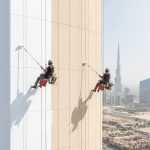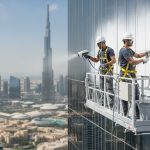
In the UAE, exterior paint isn’t a mere aesthetic choice; it’s a critical engineering component that determines whether your facade survives the 50°C summer or requires a total repaint within 12 months. With the enforcement of Law No. (3) of 2026, the stakes for building quality and safety have never been higher for developers and engineers in Dubai. We understand the frustration of watching premium finishes blister and fade under intense UV radiation and abrasive sandstorms. Selecting the right Terraco exterior paint for UAE climate conditions is now a matter of regulatory compliance and long-term asset protection.
This guide provides the vetted engineering specifications required to protect your structures from the region’s harshest elements. You’ll learn how to utilize advanced heat-reflective technology to reduce cooling loads and achieve Al Sa’fat 2.0 green building ratings. We’ll explore the technical systems that maintain aesthetic integrity for over a decade, ensuring your high-rise or villa remains a benchmark of quality in the 2026 market.
Key Takeaways
- Identify the technical causes of facade failure, including thermal cycling at 70°C and the chemical “chalking” effect driven by intense UV exposure.
- Master the selection criteria for Solar Reflectance Index (SRI) and crack-bridging elasticity to ensure compliance with Dubai’s latest building safety regulations.
- Evaluate specialized systems like Flexishield and Terracoat to determine the most durable Terraco exterior paint for UAE climate projects.
- Avoid common application pitfalls by implementing rigorous surface preparation protocols, including high-pressure washing and specialized salt decontamination.
- Shift from reactive maintenance to a strategic lifecycle approach that extends facade integrity for over a decade while reducing annual cooling loads.
The Physics of Failure: Why the UAE Climate Destroys Standard Paint
In the Middle East, a building’s facade is its most vulnerable layer. Standard decorative paints, designed for temperate European or American climates, frequently fail when subjected to the extreme environmental stressors of the Arabian Peninsula. To understand why a specialized Terraco exterior paint for UAE climate applications is essential, we must examine the physical and chemical forces that drive material degradation in this region. Standard finishes often lose their integrity within 24 months, leaving assets exposed to costly structural repairs.
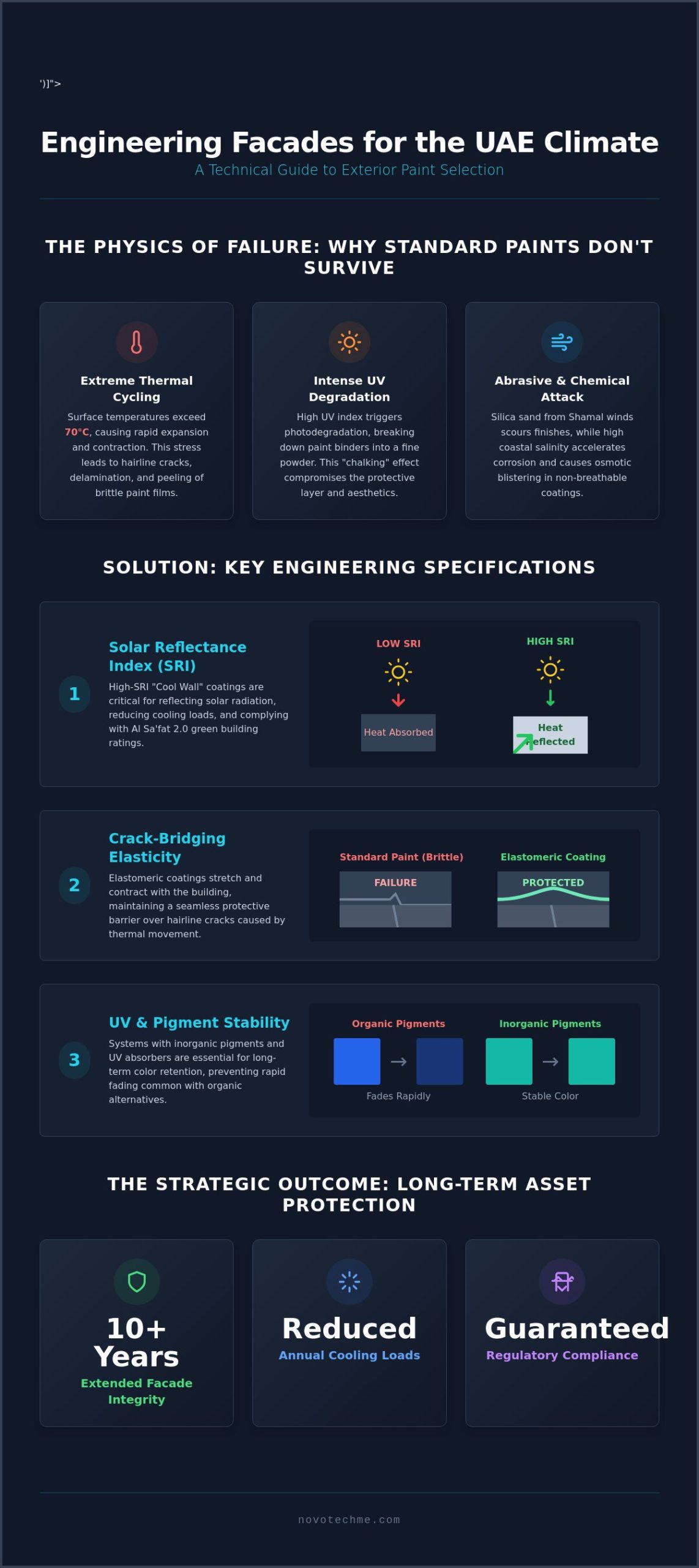
Surface temperatures on dark-colored facades in Dubai can exceed 70°C during peak summer months. This extreme heat doesn’t just affect the paint film; it penetrates the substrate. When temperatures drop at night, the resulting thermal cycling causes rapid expansion and contraction of the underlying masonry. Thermal cycling is the primary driver of hairline cracks in facade paint. Without a high degree of elasticity, the coating becomes brittle and loses its bond with the substrate, leading to widespread delamination and peeling.
Chemical failure is equally aggressive. The high UV index in the UAE triggers a process called photodegradation, which breaks down the long-chain polymer binders that hold paint together. You can learn more about how UV radiation degrades paint and other polymers through this relentless chemical breakdown. This results in “chalking,” where the binder turns into a fine powder, leaving the facade unprotected and aesthetically compromised. Additionally, Shamal winds carry fine silica sand that acts as a mechanical abrasive, scouring low-grade finishes from the wall surface. In coastal districts like Dubai Marina and Palm Jumeirah, high salinity levels accelerate the corrosion of exposed metallic elements and can lead to osmotic blistering in non-breathable coatings.
Thermal Expansion and Substrate Stress
The coefficient of thermal expansion for typical UAE cementitious renders and concrete ensures that building envelopes are in a constant state of movement. When these materials expand under the 50°C ambient heat, they exert massive tensile stress on the paint film. Terraco systems are engineered with specific elongation properties that allow the coating to stretch and contract in tandem with the building. This elasticity ensures that the protective barrier remains intact even during the most severe temperature fluctuations, preventing the ingress of moisture and harmful salts.
The Impact of High UV Index on Pigment Stability
Color retention in the UAE is a matter of chemistry rather than just aesthetics. Engineers selecting Terraco exterior paint for UAE climate projects prioritize systems that utilize inorganic pigments. These offer superior stability compared to organic alternatives that fade rapidly under UV exposure. Modern Terraco acrylic resins incorporate advanced UV absorbers to shield the coating from solar damage. The adoption of “cool” colors with high Solar Reflectance Index (SRI) values is now a technical requirement for durability. These pigments reflect infrared radiation and keep surface temperatures significantly lower, protecting both the paint and the building’s structural integrity.
Technical Selection Criteria for Climate-Proof Facades
Engineering a resilient facade in the Middle East requires a shift from decorative thinking to technical specification. While aesthetic appeal is a baseline requirement, the longevity of a project depends on measurable performance indicators. Selecting the correct Terraco exterior paint for UAE climate conditions involves balancing solar reflectance, mechanical elasticity, and environmental resistance. These metrics ensure that the building envelope remains a functional asset rather than a recurring maintenance liability.
Evaluating Solar Reflectance and Energy Efficiency
Solar Reflectance Index (SRI) is the most critical metric for energy-efficient facades. High-SRI coatings are essential for compliance with Dubai’s Al Sa’fat 2.0 green building rating system, which mandates a maximum U-value of 0.57 W/m²K for external walls. By utilizing “Cool Wall” technology, these coatings mitigate the urban heat island effect, reflecting solar radiation before it can be absorbed into the masonry. Matte finishes generally provide superior heat dissipation compared to high-gloss alternatives in high-UV environments, as they diffuse light more effectively across the surface area.
Elasticity and Crack-Bridging Specifications
Elastomeric coatings represent the premier category for new-build projects where structural settling is inevitable. A 1.5mm crack-bridging capability is the recognized industry gold standard for luxury UAE villas and high-rise structures. This elasticity allows the paint film to span dynamic cracks that emerge as the building moves. The effectiveness of this protection is directly tied to the Dry Film Thickness (DFT); a specification that’s too thin will fail to provide the necessary mechanical strength, while an overly thick application may trap moisture. If you’re managing a large-scale project, consulting with Terraco application specialists ensures that DFT targets are met with precision.
Vapour permeability is another vital technical requirement. It allows the substrate to “breathe,” ensuring that moisture trapped within the concrete can escape as vapour without causing hydrostatic pressure that leads to blisters. Finally, Dirt Pick-up Resistance (DPUR) is essential for maintaining aesthetic integrity during frequent regional dust storms. Advanced Terraco systems use cross-linking technology to create a hard outer surface that prevents sand and pollutants from becoming embedded in the coating. This combination of chemical and mechanical resistance is what defines a truly climate-proof finish.
Terraco Systems: Engineering Solutions for the Middle East
Transitioning from technical selection criteria to physical application requires a portfolio of high-performance systems designed specifically for regional stressors. Terraco offers a diverse range of coatings that act as specialized engineering solutions rather than simple decorative finishes. For projects requiring the highest level of protection, selecting the correct Terraco exterior paint for UAE climate conditions involves matching the specific system to the building’s structural requirements and environmental exposure. This ensures the facade functions as a durable shield against the elements.
Terraco Flexishield vs. Standard Acrylics
Standard acrylic paints often lack the resin density required to withstand the UAE’s high UV index and extreme thermal movement. In contrast, Flexishield is a high-build elastomeric coating engineered with a superior polymer structure. This density provides a robust barrier against carbonation and chloride ingress while maintaining the flexibility to bridge dynamic cracks. For exterior building painting in Dubai, Flexishield has become the preferred choice for facility managers looking to extend their maintenance lifecycle. While standard acrylics typically require a full repaint every 2 years due to chalking and fading, a professionally applied Flexishield system can maintain its protective and aesthetic properties for up to 10 years.
Beyond liquid-applied coatings, Terraco Exterior Insulation Finishing Systems (EIFS) represent a comprehensive approach to building envelope performance. These systems combine high-performance finishes with thermal insulation layers, which can reduce annual cooling energy demand by up to 31% in a typical UAE villa. For high-traffic commercial areas or podium levels, Terracoat textured coatings provide enhanced mechanical durability. These aggregate-based finishes offer superior resistance to impact and abrasion, making them ideal for areas where facades are subject to frequent physical wear.
Anti-Corrosive Protection for Coastal Assets
Coastal developments face the dual threat of UV degradation and high-salinity air. Structural steel and balcony railings in these zones require specialized protection to prevent rapid oxidation. The hierarchy of anti-corrosive paint UAE specifications relies heavily on high-performance epoxy primers that create an impermeable seal against salt-air moisture. Coastal assets require C5-M rated protective systems to prevent rust and structural compromise in marine environments. Using an authorized Terraco applicator is the only way to ensure these complex systems are applied to manufacturer standards, which is a mandatory requirement for securing valid 10-year warranties.
The Professional Application Lifecycle: Avoiding Common Failures
Technical specifications only provide value when the application process mirrors the rigor of the engineering phase. In the UAE, the gap between a high-performance coating and a failed facade is often found in the preparation stage. Even the most advanced Terraco exterior paint for UAE climate conditions can’t compensate for a substrate contaminated by airborne salts or residual dust. Achieving a 10-year maintenance cycle requires a methodical lifecycle approach that begins long before the first coat is applied. We treat every facade as a technical project where surface integrity is the primary objective.
Substrate Preparation and Repair
Surface preparation must involve more than a simple rinse. High-pressure washing is essential to remove deep-seated salt deposits, particularly in coastal developments. We utilize specific decontamination protocols to ensure the substrate is free from efflorescence, which otherwise causes osmotic blistering. Monitoring the pH level of the render is a critical quality control step; coatings applied to highly alkaline, fresh masonry will suffer from binder saponification, leading to premature failure. Furthermore, any structural cracks must be addressed with specialized gypsum repair or structural renovation to ensure a stable, pH-neutral surface for optimal Terraco adhesion.
Primer selection remains the most frequent point of failure in regional projects. A primer must act as a bridge, consolidating chalky surfaces and sealing the substrate against alkali attack. Using a generic primer with a high-performance Terraco topcoat creates a weak link in the system. It’s vital that the primer is chemically compatible with both the substrate and the elastomeric finish to maintain long-term bond strength. Without this chemical synergy, the risk of delamination during the peak heat of August increases significantly.
Environmental Constraints for UAE Painters
Environmental monitoring is non-negotiable for professional teams. The “Summer Gap” refers to the period between 11:00 AM and 4:00 PM in July and August when surface temperatures can cause the paint to “flash dry.” This prevents the film from coalescing properly, resulting in a brittle finish that lacks the necessary elasticity. Humidity also plays a critical role. In areas like Dubai Marina, the dew point must be monitored to prevent moisture from being trapped under the paint film during the evening cooling cycle. Professional villa painting services in Sharjah must account for morning dew cycles to ensure the substrate is sufficiently dry before application begins.
Quality control during the process involves real-time monitoring of Wet Film Thickness (WFT). This ensures the application meets the exact dry film thickness (DFT) required for the system’s crack-bridging and UV-resistance guarantees. If you require a facade that meets these stringent engineering standards, contact our Terraco application specialists for a technical consultation. We ensure that every micron of paint serves its intended protective purpose.
Maximising ROI: Maintenance and Professional Partnership
Investing in a high-performance facade is a strategic capital expenditure, not a recurring operational burden. While the initial procurement costs for premium systems may be higher than decorative alternatives, the long-term return on investment (ROI) is significant. In the UAE, the economic fallacy of “cheap paint” is exposed within 24 months as finishes begin to chalk and delaminate. By selecting the correct Terraco exterior paint for UAE climate conditions, asset owners can shift from a disruptive 2-year repainting cycle to a stable 10-year maintenance lifecycle. This transition reduces total ownership costs by over 50% when factoring in access equipment, labor, and material waste over a decade.
Long-Term Facade Management
Proactive maintenance is the cornerstone of facade longevity. Even the most resilient coatings require a structured care regime to maintain their technical properties. We recommend a property maintenance checklist for exterior assets that includes annual inspections and scheduled cleaning. Regular soft-washing is essential to remove abrasive sand and salt deposits that can dull pigments and degrade the Solar Reflectance Index (SRI) of the coating. Keeping the surface clean ensures the “Cool Wall” technology continues to mitigate heat absorption, directly impacting the building’s energy efficiency.
- Annual Visual Inspections: Identifying hairline cracks or mechanical damage before they lead to substrate exposure.
- Professional Soft-Washing: Utilizing low-pressure systems to decontaminate surfaces without damaging the paint film.
- Strategic Spot-Repairs: Executing localized touch-ups on high-wear areas to prevent the need for a full facade refresh.
- Drainage Audits: Ensuring AC condensate and rainwater runoff don’t cause localized staining or hydrostatic pressure.
The NovoTech Advantage in UAE Renovations
Technical transparency and end-to-end responsibility define our partnership model. With over 30 years of regional experience, we understand that a successful renovation requires more than just high-quality materials; it demands “Integrated Excellence.” Our team acts as an extension of your facility management group, providing clarity in material procurement and strict adherence to Terraco specifications. We don’t just apply paint; we engineer a protective envelope that secures the structural integrity of your high-rise or villa for the long term.
Our approach ensures that every project phase, from initial salt decontamination to the final quality control audit, is documented and verified. This level of precision is why leading developers trust us to manage their most valuable assets. If you’re ready to upgrade your building’s performance and aesthetic, consult with NovoTech for a technical facade evaluation. We’ll provide a detailed assessment of your current substrate condition and a roadmap for implementing a Terraco exterior paint for UAE climate solution that delivers lasting value.
Engineering Future-Proof Facades for the UAE
Facade integrity in the Middle East is a technical challenge that demands more than standard decorative finishes. It requires a deep understanding of thermal stress, chemical stability, and regulatory compliance. By prioritizing high-SRI coatings and elastomeric properties, asset owners align with the stringent requirements of Law No. (3) of 2026 while securing their building’s long-term value. Selecting the right Terraco exterior paint for UAE climate conditions is the first step toward a decade of maintenance-free protection and reduced cooling loads.
As an authorized Terraco applicator with over 30 years of UAE experience, NovoTech specializes in high-rise and luxury villa projects that demand integrated excellence. We bridge the gap between complex technical specifications and flawless execution, ensuring your investment is protected against the region’s harshest elements. Request a Technical Facade Assessment from NovoTech today to evaluate your substrate’s health and performance. Your building’s facade is its most important asset, and we’re here to help you protect it.
Frequently Asked Questions
What is the best Terraco paint for the Dubai heat?
Terraco Flexishield is the premier engineering solution for the extreme Dubai heat. It’s a high-build elastomeric coating designed to withstand surface temperatures that frequently exceed 70°C on dark facades. Unlike standard acrylics, its advanced resin structure prevents the chemical breakdown known as chalking, ensuring the film remains intact throughout the most intense summer months.
How often should a building be repainted in the UAE climate?
Standard decorative paints in the region often require a full refresh every 2 years due to rapid UV degradation. However, using a high-performance Terraco exterior paint for UAE climate conditions can extend this lifecycle to 10 years or more. Longevity is directly tied to the use of heat-reflective pigments and the precision of the initial surface preparation.
Can I use standard interior paint for a villa exterior in the UAE?
No, interior paint is not formulated with the UV absorbers or elastic binders required to survive the Arabian Peninsula’s solar load. Applying interior products to a villa exterior will result in rapid pigment fading and film failure within months. Exterior systems must have specific Solar Reflectance Index (SRI) values to manage the intense thermal stress of the region.
What is the Solar Reflectance Index (SRI) and why is it important in Dubai?
SRI is a technical metric that combines solar reflectance and thermal emittance to determine how cool a surface remains in the sun. In Dubai, high-SRI coatings are mandatory under Al Sa’fat 2.0 regulations to mitigate the urban heat island effect. These coatings reflect infrared radiation, significantly reducing the building’s internal cooling load and improving overall energy efficiency.
How does coastal humidity affect Terraco paint durability?
High humidity in coastal districts like Dubai Marina increases the risk of osmotic blistering and salt-air corrosion. Specialized Terraco systems for these environments feature high vapour permeability, which allows the substrate to breathe. This prevents moisture from becoming trapped behind the paint film, which is the primary cause of delamination in high-salinity zones.
Why is an authorized Terraco applicator necessary for warranty?
Authorized applicators are trained to meet the manufacturer’s strict technical requirements for Dry Film Thickness (DFT) and substrate decontamination. Most Terraco 10-year warranties are only valid when the system is applied by a vetted specialist. This ensures that the coating performs as engineered and provides the full protective benefits promised in the technical data sheets.
Are there specific 2026 colour trends that help with heat resistance?
The 2026 trend focuses on “Climate-Smart Colors” like warm greige and muted olive green. These shades utilize inorganic pigments that offer superior stability under intense UV exposure compared to organic alternatives. These lighter, earth-toned palettes provide higher SRI values, which keep surface temperatures lower and extend the physical life of the coating system.
What is the difference between elastomeric and standard exterior paint?
Elastomeric coatings are significantly thicker and more flexible than standard paints. They’re designed to bridge dynamic cracks up to 1.5mm, which is essential for managing the structural settling and thermal expansion common in UAE buildings. Standard exterior paint is a thinner film that lacks the elongation properties needed to span cracks, leading to visible facade failure as the masonry moves.