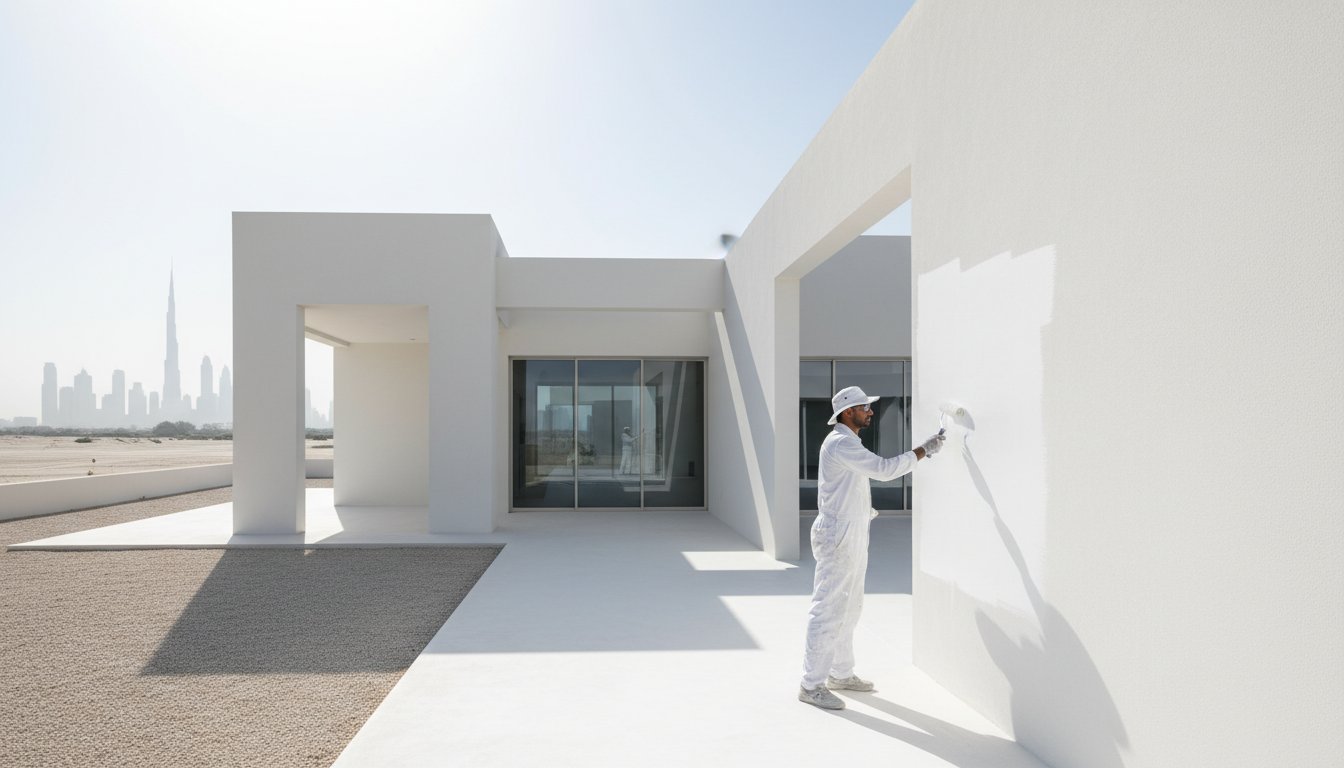
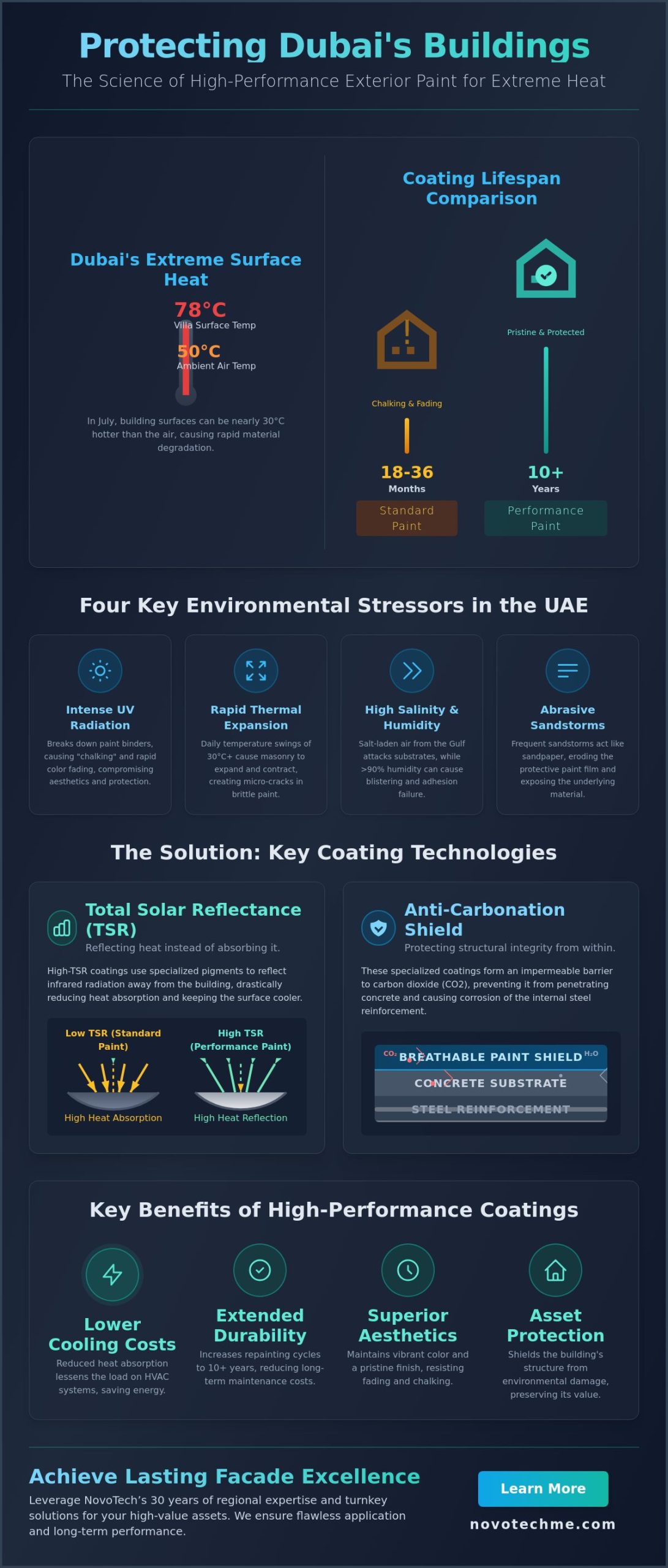
In the peak of July, the exterior surface of a typical villa in Dubai can reach a staggering 78°C, which is nearly 30 degrees hotter than the ambient air temperature. You recognize that maintaining a pristine facade in the UAE is a constant battle against extreme UV degradation and rapid thermal expansion. Identifying the best exterior paint for Dubai heat is a technical necessity to prevent standard coatings from failing within 36 months. Most conventional options lead to unsightly chalking and increased cooling costs as your walls absorb excessive solar energy.
This guide provides the technical specifications and high-performance coating systems required to protect your property from extreme radiation and 50°C+ temperatures. We’ll explore how advanced cross-linking polymers and high-reflectance pigments can extend your repainting cycles to 10 years. These systems reduce surface temperatures by up to 15°C. We will break down the essential application protocols and chemical compositions needed to ensure your asset remains resilient against sandstorms and the region’s intense climate.
Key Takeaways
- Understand how unique environmental stressors like UV radiation and high salinity necessitate high-performance coatings to prevent structural degradation in the Middle East.
- Identify the best exterior paint for Dubai heat by evaluating Total Solar Reflectance (TSR) and anti-carbonation properties that protect internal steel reinforcement.
- Gain technical insights into leading coating systems from Terraco, Jotun, and Hempel, specifically formulated to withstand the UAE’s extreme 50°C+ temperature fluctuations.
- Learn critical application protocols, including strategic “application windows” and advanced surface preparation, required to ensure long-term coating adhesion in desert climates.
- Discover how NovoTech’s turnkey solutions and 30 years of regional expertise deliver integrated excellence for complex facade projects, from high-rise assets to luxury renovations.
Why Dubai’s Climate Demands High-Performance Exterior Coatings
Dubai’s architectural landscape faces some of the most aggressive environmental conditions on the planet. Selecting the best exterior paint for Dubai heat isn’t merely an aesthetic choice; it’s a critical engineering decision for asset protection. During peak summer months, ambient temperatures frequently reach 50°C, while surface temperatures on dark-colored facades can soar even higher. This intense thermal load, combined with high salinity from the Arabian Gulf and abrasive sand erosion, necessitates a coating system that functions as a technical shield rather than a simple decorative layer.
Standard masonry paints often fail within 18 months in the UAE because they lack the chemical resilience to withstand constant UV-C exposure and humidity levels that often exceed 90%. When paint loses its integrity, it exposes the underlying concrete to carbonation and chloride attack. High-performance coatings are designed to mitigate these risks by providing a seamless, protective barrier that maintains its structural properties under extreme solar stress.
The Impact of UV Radiation on Pigment Stability
UV radiation acts as a primary catalyst for chemical degradation in low-quality coatings. High-intensity rays penetrate the paint film, breaking down the molecular binders that hold pigments in place. This process leads to “chalking” and rapid color fading, which compromises the building’s professional appearance. To combat this, modern architectural specifications are adopting technology originally developed for reflective roof coatings to redirect solar energy away from the building envelope.
Utilizing these infrared-reflective pigments can reduce the surface temperature of a vertical wall by as much as 10°C. This temperature reduction directly lowers the cooling demand on HVAC systems, providing a measurable impact on operational costs. It’s also vital to select breathable coatings in coastal zones. Non-breathable films trap moisture within the substrate during humid nights; as the sun rises, this moisture turns to vapor and creates pressure, leading to unsightly blistering and adhesion failure.
Thermal Expansion and Masonry Health
Concrete and masonry are dynamic materials that respond to the extreme diurnal temperature swings found in the UAE. In a single 24-hour cycle, a building facade may experience a temperature shift of 30°C or more. This constant expansion and contraction creates significant internal stress within the substrate, often resulting in micro-cracks that are invisible to the naked eye.
- Daily Cycling: Rapid heating in the morning followed by cooling at night causes standard paint films to become brittle.
- Substrate Protection: Elastic coatings bridge existing hairline cracks, preventing the ingress of salt-laden air.
- Longevity: Specifying the best exterior paint for Dubai heat can extend the maintenance lifecycle of a commercial property by 5 to 7 years.
Thermal elasticity is the ability of a coating to stretch without losing adhesion. Without this specific performance characteristic, the coating will shear away from the masonry surface as the building moves. High-build elastomeric coatings provide the necessary flexibility to accommodate these shifts, ensuring the building envelope remains watertight and structurally sound despite the punishing climate.
Key Performance Indicators: What Makes a Paint Heat-Resistant?
Selecting the best exterior paint for Dubai heat requires a shift from aesthetic preference to rigorous technical evaluation. Performance is measured through specific engineering benchmarks that ensure the building envelope remains resilient against 50°C peak temperatures. High-performance coatings serve as a thermal shield, protecting the structural integrity of the asset while maintaining visual excellence.
To achieve long-term durability in the Middle East, four critical indicators define a superior coating:
- Total Solar Reflectance (TSR): This metric quantifies the percentage of solar energy reflected away from the surface. Higher TSR values indicate that less heat is absorbed into the substrate.
- Anti-Carbonation Properties: These coatings act as a barrier against carbon dioxide. This prevents the carbonation of concrete, which otherwise leads to the corrosion of internal steel reinforcement, a common issue in Dubai’s coastal environment.
- Crack-bridging Ability: Measured in millimeters, this indicates the paint’s capacity to stretch over hairline cracks. A rating of 1.5mm to 2.0mm is essential to accommodate the thermal expansion and contraction cycles of concrete during extreme temperature shifts.
- Dust and Sand Resistance: Premium finishes utilize low-tack technology. This prevents sand particles from embedding into the paint film, which avoids “sand-burn” and preserves the original color clarity.
TSR and Energy Efficiency in 2026
In 2026, the integration of infrared-reflective pigments has become a standard for sustainable developments. High-TSR paints are proven to reduce indoor surface temperatures by 5-7°C compared to conventional coatings. This thermal reduction directly impacts the building’s cooling load. Utilizing a reflective surface significantly lowers the temperature of the structure, which can decrease HVAC energy consumption by approximately 15% to 20%. Dubai Municipality’s Al Sa’fat regulations now emphasize these high-reflectance materials to meet stringent green building standards.
Elastomeric vs. Standard Acrylic Coatings
While standard acrylics are suitable for milder climates, elastomeric coatings are the technical gold standard for Dubai villas. These coatings are applied at a much higher Dry Film Thickness (DFT) than standard paints, creating a robust, rubber-like membrane. This thickness is vital for protecting against the abrasive force of wind-borne sand.
A critical factor in these advanced coatings is the SD value, which measures water vapor permeability. The coating must be “breathable,” allowing moisture trapped within the concrete to escape as vapor while simultaneously blocking liquid water from entering. This balance prevents the blistering and peeling often seen in lower-quality applications. For property owners seeking integrated excellence in facility maintenance
Comparing the Best Exterior Paint Systems for UAE Structures
Selecting the best exterior paint for Dubai heat requires a technical understanding of chemical stability under 50°C temperatures. In 2026, the UAE market is dominated by three major players: Terraco, Jotun, and Hempel. Each brand offers distinct advantages for the region’s unique climate. While standard coatings often fail within 24 months due to thermal expansion, these premium systems utilize advanced polymers to maintain structural integrity. Scientists have recently developed a new kind of paint that addresses these thermal challenges by reflecting significant portions of infrared light, a technology now influencing high-end commercial formulations across the Gulf.
Terraco remains a dominant force for large-scale infrastructure. Their Middle East specific formulations are engineered for high-rise facades where solar gain is most intense. For properties in high-salinity areas like Dubai Marina or JBR, Hempel’s specialized anti-corrosive primers provide a critical barrier against chloride ion penetration. Jotun’s Jotashield remains the industry benchmark for color retention. It utilizes pigments that don’t degrade under the relentless UV index of the Arabian Peninsula, ensuring that deep hues remain vibrant for years.
Terraco Application: The Professional Choice
Novotech recommends Terraco for expansive commercial developments because of its superior adhesion properties. The Terracoat textured coatings are particularly effective. They mask minor substrate imperfections while providing a breathable, weather-resistant shield. As an authorized applicator, Novotech ensures that every layer is applied according to strict manufacturer protocols. This is vital for securing long-term warranties. This systematic approach reduces maintenance cycles by 30% compared to generic alternatives. It’s a strategic investment for asset managers who value operational longevity.
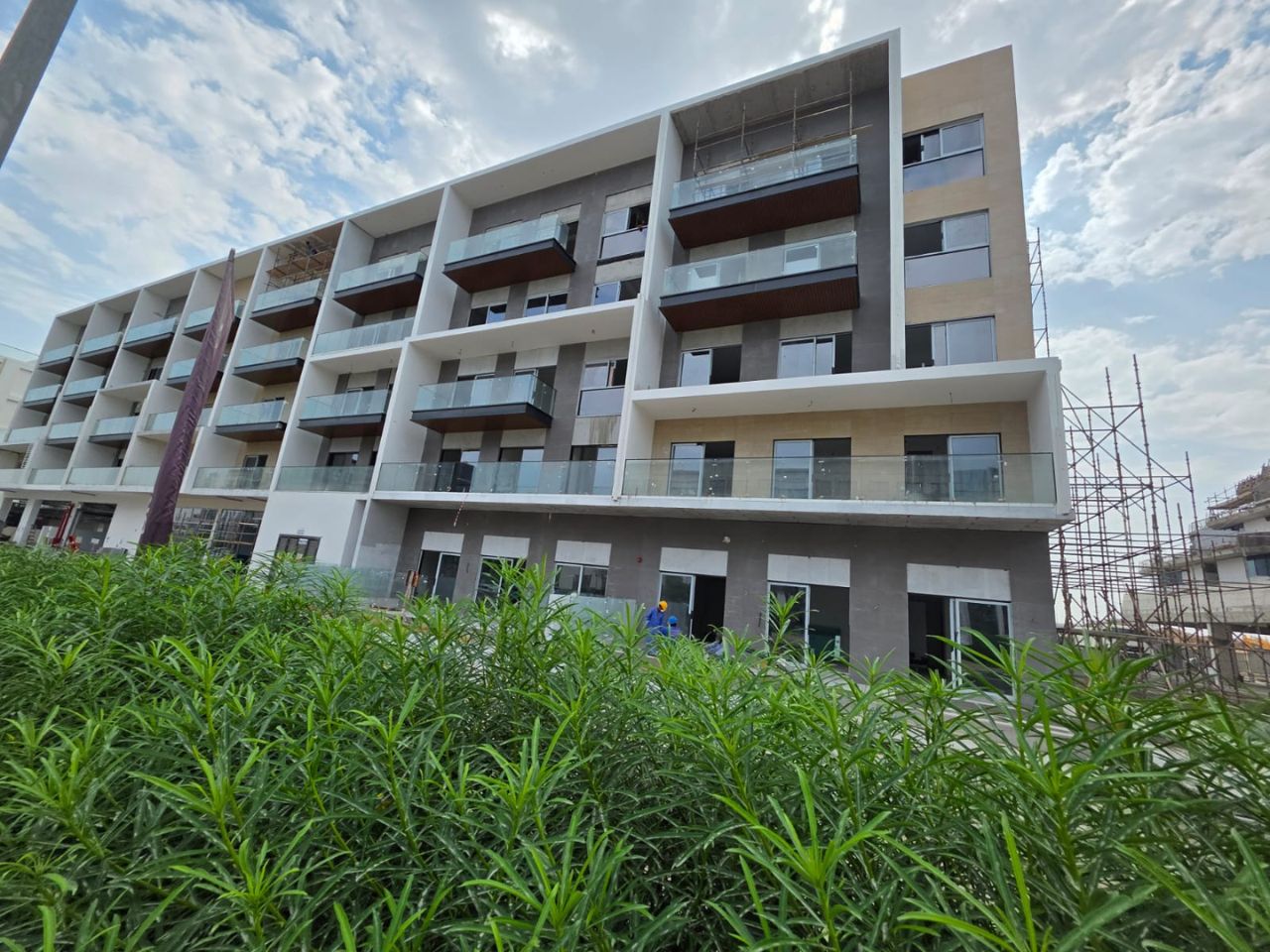
High-Rise vs. Villa Painting Requirements
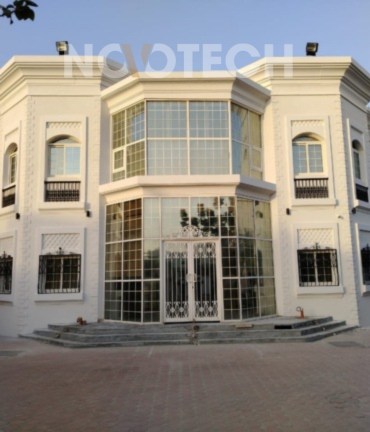
Skyscrapers in Downtown Dubai face different stressors than residential units. High-rise facades must withstand significant wind loads and accumulated atmospheric pollution at altitude. These structures require high-performance elastomeric coatings that move with the building. Conversely, luxury villa owners often prioritize specific aesthetic finishes. Achieving a “brand new” look involves using silk or matt finishes that offer high dirt-pickup resistance. For residents looking for specialized expertise in the Northern Emirates, our Premium Villa Painting Services in Sharjah provide tailored solutions that balance elegance with extreme heat protection.
- Commercial High-Rises: Focus on elasticity and atmospheric resistance.
- Coastal Properties: Focus on anti-corrosive primers and salt-spray protection.
- Luxury Villas: Focus on UV-stable color retention and premium textures.
Professional Application: Ensuring Longevity in 45°C+ Temperatures
Executing a facade project in the UAE requires more than just high-grade materials; it demands a rigorous technical methodology. Even the best exterior paint for Dubai heat will fail prematurely if the application process ignores the volatile climatic variables of the region. We prioritize a systematic approach that accounts for thermal expansion and high UV indices to ensure a finish that lasts a decade rather than a single season. It’s not just about aesthetics; it’s about engineering a protective shield for the structure.
Precision begins with the application window. Our teams avoid work during peak solar radiation periods, typically between 11:00 AM and 4:00 PM during summer months. We monitor Wet-Film Thickness (WFT) using calibrated gauges to guarantee the coating meets the manufacturer’s specified microns. This technical oversight prevents the common issue of pinholing, where rapid solvent evaporation creates microscopic voids in the paint film. We also ensure humidity levels stay below 85% to prevent moisture entrapment, which is a primary cause of blistering in the Gulf region.
Surface Preparation for Dubai Properties
The integrity of the bond depends entirely on the substrate’s condition. Dubai’s coastal air deposits high concentrations of chlorides and sulfates on building surfaces. We utilize high-pressure washing at 3,000 PSI to eliminate salt crystals and chalking, which is the powdery residue left by degraded old paint. For comprehensive results, we integrate exterior building painting Dubai standards that require specialized elastomeric fillers for structural cracks. These fillers accommodate the 2-3mm of thermal movement common in reinforced concrete during 24-hour heat cycles, ensuring the surface remains seamless before the first primer coat is applied.
The Science of the Perfect Finish
For large-scale commercial facades, we deploy airless spraying technology. This method provides a uniform, high-build coating that manual rolling can’t match, especially on textured render. Curing times are a critical variable in the UAE’s arid environment. Chemical cross-linking in modern acrylics requires a controlled evaporation rate to achieve maximum tensile strength. Paint applied in temperatures exceeding 40°C may dry too quickly, leading to poor adhesion. By managing the drying phase and applying a multi-layer system—consisting of one alkali-resistant primer, one undercoat, and two weather-shield top-coats—we ensure the best exterior paint for Dubai heat retains its flexibility and color retention properties against the harsh desert sun.
Ready to protect your asset with a technically superior finish? Contact Novotech today for a professional site assessment and bespoke coating strategy.
NovoTech: Your Strategic Partner for Exterior Excellence
NovoTech brings over 30 years of technical proficiency to the UAE’s construction and maintenance sector. We’ve spent three decades refining our application methodologies to survive the specific thermal stresses of the Middle East. Our team manages turnkey projects that range from complex high-rise rope access painting to the meticulous restoration of luxury villas in neighborhoods like Emirates Hills and Palm Jumeirah. We don’t just apply coatings; we engineer protective barriers. By utilizing only authorized, climate-tested systems, we ensure your assets withstand intense UV degradation and salt-air corrosion. Our bespoke maintenance programs are designed to extend the lifecycle of your facade, ensuring the best exterior paint for Dubai heat performs at its peak for years rather than months.
Our operational history is built on reliability and technical competence. We understand that a building’s exterior is its first line of defense against a harsh environment where surface temperatures can exceed 70°C. NovoTech’s approach involves:
- Rigorous substrate preparation to ensure maximum adhesion.
- Application of high-reflectivity coatings to reduce cooling loads.
- Utilization of advanced scaffolding and rope access for total site coverage.
- Strict adherence to local environmental and safety regulations.
The NovoTech Advantage: Integrated Solutions
We provide a holistic approach by combining standard aesthetic finishes with specialized anti-corrosive paint in the UAE. This integration is vital for properties near the coastline where humidity and salinity levels accelerate structural decay. Our technical expertise directly impacts your bottom line by reducing long-term property depreciation. A well-executed coating system maintains a building’s valuation by preventing concrete carbonation and protecting the underlying structure. NovoTech’s portfolio includes landmark projects across Dubai and Sharjah, demonstrating our ability to scale solutions for diverse architectural requirements. We prioritize operational efficiency, ensuring that our presence on-site causes minimal disruption to your commercial or residential activities.
Secure Your 2026 Exterior Renovation
Preparing for the 2026 season requires early strategic planning. Our consultation process begins with a comprehensive technical site survey to identify substrate issues before any paint is applied. We provide professional color consultancy to ensure your aesthetic choices align with modern heat-reflective technologies. Every project we undertake is backed by robust warranties and a dedicated after-care protocol. This commitment ensures your property remains a regional landmark and a testament to quality. It’s time to protect your investment with precision and expertise. Contact NovoTech for a professional exterior painting consultation to discuss your specific project requirements and technical specifications.
Achieve Lasting Structural Resilience in the UAE
Protecting a high-value asset in the Middle East requires more than a standard aesthetic update. It demands a technical approach to thermal management and UV resistance. Integrating high-performance coatings ensures your building withstands surface temperatures that often exceed 70°C during peak summer months. By prioritizing solar reflectance and elastic properties, property owners achieve a significant reduction in heat transfer, which directly lowers cooling energy consumption across the structure’s lifecycle.
Selecting the best exterior paint for Dubai heat isn’t just about the product; it’s about the precision of the technical application. NovoTech brings 30 years of UAE experience to every project, operating as an authorized Terraco applicator specialized in luxury villas and high-rise developments. Our turnkey solutions provide the engineering depth needed to handle the region’s most demanding environmental conditions. We’re ready to transform your exterior into a shield against the elements.
Request a Professional Exterior Painting Quote from NovoTech today to secure your property’s future. Investing in professional-grade protection now ensures your investment remains pristine and efficient for decades.
Frequently Asked Questions
What is the best time of year to paint a building exterior in Dubai?
The optimal period for exterior painting in Dubai is between November and March. During these months, ambient temperatures typically range from 20°C to 30°C, which ensures the coating dries at a controlled rate. You shouldn’t paint during the peak summer months because surface temperatures can exceed 70°C. These extreme conditions cause paint to flash-dry, leading to poor adhesion and premature failure of the finish.
How long does exterior paint typically last in the UAE climate?
High-quality exterior paint in the UAE typically maintains its integrity for 5 to 7 years. This lifespan depends on the formulation’s resistance to a UV index that frequently reaches 11 or higher. Using the best exterior paint for Dubai heat can extend this duration by preventing chalking and pigment degradation. Regular maintenance and annual inspections help identify early signs of thermal stress before they require a full turnkey repainting solution.
Can heat-resistant paint really lower my DEWA bills?
Heat-resistant coatings can reduce indoor cooling requirements by approximately 10% to 15% during peak summer months. These specialized paints utilize high Solar Reflectance Index (SRI) technology to bounce solar radiation away from the building envelope. By lowering the surface temperature of a villa by as much as 20°C, the HVAC system operates more efficiently. This reduction in thermal load directly translates to lower monthly DEWA consumption for residential and commercial properties.
What is the difference between standard paint and anti-carbonation coatings?
Standard paints provide aesthetic value, whereas anti-carbonation coatings act as a technical barrier against carbon dioxide and chloride ingress. These coatings are vital for Dubai’s reinforced concrete structures because they prevent the pH level of the concrete from dropping. This protection keeps internal steel rebar from corroding. Technical assessments show that anti-carbonation systems provide a 10 year protection window against structural degradation in high-density urban environments.
Why is my exterior paint peeling only on the south-facing walls?
South-facing walls experience the highest levels of solar radiation and thermal expansion, leading to localized paint failure. In Dubai, these surfaces often reach 75°C, causing the paint film to lose elasticity and pull away from the substrate. This issue is common when the coating lacks the high-performance polymers found in the best exterior paint for Dubai heat. Selecting a product with superior flexibility ensures the film expands and contracts without cracking under intense UV stress.
Do I need to prime my villa walls before repainting with a different color?
You must use an alkali-resistant primer when transitioning between colors or applying new coats over aged surfaces. A dedicated primer ensures maximum adhesion and prevents the previous pigment from bleeding through the new finish. In the UAE’s arid climate, skipping this step often results in “mapping” or uneven color distribution. Applying a bespoke priming layer creates a uniform surface tension, which is a standard requirement for professional-grade architectural finishes.
How does salinity affect the choice of paint for coastal properties in Dubai?
Salinity requires the use of specialized chloride-resistant coatings to prevent salt-induced blistering and efflorescence. Properties within 5 kilometers of the coastline, such as those in Palm Jumeirah or JBR, face constant exposure to airborne salts that penetrate standard paint films. You should select a breathable siloxane-based paint that allows moisture to escape while blocking salt ions. This technical approach prevents the structural damage often seen in coastal villas that utilize low-grade materials.
Are light colors better than dark colors for Dubai exteriors?
Light colors are technically superior for Dubai exteriors because they reflect up to 80% of solar energy. Darker shades absorb heat, which accelerates the breakdown of the paint’s chemical bonds and increases the building’s internal temperature. White, off-white, and light beige tones maintain their color stability longer under the UAE’s 3,500 annual sunshine hours. Choosing a light palette is a strategic decision that enhances both the longevity of the coating and the building’s overall energy efficiency.