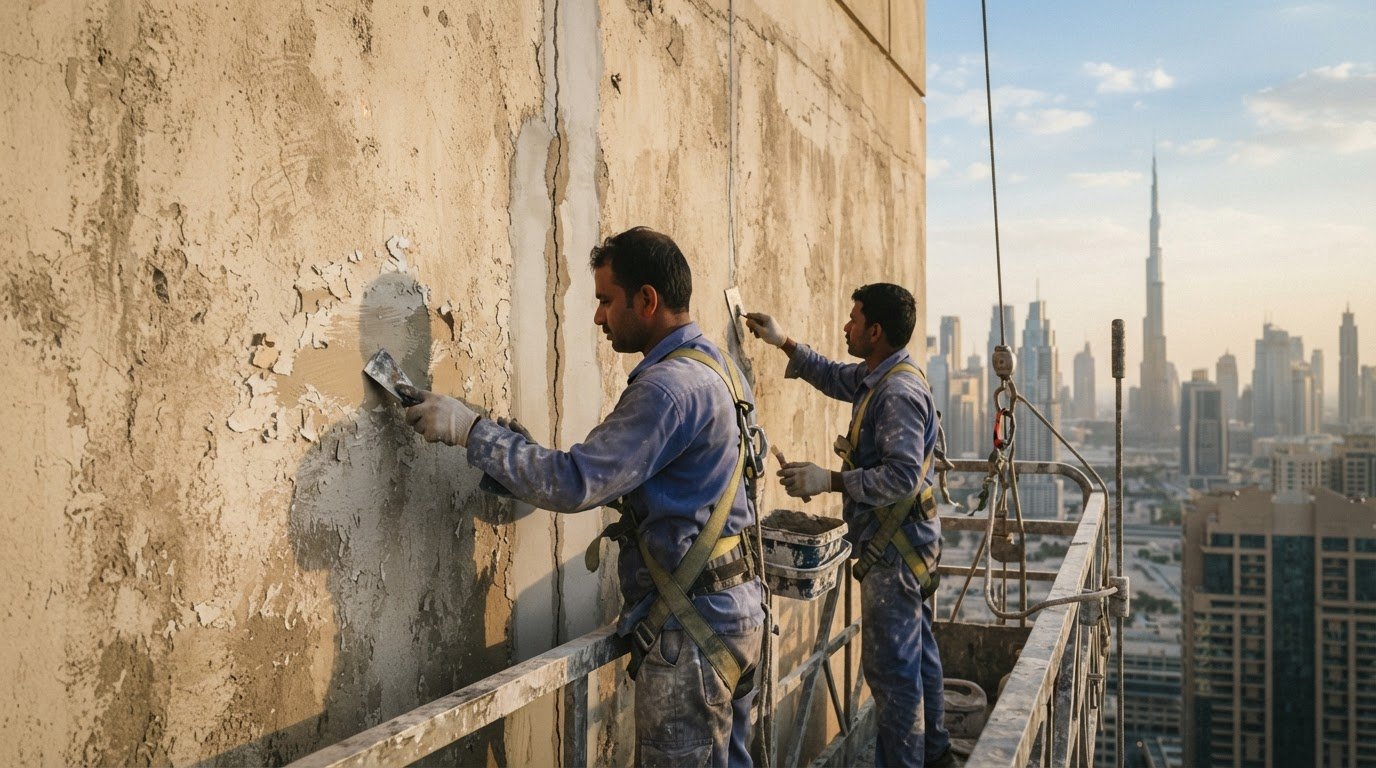
The coating is only as reliable as the wall beneath it. For sand-proof exterior coatings for Dubai buildings, preparation means removing loose or flaking paint, dust, salt deposits and algae, repairing cracks or damaged render, and allowing the surface to dry before applying a suitable primer. This matters in a climate where summer temperatures can exceed 48°C and paint films face daily expansion and contraction.
Dust and sand are obvious concerns, but a coating also needs to suit the wall material and the building’s exposure to heat, humidity and moisture. For sand-proof exterior coatings for Dubai buildings, a well-prepared surface and compatible primer support adhesion, while the right finish and coating system help protect the facade from local conditions.
This article explains how to prepare and prime exterior walls, which protective properties to consider, and why the right coating can differ between a villa and a high-rise facade in Dubai. Learn how surface condition, substrate and exposure guide coating selection, so the system suits the building rather than being chosen on appearance alone.
Key Takeaways
- Identify fading, cracks and surface damage before selecting a coating system for Dubai’s intense sun.
- Match protective properties to the facade’s exposure to heat, sand, humidity and rain.
- Consider the wall material, building type and finish when assessing coating suitability for a villa or high-rise.
- Learn how professional exterior painting and villa finishing can support a more coordinated approach to facade work.
What preparation is required before repainting exterior walls in Dubai?
Dubai’s intense UV exposure can fade exterior paint and weaken colour retention. Summer temperatures can exceed 48°C, subjecting paint films to daily expansion and contraction. A weatherproof system should suit the wall material and local weather conditions, rather than being treated as interchangeable with ordinary paints.
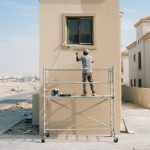
Start by removing loose or flaking paint, dust, salt deposits and algae. Clean the wall, repair cracks or damaged render, then let the surface dry. It must be structurally stable before priming. Apply a suitable exterior primer to support adhesion, followed by two full coats of exterior paint. Avoid painting when a sandstorm is forecast, as airborne grit can spoil the finish.
Silicone coatings can reduce dust accumulation; elastomeric coatings address waterproofing and coastal moisture, while acrylic coatings offer UV resistance and colour retention. Polyurethane suitability depends on its formulation and specification, so the coating chemistry alone cannot establish a sand-resistance ranking.
Weatherproof paint is formulated for relevant exposure, such as UV or moisture; “normal paint” does not specify those protective properties. For sand-proof exterior coatings for Dubai buildings, match the system to concrete, plaster or masonry and the facade’s exposure. In humid coastal conditions, moisture resistance matters; on sun-exposed walls, UV resistance helps retain colour.
Exterior paint in the UAE usually lasts three to five years, while repainting every 4-5 years is recommended for maximum protection. Peeling, cracks and fading signal that the surface needs attention; south- and west-facing walls may need repainting sooner because they receive the most sun. Lighter colors reflect heat better than dark colors. Sample shades outdoors, where light can make them appear lighter and more saturated. Most Dubai communities require approval before exterior colours change.
Protection from Dubai sun, heat, dust, sand, humidity, and rain
Dubai facades face several types of exposure at once, so performance depends on matching the coating system to the building’s conditions. Consider sun, airborne sand, coastal moisture and rainfall together, rather than treating each as an isolated concern.
Resistance to Sun, Heat, and Sand
Resistance means a coating can withstand local exposure while retaining adhesion and surface integrity. UAE temperatures can exceed 45°C during peak summer months, and ultraviolet exposure can fade exterior finishes. Sand settles on painted surfaces and may cause abrasion over time. Silicone-based paints can reduce dust accumulation, while acrylic coatings offer UV resistance and colour retention. Anti-dust finishes don’t prevent all deposits or abrasion, so periodic cleaning remains relevant.
For outdoor walls, choose a coating system suited to the facade’s exposure and substrate. Coastal humidity, desert heat and urban pollution place different demands on durability. Water-resistant coatings can help limit moisture penetration and paint swelling; anti-fungal and anti-algae formulations address microorganism growth in humid conditions.
Standards for Façade Coatings
A façade coating specification sets out the product and performance requirements for a particular building. Select products compatible with the surface and the project specification, considering concrete, plaster or masonry and the facade’s exposure. The applicable requirements depend on the project; avoid assuming one coating specification suits every Dubai building. The cost per square metre depends on coating system, surface condition, access and area, with project pricing provided after a quote request.
Testing Coating Performance
Performance testing assesses whether a coating adheres to its prepared substrate and withstands abrasion and weather exposure. A representative test panel can show adhesion, surface wear and changes after exposure; assess the results against the project specification and intended conditions. On an existing facade, peeling, blistering or colour change can signal performance concerns, but appearance alone does not measure abrasion resistance.
Sand-repellent coatings can reduce dust accumulation, but they can’t stop all windblown sand or eliminate cleaning. Abrasion may still affect the surface over time, while moisture resistance and UV performance depend on the chosen formulation. For facade work, exterior building painting can be planned around the building’s substrate and exposure.

Exterior wall preparation and priming
In Dubai’s climate, a sound coating starts with a sound substrate. Inspection helps distinguish surface dirt from structural defects and determine whether the wall needs cleaning, repair or both. Check for peeling, cracks, damaged render, salt deposits and algae. Note fading too: sunlight can affect the finish, while cracks and unstable areas need attention before repainting.
Cleaning should remove dust, dirt and environmental contamination that could interfere with adhesion. Pressure washing can clear dirt, loose paint, algae and salt from exterior surfaces. Let the wall dry after cleaning; it should be dry and structurally stable before coating. Damp or unstable areas can undermine the finish, so the surface condition guides the next step.
Repair cracks and damaged render before priming. Fill cracks with putty, then sand repairs smooth so the coating meets the surrounding wall evenly. Remove loose paint rather than painting over it. These steps matter on concrete, plaster and masonry because exterior paint must suit the substrate to adhere properly. Preparation is complete only when repairs are sound and dust has been cleared.
Primer selection depends on the surface. Apply a suitable exterior primer to seal the prepared wall and support adhesion, matching it to the substrate and topcoat. Primer provides a consistent base; it cannot fix loose render or replace crack repairs. For a facade exposed to strong sunlight, choose the complete coating system for the surface and exposure, not colour alone. Lighter shades reflect heat better than dark colours, and outdoor samples show how daylight affects the final appearance.
Before application, assess the forecast and consider airborne contamination. Avoid exterior painting when a sandstorm is forecast, as fresh paint can collect grit. A clean, dry, stable wall, repaired and primed for its material, gives the topcoat a properly prepared base for Dubai’s weather conditions.
Exterior coating suitability for villas and high-rise facades
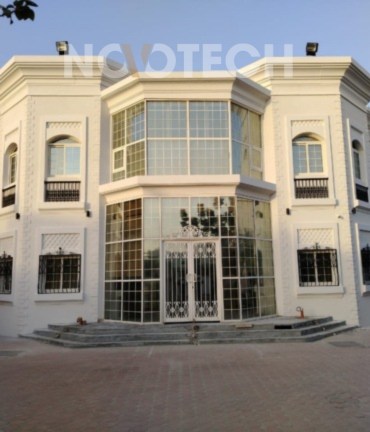
Villas and high-rise buildings need coating systems selected for their surfaces and exposure. A villa may combine rendered walls, decorative details and sheltered sections, while a tower has broad facade areas with varied sun exposure. Concrete, plaster and masonry can all be suitable substrates, depending on the coating’s formulation and specification. Building type alone does not determine the right system.
For villas, assess each elevation separately. South- and west-facing walls receive the most sun in the UAE and may need repainting sooner. Lighter shades can reflect more heat than dark ones, while silk or satin finishes are easier to clean than rough textures in dusty areas. Outdoor colour samples help show how daylight affects the chosen shade.
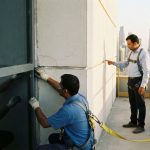
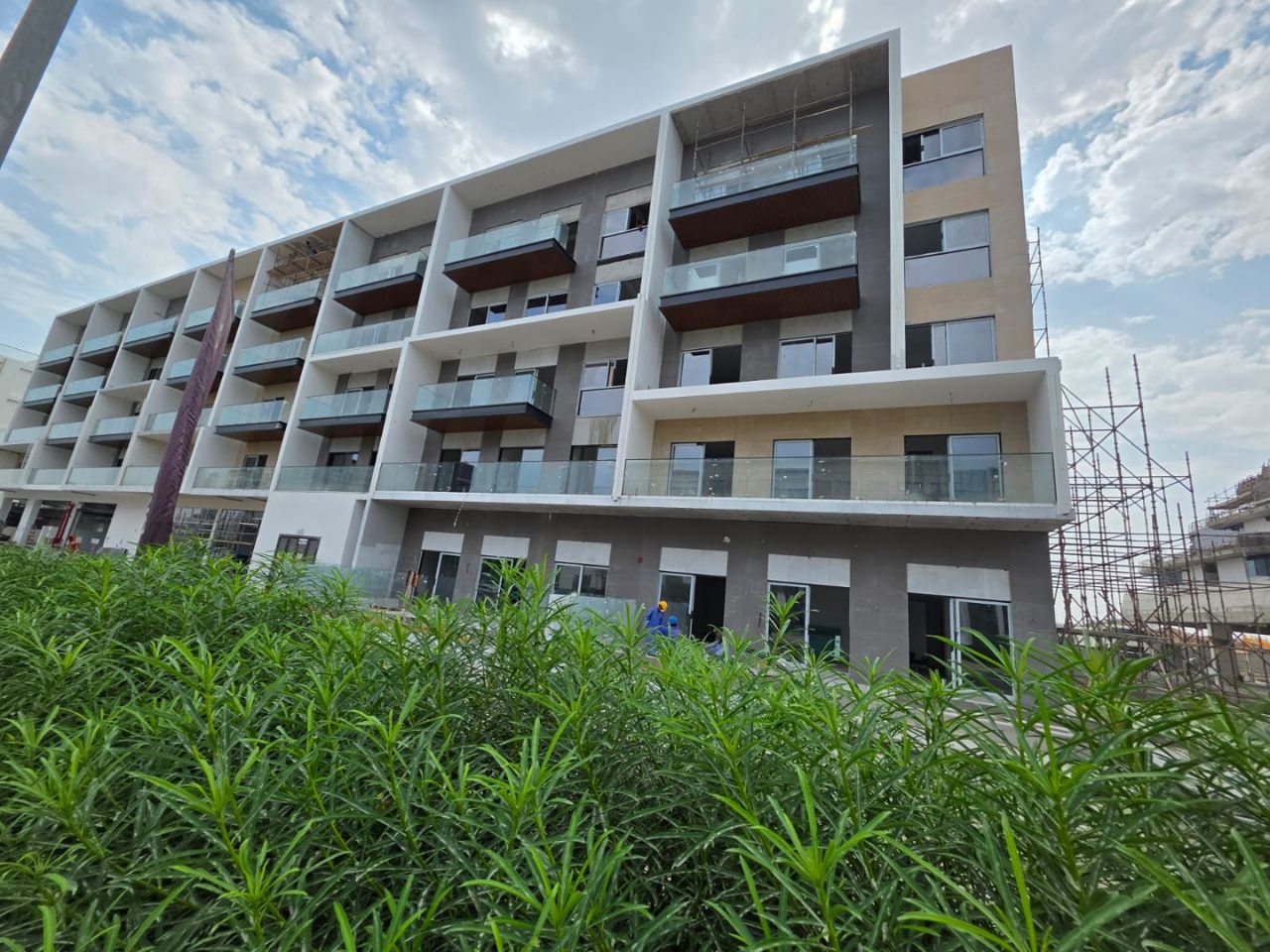
High-rise facades need consistent coating performance across large areas. Coatings should remain stable under high temperatures without softening, cracking or losing adhesion. Differences in substrate condition and exposure across elevations can affect the specification. Matching the product to concrete, plaster or masonry helps maintain compatibility across the facade.
Acrylic coatings can expand and contract with the surface, reducing cracking. This can matter where temperature changes create repeated movement in the coating. Lasting performance still depends on a compatible product, sound substrate and selection suited to the exposure. A finish that reduces visible dust accumulation may make routine cleaning easier, but it will not eliminate sand deposits.
For either property type, assess the wall material, sun exposure, finish and maintenance needs together. These factors shape a practical coating choice more reliably than choosing by appearance alone. For a project-specific discussion of villa or tower facades, discuss your exterior coating requirements as part of planning the work.
NovoTech: Epoxy Floor Painting & Coatings
NovoTech provides exterior building painting and villa painting and exterior finishes, matching facade preparation and coating selection to each project. For high-rise facades, the coating system can be planned around the substrate and environmental exposure; villa projects can account for different elevations and finishes.
Epoxy Floor Painting & Coatings is a separate service for floors, not exterior walls. Keeping these applications distinct helps match the material to its intended surface. NovoTech also provides interior painting solutions for projects that include indoor areas alongside exterior work.
If you’re planning exterior painting for a villa or high-rise building in Dubai, contact NovoTech to discuss your project.
Plan the next stage of facade care
Choosing sand-proof exterior coatings for Dubai buildings is an opportunity to plan beyond the next repaint. Treat the facade as part of the property’s ongoing maintenance, aligning coating selection with the building’s use, appearance and exposure. This helps owners set priorities for future inspections and cleaning without assuming one finish suits every surface.
For a villa, the decision may focus on balancing facade appearance with practical upkeep. For a high-rise, consistency across elevations and surfaces may take priority. In either case, a clear project scope helps align preparation, coating choice and application with the building’s requirements.
NovoTech can discuss the exterior painting needs of your property and the next steps for planning the work. Contact NovoTech about exterior coatings to start a project conversation. A considered plan is a strong foundation for maintaining your building’s exterior.
Frequently Asked Questions
Which exterior paints come with more than a 10-year durability in the UAE?
A paint label alone can’t establish a service life exceeding 10 years. Longevity depends on the complete coating system, substrate, preparation, exposure and maintenance. For a Dubai project, evaluate the product’s technical documentation for the specified surface and conditions, including how performance is assessed. A topcoat claim by itself doesn’t describe how the primer and underlying wall affect the finished system.
Can exterior paint resist heat?
Yes. Exterior coatings can be formulated for heat exposure, and solar-reflective coatings can reduce a building’s surface temperature by 4-5 degrees. The coating’s suitability depends on the substrate and the project’s exposure. For example, a sun-exposed facade may benefit from a reflective finish, while the full system still needs to suit the wall and retain adhesion under local conditions.
Exterior Coating in Dubai: What’s New Trends in 2025?
Options for new builds and retrofits include low-VOC paints, bio-based resins and recyclable formulations. Other developments include nano-coatings that repel dust and water, and smart coatings designed to detect moisture intrusion or early corrosion. These options serve different purposes, from easier facade cleaning to material selection and early detection. Their relevance depends on the building, substrate and exposure, not the trend alone.
What exterior coatings resist sand abrasion and dust in Dubai’s climate?
Silicone-based exterior paints can reduce dust accumulation, while nano-coatings can repel dust and water. Neither keeps a facade deposit-free: airborne sand can settle and cause abrasion over time. For easier cleaning, a silk or satin finish is generally more practical than a rough, textured surface. Choose the system for the wall’s exposure and maintenance needs, rather than relying on a “sand-proof” label alone.
Which coating systems are suitable for Dubai concrete, stucco, and metal façades?
Concrete and plaster facades need coatings formulated for those surfaces; masonry may also be compatible, depending on the product specification. Stucco needs a system suited to its actual composition and condition. Metal facades need a compatible protective system that addresses corrosion. The substrate determines primer and coating compatibility, so do not assume one formulation suits every material or facade detail.
What are the UV, heat, humidity, and salt-spray performance requirements for Dubai exterior coatings?
Requirements depend on the facade material and its exposure. Assess UV colour retention and heat stability on sun-facing surfaces, then consider moisture resistance in humid or coastal locations. Metal facades also need corrosion protection suited to their environment. Assess salt-spray performance against the project specification and intended exposure; a single numerical threshold does not apply to every coating or substrate.