What if the dust you can see is only part of the problem? During an interior renovation, fine particles can travel beyond the work zone into occupied rooms, furnishings, and ventilation pathways. Effective dust control measures for interior renovation projects limit dust at its source and contain it as work progresses, rather than relying on cleanup at the end.
Renovating an occupied villa, office, or other property in Dubai without disrupting nearby spaces takes more than a final clean. It means coordinating containment, dust capture, and work sequencing, then checking how dust could move through the building. This guide explains how to limit dust migration, protect adjoining spaces, and plan an orderly handover. It also distinguishes controls that prevent dust from spreading from methods that remove settled residue afterward. NovoTech brings more than 30 years of renovation and painting experience in the UAE, coordinating preparation, interior work, and finishing as part of the project.
Key Takeaways
- Learn how dust moves through doorways, corridors, air returns, and the movement of people and materials.
- Compare source capture, barriers, protected openings, and housekeeping to understand what each control can and cannot do.
- See why a barrier can reduce dust migration but may not control airborne dust on its own.
- Use a practical sequence to plan dust control before work, manage it during dusty tasks, and inspect after cleanup.
- Apply dust control measures for interior renovation projects alongside renovation, surface preparation, painting, and handover planning.
Why dust control measures matter during interior renovation projects
Renovation dust control is the planned prevention, containment, and capture of dust where renovation work creates it. It starts before particles spread. Final cleaning removes residue left after the work is complete, but it cannot undo dust migration into adjacent rooms, furnishings, or building systems.
This distinction matters in occupied villas, offices, and other properties in Dubai. Dust on protected surfaces can complicate preparation and finishing, while particles settling on fresh paint or other completed work can affect the handover. A coordinated plan accounts for dusty tasks alongside the renovation sequence, surface preparation, painting, and final inspection. General methods such as suppression and containment are outlined in this Dust control overview. The right approach depends on the work and the property.
What kinds of dust do interior renovation activities create?
Different tasks produce different particles. Cutting and drilling can release dust from the material being worked. Sanding and scraping create fine residue from coatings or surfaces. Gypsum partition and ceiling work can produce dust during cutting, adjustment, or finishing. Particle size and composition vary with the material, tool, and task, so one control method may not suit every activity. For tasks that raise safety concerns, follow authoritative guidance relevant to the material and work involved.
Why can renovation dust move beyond the work area?
Workers and materials can carry dust through corridors, while open doorways and air movement create routes into other rooms. Depending on the HVAC configuration and site conditions, uncovered air returns may also allow particles to enter building systems. Visible debris is easier to spot, but finer particles may remain airborne for a time or settle after activity has stopped.
Open pathways let renovation dust migrate. A work area can look contained while residue still appears elsewhere. A barrier may limit movement through a doorway, but it does not automatically capture airborne particles. Dust control measures for interior renovation projects need to address both the routes dust can travel and the task creating it. Final cleaning remains necessary, but it works best as the last stage of a plan that manages dust throughout the work.
How renovation dust travels through rooms, airflow, and building systems
A renovation work zone connects to the rest of a property through more than its doorway. People can carry particles on footwear, clothing, and tools, and materials can carry dust along a corridor. Moving removed materials creates another potential route. Airflow adds less visible pathways. Depending on the building layout, HVAC operation, and site conditions, particles may move between rooms or toward shared air returns and supply outlets. The pattern can differ between villas, offices, and other occupied properties.
How do ventilation and HVAC systems affect renovation dust?
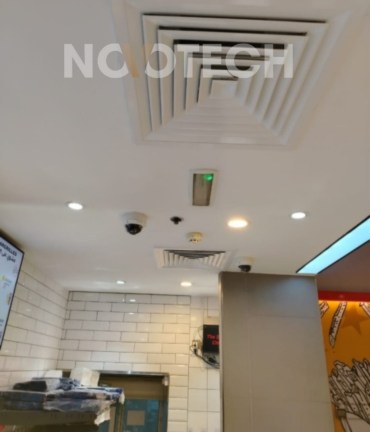
Air returns draw air from a space, while supply outlets deliver it. Their locations and operation can influence how air moves around a work zone. A return near renovation activity is one pathway to assess, though its effect depends on the system and conditions on site. The EPA guide to IAQ during remodeling describes approaches such as barriers and ventilation planning. Coordinate protection of openings or any change to HVAC operation with qualified building personnel.
Which rooms and routes need protection first?
Start with rooms directly adjoining the work area, then trace likely routes to shared entrances, corridors, occupied workspaces, and other rooms people use during the project. In a Dubai villa, consider how people move between the renovation zone and rooms that remain in use. In an office, map staff access and shared areas, as well as the route for tools and removed materials. For more on planning around commercial occupancy, see NovoTech’s office renovation guide.
During a site walk-through, follow the routes people and materials will actually use. Use this checklist to identify paths that may need protection or closer attention:
- Which adjoining rooms will remain occupied during the work?
- Where are the nearest doorways, corridors, shared entrances, air returns, and supply outlets?
- How will workers bring in tools and move removed materials out?
- Do those routes pass through furnished or actively used spaces?
- Who can advise on the building’s HVAC layout and operation?
Record the answers before work begins. Revisit the route plan if the work zone, access path, or building conditions change. Dust control measures for interior renovation projects are more effective when they account for airflow and everyday movement, not just the room being renovated. For a coordinated approach to renovation and interior painting planning, explore NovoTech’s renovation and interior painting work.
Which dust control measures work best, and is sealing one room enough?
Sealing off a room helps limit dust migration, but it does not necessarily capture particles produced inside the work zone. Effective dust control measures for interior renovation projects match each control to its purpose: capture dust near the task, contain movement through openings, protect relevant building pathways, and manage residue as work progresses. The material, activity, room layout, and building systems all influence the right combination.
| Measure | Function | Suitable context | Limitation |
|---|---|---|---|
| Source capture | Collects dust close to the task that creates it | Dust-generating cutting, sanding, or drilling | Must suit the tool, material, and task; it does not isolate adjacent rooms |
| Physical barrier | Restricts dust movement through an opening | Separating an active work zone from occupied areas | Can reduce migration but may not control airborne dust by itself |
| Protected openings | Helps limit dust entering relevant building pathways | Where nearby air returns or other openings may be exposed | Protection must suit the building and HVAC system |
| Controlled housekeeping | Removes settled residue from work surfaces and routes | Throughout work and during final cleaning | Does not prevent dust from spreading before cleanup |
What does source extraction do that room sealing cannot?
Source extraction aims to capture particles near the activity that creates them. A barrier, by contrast, blocks or limits their movement out of the room. One addresses dust at the task; the other addresses its route. The appropriate extraction method depends on the tool, material, and work being performed. A method suited to sanding may not fit every cutting or drilling task.
How should barriers, HVAC protection, and cleaning work together?
A layered plan combines a well-positioned barrier with attention to exposed openings and a controlled route for entry, exit, tools, and removed materials. Keep work surfaces and travel paths orderly during the project so settled residue is less likely to be carried elsewhere. Final cleaning then addresses remaining dust. Coordinate any HVAC-related protection with qualified building personnel. If floor preparation is part of the scope, include it in the sequence for epoxy floor coating work.
For a small task with limited dust generation and few routes to occupied areas, a barrier and orderly housekeeping may be part of the plan. Work that creates dust near shared spaces or building openings may call for additional controls. Do not treat one sealed doorway as a complete system. Align containment, task-level capture, opening protection, and cleaning with the actual work sequence.

How to plan dust control before, during, and after renovation work
A reliable plan follows the project through preparation, active work, and handover. Dust control measures for interior renovation projects should reflect the tasks, materials, access routes, and occupied areas involved, rather than treating protection as a one-time setup. For villas, offices, and other occupied properties in Dubai, agree on responsibilities and communication with relevant occupants or building management before work begins.
What should be prepared before renovation begins?
Start with a site survey. Record dusty tasks, adjoining rooms, ventilation paths, occupants, and routes for workers, tools, and removed materials. Define the active work zone, decide which contents should be removed or covered, and plan how to protect boundaries and exposed openings. Confirm access and work sequencing so dusty tasks do not conflict unnecessarily with use of nearby spaces.
What should happen during work and at handover?
Protection needs attention while work is underway, not just before it starts. Recheck barriers and protected openings as tasks or work areas change. Use housekeeping methods suited to the material and task. Avoid dry sweeping fine dust in a way that puts it back into the air. At completion, clean the work zone and routes, then inspect adjoining spaces before handover.
Use this six-step sequence:
- Survey: Map dust-producing tasks, occupied areas, openings, and movement routes.
- Isolate: Set clear boundaries between the active work zone and nearby spaces.
- Prepare controls: Arrange suitable task-level controls, protection for relevant openings, and contents protection before work starts.
- Monitor: Check controls during dusty tasks and after changes to the work scope or access route.
- Clean: Manage residue during the project and complete cleaning after dusty work ends.
- Inspect: Review the work area, travel routes, and adjoining rooms before handover.
A final visual check can identify visible residue on surfaces and floors, but it cannot measure airborne particles or establish that a specialist safety threshold has been met. Where the material or work presents a specific safety concern, use an appropriate qualified assessment rather than treating appearance alone as verification.
Handover checklist: Are surfaces and routes visibly clean? Are adjoining rooms free of obvious dust? Have barriers and temporary protection been removed without spreading residue? Are any remaining cleaning or specialist verification needs recorded and assigned?
For renovation work that includes interior painting or gypsum work, coordinate dust-aware planning with the project sequence from preparation through finishing. Plan your interior renovation with NovoTech.
How NovoTech can coordinate dust-aware interior renovation planning
Dust planning is most useful when it follows the renovation scope from early preparation through finishing and handover. NovoTech carries out interior painting, gypsum partition and ceiling work, and renovations, bringing those stages into a coordinated project plan. The aim is to plan work areas and sequencing around how the property is used, while avoiding unnecessary movement between active and prepared spaces. No renovation plan can promise a dust-free process, but clear coordination can help manage where and when dust-producing work takes place.
How does dust-aware planning fit an interior renovation schedule?
Consider a project that includes gypsum work and repainting in adjoining rooms. Scheduling dusty preparation and gypsum tasks before final surface preparation and painting can help reduce the chance that later activity disturbs completed finishes. The sequence should also account for access between rooms, the movement of materials, and when each area can be cleaned and returned to use.
These decisions depend on the scope. A villa renovation with rooms remaining occupied may call for a different sequence from a commercial interior with shared work areas. NovoTech coordinates renovation, gypsum, and interior painting stages around the agreed work areas and property use, while dust controls are planned to suit the tasks and site conditions.
What should a project discussion establish?
A productive planning discussion establishes the property type and occupancy, which rooms are included, and which areas must remain accessible. It also maps adjacent rooms, entrances, material routes, and handover expectations. With that information, the work sequence can be set out clearly, including when preparation, painting, and later-stage cleaning should take place. If the scope or access changes, revisit the sequence to keep the plan aligned with the project.
- Property and use: Is the space a villa, office, or another occupied property?
- Work scope: Which renovation, gypsum, and painting stages are included?
- Movement: How will workers and materials reach the active work areas?
- Handover: Which spaces need inspection and cleaning before they return to use?
These details give the project team a practical basis for coordinating dust control measures for interior renovation projects alongside the wider renovation schedule. Discuss your renovation project with NovoTech.
Plan a More Controlled Renovation from Start to Handover
Successful dust control measures for interior renovation projects combine controls at the task, clear boundaries around work areas, and consistent attention to access routes and building airflow. A barrier can limit migration, but it works best as part of a coordinated plan. Final cleaning and inspection then help prepare occupied spaces and finished surfaces for handover.
Sequencing matters, too. Align renovation and gypsum work with surface preparation, interior painting, and later-stage cleaning to reduce unnecessary movement through prepared areas. NovoTech brings more than 30 years of experience, with the company founded in 1993, to residential and commercial interior painting, gypsum work, and renovation projects.
Planning an interior project in Dubai or elsewhere in the UAE? Discuss your interior renovation project with NovoTech and take the next step toward a more orderly, well-coordinated renovation.
Frequently Asked Questions
Can renovation dust travel through an HVAC system?
Yes, renovation dust can travel through an HVAC system, depending on its layout, airflow, and whether work zones or openings are protected. Dust can also move through doorways and shared corridors, so HVAC is only one pathway to assess. Include relevant ventilation openings in the project plan, but coordinate with qualified building personnel before covering components or changing system operation. Final cleaning matters, but it should not be the only dust-control measure.
Is sealing off a room enough to control renovation dust?
No. A barrier can reduce dust moving into adjacent spaces, but it may not capture particles where the work creates them. Openings, entry routes, airflow, and changes in activity can also weaken containment. A more complete plan combines a barrier with suitable source control, appropriate protection for ventilation pathways, and housekeeping. The right combination depends on the task, materials, and property layout, particularly when nearby rooms remain occupied.
How do you control dust when sanding walls during renovation?
Begin by limiting access to the work zone and protecting nearby rooms and contents. Where the material and equipment allow, use suitable dust capture at the sanding task rather than relying on a doorway barrier alone. Maintain the planned barriers and protect relevant openings, then clean surfaces and travel routes using methods that do not disperse fine dust. Select controls for the specific surface and task, and follow applicable safety guidance.
What is the best way to protect furniture from renovation dust?
Remove furniture from the active work area before dusty tasks where practical. For items that must remain, use suitable protective sheeting and, if possible, place them outside the work zone. Protect floors and access routes too, since footwear and equipment can carry dust. Check covers as work progresses, then remove them carefully so settled dust does not spill onto cleaned areas or finished surfaces.
Should renovation dust be cleaned during the project or only at the end?
Both stages matter. Housekeeping during the project helps limit dust buildup on surfaces and access routes, while a final clean addresses residue after dusty tasks are complete. Cleaning does not replace containment or source capture, and later work can create new dust after an area has been cleaned. Plan housekeeping around the work sequence, then inspect the relevant spaces against the project’s handover expectations.
How can dust be controlled during an office renovation in Dubai?
Start by mapping occupied workspaces, shared corridors, access routes, ventilation pathways, and the renovation zone. Coordinate movement and work sequencing with building management, then plan appropriate barriers, task-level controls, and ongoing housekeeping. Align the plan with the building’s applicable requirements. Include handover and access arrangements in the schedule, especially when staff need to continue using adjacent areas.
Can a renovation be completely dust-free?
It is more accurate to plan to reduce and contain dust than to promise a completely dust-free renovation. Activities such as sanding, cutting, and drilling can create particles, and open pathways may allow some to move beyond the task area. A layered plan helps limit spread, protect adjoining spaces, and support orderly cleanup. Explain project-specific limitations clearly, and do not treat a final clean as proof that no dust escaped.