A peeling patch doesn’t automatically mean repainting the whole bathroom wall. Fixing paint peeling from humidity in Dubai bathrooms may be limited to the affected area if the damage is small and the surrounding paint is sound; widespread peeling usually calls for a full-wall repaint. First address the moisture source, then prepare the surface before applying new paint.
A simple touch-up can seem sufficient, especially when the damage is confined to one spot. But condensation, poor ventilation or a leak can weaken paint adhesion beneath the surface. Painting over damp or loose material may hide the problem only temporarily.
This article explains how humidity and condensation cause bathroom paint to peel, when a local repair may be suitable, and what proper preparation involves. It also covers signs that recurring damage, soft plaster or a possible leak may require more than repainting.
Key Takeaways
- Learn how to distinguish humidity-related paint failure from signs of a leak or weakened plaster.
- See when a local repair may be enough and when peeling across the wall calls for broader repainting.
- Understand why removing failed paint and preparing the surface matters before a new coating is applied.
- Find out how ventilation and moisture control can help reduce the risk of peeling returning.
Does humidity cause paint to peel?
Yes. In Dubai bathrooms, moisture from condensation or leaks can weaken paint adhesion. A proper repair starts by finding the moisture source, not simply covering the damaged finish.
How Moisture Peels Paint
Humidity and condensation can move behind a paint film and break its bond with the wall, causing bubbles, blisters or peeling. Dubai’s hot outdoor conditions and air-conditioned interiors can also create condensation on cooler surfaces, especially where airflow is limited. The cause matters: paint applied over damp plaster can blister again, while loose layers may conceal a deeper problem.
Moisture Source Diagnosis
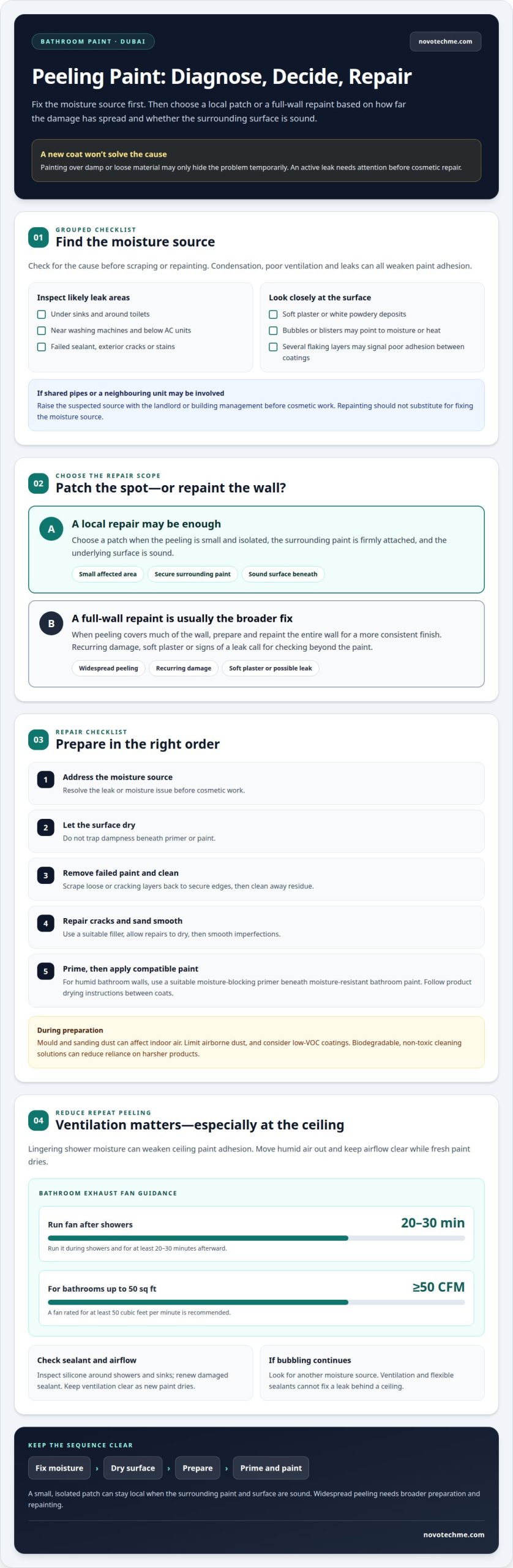
Inspect under sinks, around toilets, near washing machines and below AC units for early signs of leakage. Check for failed sealant, exterior cracks, stains, soft plaster and white powdery deposits; efflorescence can appear when moisture carries salts through masonry or plaster. Blisters can point to moisture or heat, while several flaking layers may indicate poor adhesion between old and new coatings.
For bathroom water damage, distinguish building coordination from the paint repair. Raise suspected shared pipes or a neighbouring unit with the landlord or building management before cosmetic work. Responsibility depends on the affected area and tenancy or building arrangements, so repainting should not substitute for addressing the source.
Primers and Paints for Humid Walls
For humid bathroom walls in Dubai, use a suitable moisture-blocking primer beneath moisture-resistant bathroom paint; for ceilings, 100 percent acrylic latex paint is recommended. Apply primer only after loose paint is removed and damp material has dried. A described ceiling process uses two coats of specialized moisture-blocking primer, with about 1 to 2 hours of drying time.
Breathable primers and damp-proof coatings can help limit water penetration, while multiple thin coats of low-VOC paint support a durable finish. Follow the product’s drying instructions between coats. Anti-mould paint can help resist mould, but no coating fixes an active leak or replaces adequate ventilation.
Can you fix peeling paint without repainting the whole wall?
Yes, a small, isolated patch can be repaired without repainting the whole wall; widespread peeling calls for broader repainting. For fixing paint peeling from humidity in Dubai bathrooms, first address the moisture source and let the surface dry. Then prepare the area before repainting.
Preparing Surfaces for Repair
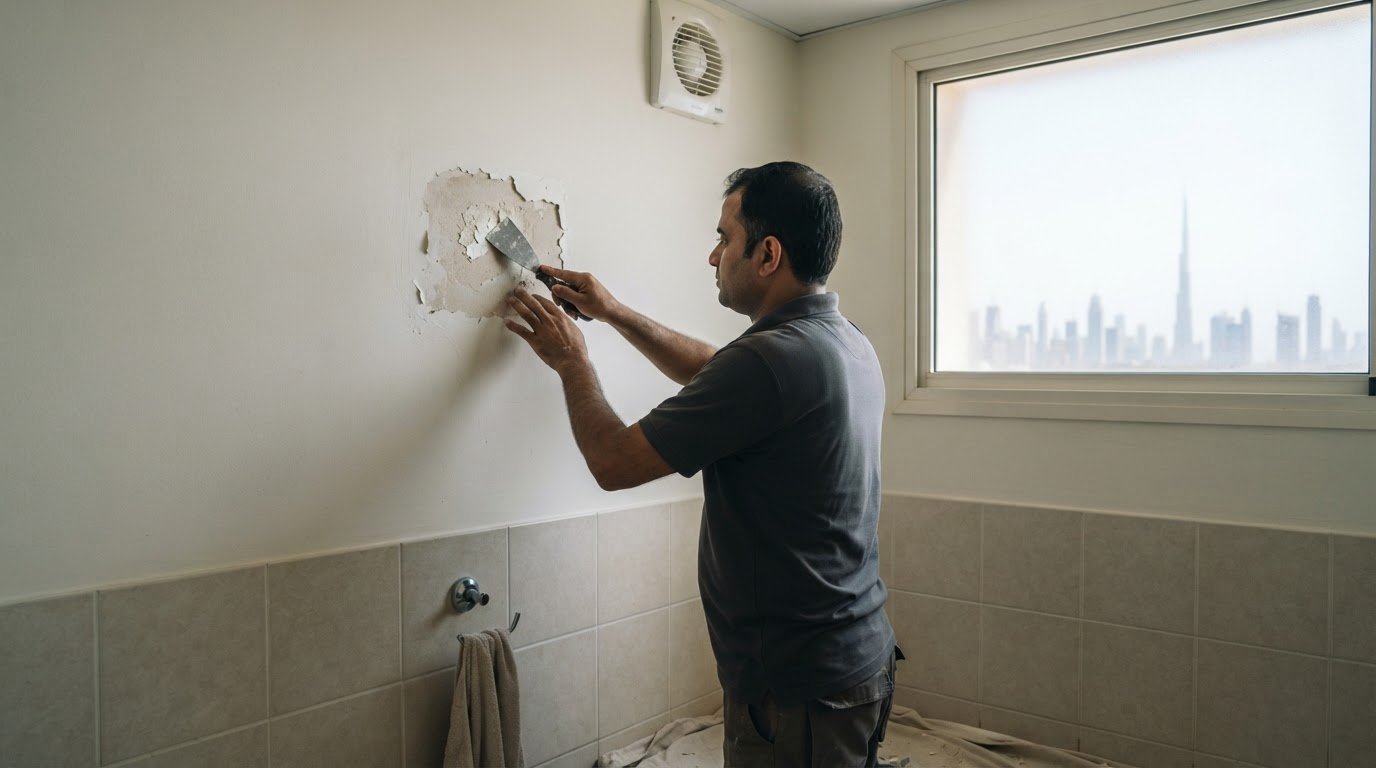
Surface preparation removes failed paint and creates a stable base for the new paint film. Scrape off loose or cracking paint, clean the residue, fill cracks with a suitable eco-friendly filler, then sand imperfections smooth. Biodegradable, non-toxic cleaning solutions can reduce reliance on harsher products. Let repairs dry before applying primer; moisture trapped beneath the finish can cause further failure.
Patching Versus Repainting the Wall
A local patch may suit a small area if the surrounding paint is firmly attached and the underlying surface is sound. Scrape back to secure edges, prepare and prime the repair, then apply compatible paint. If peeling covers much of the wall, preparing and repainting the entire wall can create a more consistent finish. This helps define the right scope for fixing paint peeling from humidity in Dubai bathrooms.
Repair Steps and Health Risks
Follow the right sequence: address moisture, allow the surface to dry, remove loose paint, clean, repair cracks, sand, prime and apply compatible paint. Mould and sanding dust can affect indoor air, while conventional paints may emit volatile organic compounds. Limit airborne dust during preparation and consider low-VOC coatings. DIY costs depend on the affected area, materials and surface condition; professional repair costs also reflect preparation, access and labour. Requesting a quote establishes the price for the specific work.
For a larger interior repaint, professional interior painting can address the wall surface beyond a small patch.
Why Is My Bathroom Ceiling Paint Peeling?
In Dubai bathrooms, humidity that lingers after showers can contribute to bubbling and weaken paint adhesion. Run an exhaust fan during and after showers to remove moist air before it repeatedly affects the ceiling.
Humidity and Poor Ventilation
Inadequate ventilation allows shower moisture to remain in the bathroom, exposing ceiling paint to damp air for longer. That repeated exposure can weaken adhesion and lead to bubbling or peeling, particularly where airflow is restricted. Use the exhaust fan during showers and for at least 20-30 minutes afterward. Also inspect the ceiling for stains or soft areas, since a leak can cause damage that ventilation alone won’t resolve.
Ventilation and Paint Adhesion
Proper ventilation moves humid air out rather than letting it settle on cooler surfaces and affect the paint film. Run the fan during and after showers, and keep airflow clear while fresh paint dries. For bathrooms up to 50 square feet, a fan rated for at least 50 cubic feet per minute is recommended. If the ceiling continues bubbling after ventilation improves, look for a separate moisture source before repainting.
Coat Thickness and Sealants
Thin, even coats tend to dry more consistently than a thick layer, which can remain vulnerable while curing. Maintain ventilation during drying and follow the paint’s stated intervals between coats. Inspect the silicone around showers and sinks, and renew damaged sealant to limit water entering gaps. Before repainting, remove failed paint and address damp material. Flexible sealants protect joints but cannot fix a leak behind the ceiling.
Humidity and condensation causing bathroom paint to peel
Dubai’s summer relative humidity stays above 60%, and coastal areas can reach 80-90%. When warm, humid air meets cooler surfaces inside an air-conditioned home, moisture can condense on the bathroom ceiling. Repeated dampness can work behind the paint film, weakening its bond and creating bubbles or peeling. The indoor temperature difference matters because a ceiling may collect moisture even without a visible plumbing leak.
Ceilings are especially exposed when shower steam rises and lingers in a room with limited airflow. Look for condensation patterns, bubbling or peeling above the shower, and compare them with marks around ceiling edges and fixtures. A stain that grows or returns after the room dries deserves attention. Resistant paint won’t solve moisture on a damp ceiling, and the new finish may fail again.
AC drainage is another possible source in Dubai homes. A blocked or leaking AC drain line can release water near the unit, allowing moisture to travel across a ceiling or wall before the leak becomes obvious. Check below AC units for damp marks and note whether damage appears near the unit, along a pipe route or in a bathroom with no nearby equipment. The pattern can help distinguish condensation from a drainage issue.
Before repainting, identify whether moisture comes from shower condensation, an AC drain line, plumbing or failed sealant. After addressing the source, let the area dry and assess whether the plaster and paint layers remain firm. Persistent dampness, soft material or recurring ceiling bubbles call for repairs beyond another coat of paint. Resistant paint can support the final finish, but it cannot stop water entering from above or behind the interior surface.
If the moisture source is resolved and the bathroom needs a refreshed finish, discuss an interior paint repair suited to the affected surface.
NovoTech: Exterior Building Painting Services
NovoTech provides Interior Painting Solutions for bathroom walls and ceilings once the moisture source has been addressed and the surfaces are ready for repainting. If the damage extends beyond a small patch, the work can include the affected interior surfaces and the finish needed for a consistent appearance.
If an inspection points to exterior paint deterioration, NovoTech’s Exterior Building Painting Services and Villa Painting & Exterior Finishes address the building’s exterior coating needs. These services complement interior work but do not replace fixing an active leak or drainage issue. Contact NovoTech to discuss the painting work your property needs.
Plan the Repair Around the Room
A bathroom refresh starts with a clear scope, not just a new coat of paint. Treat recurring damage as a prompt to consider how the room is used, where moisture collects and whether the repair should extend beyond one marked area. This helps match the surface work to the bathroom’s overall condition.
For fixing paint peeling from humidity in Dubai bathrooms, turn your observations into a practical repair brief: note where the paint has lifted, whether the damage returns and what may be contributing to dampness. This gives the painting work a defined starting point and helps avoid treating the visible patch as the whole problem.
NovoTech can discuss the bathroom painting work needed for your property. Contact NovoTech about bathroom paint to start planning the next step. With a clear scope, you can move forward with confidence.
Frequently Asked Questions
How long should good paint last in Dubai?
Properly prepared interior paint in Dubai may look good for 4-6 years, while bathrooms and kitchens typically need repainting every 3-5 years because of greater moisture exposure. These are useful planning ranges, not a diagnosis of a particular wall. Peeling sooner can point to moisture, weak adhesion or inadequate preparation, rather than simply the paint reaching the end of its service life.
A Diagnostic Checklist: What Is Your Peeling Paint Telling You?
Use the damage’s location and appearance to narrow down possible causes. White, powdery residue can indicate salts carried to the surface by moisture. Paint lifting in layers can signal a bond problem between coatings. Damage concentrated around a ceiling fixture, AC unit or plumbing route deserves closer attention to the nearby moisture source. Note whether the affected area changes over time.
Why does paint peel in humid Dubai bathrooms?
In Dubai bathrooms, recurring moisture can reach the paint-to-wall bond and weaken it, eventually causing bubbles or flakes. Shower steam can linger on ceilings and walls, while air conditioning can cool surfaces where moisture collects. Paint may also fail if it was applied over damp material or an incompatible previous finish. The coating must suit the room, but it cannot compensate for moisture entering behind the surface.
How can you identify moisture leaks versus condensation causing peeling paint?
Consider the damage pattern and when it appears. Condensation is more likely if moisture follows shower use and affects cooler, exposed ceiling areas. A leak is more suspect when a stain stays damp, expands or appears near plumbing, an AC drain line or a shared pipe. Check whether damage returns independently of shower use, and record its location to track changes over time.
How long should bathroom walls dry before repainting after peeling paint is removed?
Allow a bathroom ceiling to dry for 24 hours with forced ventilation before applying primer. Drying time can vary with the amount of moisture and the surface material, so the wall must also be dry to the touch and free from visible dampness. If plaster remains soft or a stain continues to grow, address the moisture source before beginning the paint system.
What are typical Dubai prices for repairing and repainting bathroom walls?
There is no single reliable price for every bathroom repair. The cost depends on the damaged area, ceiling height, plaster condition, extent of scraping and patching, moisture-related repairs, and the primer and paint system required. A small surface repair differs from a wall that needs extensive preparation. The price is provided after a quote request, based on the project’s scope.