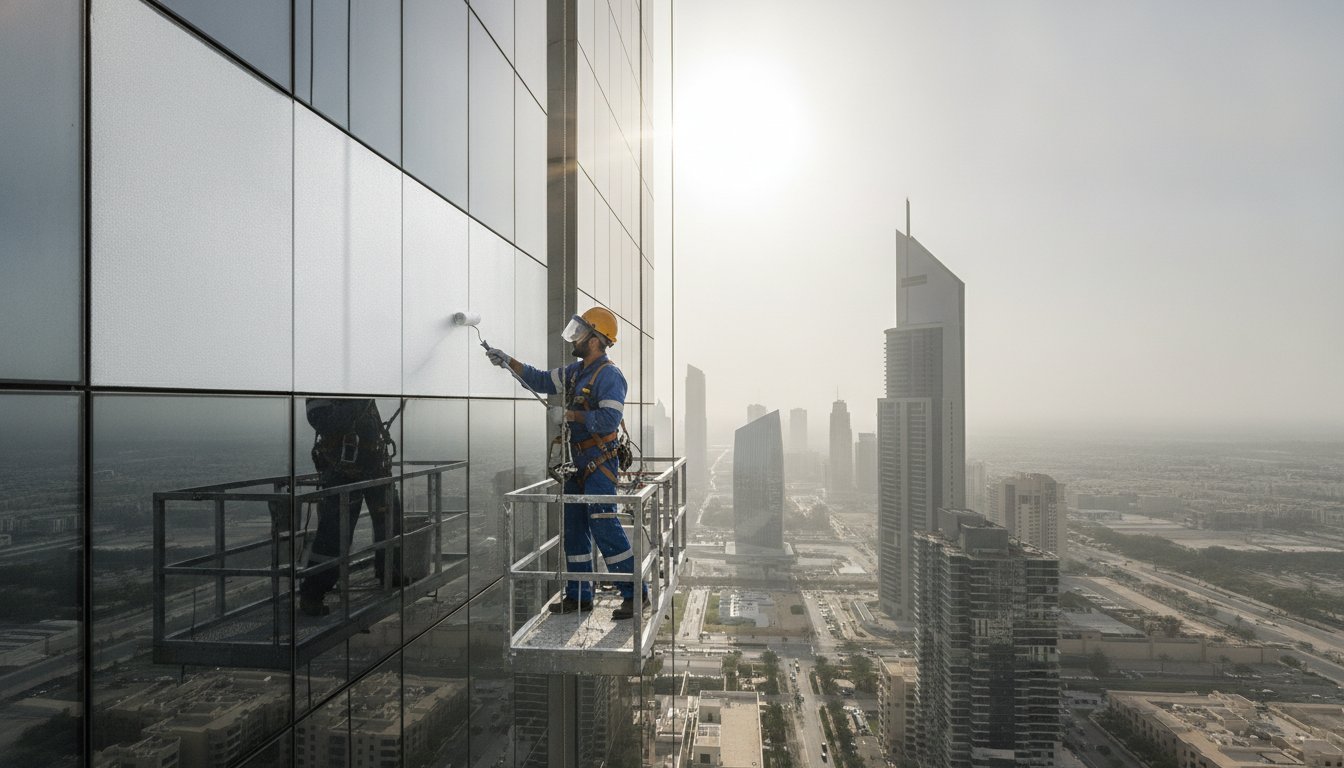
In extreme environments, a building’s exterior finish serves as a technical shield rather than a cosmetic luxury. Many asset managers struggle to determine exactly how often should a building be painted, frequently waiting until visible peeling occurs before taking action. By that stage, however, underlying moisture infiltration or intense UV degradation may have already compromised the structural substrate. We recognize that your property is a high-value investment, which makes it essential to distinguish between a simple aesthetic refresh and a functional protective system.
This 2026 maintenance guide provides a data-driven framework for your repainting schedule, accounting for specific materials like stucco, metal, and painted brick. We examine how regional variables, such as the extreme heat of the UAE, necessitate more frequent maintenance cycles compared to global averages. You’ll learn to identify the early warning signs of coating failure and discover how advanced technologies, including thermoactive coatings that reflect up to 85 percent of solar radiation, can significantly extend the life of your asset. We also address the operational impact of Dubai Law No. 7 of 2025 to ensure your upcoming projects align with the latest professional competency requirements.
Key Takeaways
- Establish a data-driven maintenance schedule by understanding how material porosity and surface type dictate coating adhesion longevity.
- Determine exactly how often should a building be painted when operating in extreme climates characterized by high UV radiation and significant thermal expansion.
- Identify early failure indicators, such as surface chalking or hairline cracks, to prevent minor aesthetic issues from evolving into costly structural damage.
- Distinguish between traffic-driven interior maintenance needs and the specialized protective requirements of exterior high-rise and villa finishes.
- Maximize your maintenance ROI by utilizing high-performance protective systems and certified Terraco applications designed for long-term durability.
Standard Maintenance Cycles: How Often Should You Paint by Surface Type?
Determining how often should a building be painted requires a technical analysis of the substrate’s porosity and environmental exposure. Paint isn’t merely a colorant; it’s a protective film that bonds to various surfaces with differing levels of efficacy. Understanding Paint composition and types is essential for selecting a binder that matches the substrate’s thermal expansion coefficient. Porous materials like wood and masonry offer deep mechanical anchors for coatings, yet they also absorb moisture that can destabilize the bond from within if the protective layer is compromised.
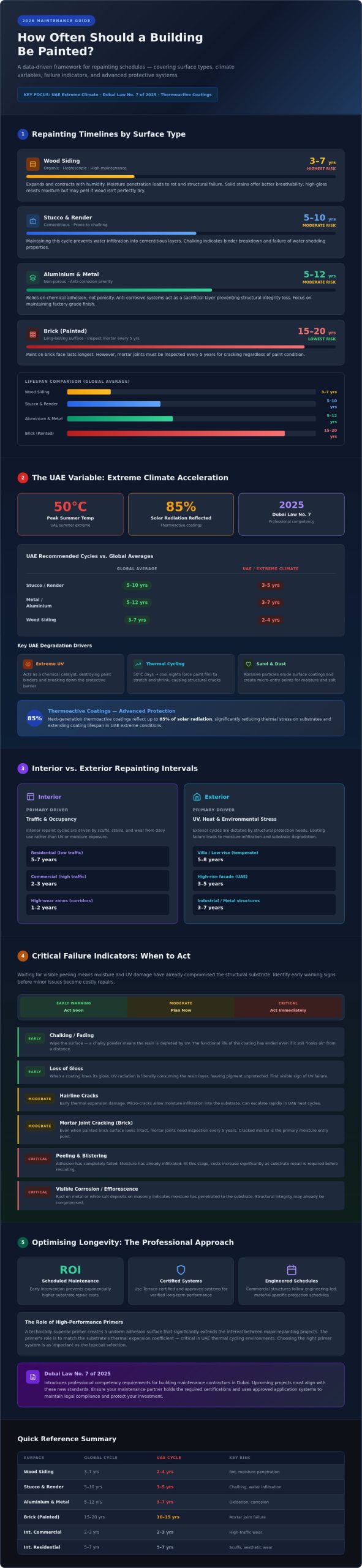
Wood is the most high-maintenance substrate in any portfolio. Because it’s organic and hygroscopic, it reacts to humidity by expanding and contracting. This movement puts immense stress on the paint film. Without frequent attention, typically every 3 to 7 years, moisture penetrates the grain. This leads to rot and expensive structural failure that a simple recoating can’t fix; for framed properties, ensuring internal dry conditions through cavity wall insulation removal is often a critical step in preventing this deep-seated moisture damage. In contrast, masonry and stucco are more resilient, but they’re prone to “chalking” as the binders break down, which signals that the water-shedding properties are failing.
Non-porous substrates like aluminium and steel don’t absorb paint. They rely on sophisticated chemical adhesion. When maintenance is neglected on these surfaces, oxidation begins. For industrial or high-rise assets, we utilize anti-corrosive systems that act as a sacrificial layer. These systems are designed to prevent the underlying metal from losing its structural integrity, extending the functional life of the facade significantly.
Material-Specific Repainting Timelines
- Wood Siding: 3 to 7 years. Solid stains offer better breathability, while high-gloss paints provide superior moisture resistance but may peel faster if the wood isn’t perfectly dry.
- Stucco and Render: 5 to 10 years. Maintaining this cycle is critical to prevent water infiltration into the cementitious layers.
- Brick (Painted): 15 to 20 years. While the paint on the brick face lasts a long time, you must inspect the mortar joints every 5 years for signs of cracking.
- Aluminium and Metal: 5 to 12 years. The focus here is on preventing oxidation and maintaining the factory-grade finish.
The Difference Between Aesthetic Refresh and Functional Recoating
Facility managers often ask how often should a building be painted to maintain structural integrity rather than just curb appeal. Fading is often the first sign of UV failure. When a coating loses its gloss, the resin is literally being eaten away by radiation. This leaves the pigment unprotected. If you can wipe a “chalky” powder off the surface with your finger, the functional life of the paint has ended.
The role of high-performance primers shouldn’t be underestimated. A technically superior primer creates a uniform surface that extends the interval between major projects. While residential properties might prioritize aesthetics, industrial and commercial structures follow engineering-led schedules. These schedules prioritize the protection of the asset’s core materials over simple visual updates. Using certified systems, such as those provided by The Awesome Painting Services, ensures that the coating performs its primary role: acting as a barrier against the elements.
The UAE Variable: How Extreme Climates Accelerate Paint Degradation
The UAE climate presents a unique engineering challenge for building maintenance. While standard guides might suggest decade-long intervals, the reality of the Middle East is far more demanding. Peak summer temperatures reaching 50°C cause substrates to undergo significant thermal expansion. When the evening cools, these materials contract. This constant cycle forces the paint film to stretch and shrink, eventually leading to structural cracks. Research into how extreme climates accelerate paint degradation confirms that traditional coatings often lack the elasticity required for this environment.
UV radiation in high-index regions like Dubai acts as a chemical catalyst that destroys paint binders. This process isn’t just about losing visual appeal; it’s a fundamental breakdown of the protective barrier. When considering how often should a building be painted in this region, asset owners must also account for the “sandblasting” effect of desert winds. High-velocity sand particles physically abrade the exterior finish, thinning the protective layer year by year. This mechanical wear, combined with chemical degradation, means a standard paint job can fail years earlier than it would in a temperate climate.
Impact of 100% UV Exposure on Colour Retention
The intense Middle Eastern sun causes rapid pigment breakdown through photo-oxidation. Darker shades absorb more thermal energy, which accelerates the failure of the underlying resin and increases the building’s cooling load. We’ve found that lighter colours, such as off-whites and light beiges, reflect a higher percentage of solar radiation and maintain their structural integrity for longer periods. Chalking is a visible symptom of binder degradation where the paint resin breaks down into a powdery residue. Once this occurs, the surface is no longer waterproof and requires immediate professional intervention.
Humidity and Salt-Induced Corrosion
Coastal properties in Dubai Marina or Palm Jumeirah face the added threat of high salinity. Salt air is naturally corrosive. It penetrates even minor fissures in a paint film. High humidity levels then trap this moisture against the substrate, creating an ideal environment for oxidation. If left unaddressed, this leads to the carbonation of concrete and the subsequent corrosion of internal rebar. Utilizing specialized anti-corrosive paint uae solutions is a technical necessity for high-rise assets. For comprehensive protection, our exterior high rise building painting services incorporate these advanced systems to safeguard your structural investment against the dual threats of heat and salt.
Interior vs. Exterior: Understanding Different Repainting Intervals
Asset managers must recognize that interior and exterior surfaces demand fundamentally different maintenance strategies. While we’ve established that exterior coatings serve as a technical barrier against environmental stressors, interior painting solutions are governed by operational wear and corporate standards. The decision on how often should a building be painted depends heavily on whether you’re protecting a facade from the elements or maintaining a professional atmosphere for occupants. We find that a bifurcated maintenance strategy is the most efficient way to manage long-term asset value.
Usage dictates the schedule more than anything else. In a commercial environment, the physical impact from foot traffic, furniture movement, and cleaning chemicals determines the paint’s lifespan. Furthermore, the building’s HVAC system creates a controlled but consistently dry environment. This can lead to the “brittling” of lower-quality binders over time. We prioritize high-performance, scrub-resistant finishes that withstand the rigors of modern facility management while maintaining indoor air quality through low-VOC formulations.
Exterior Painting: The Structural Shield
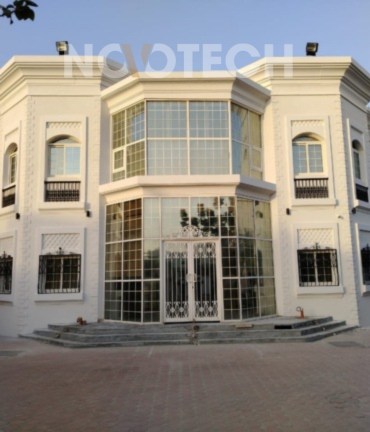
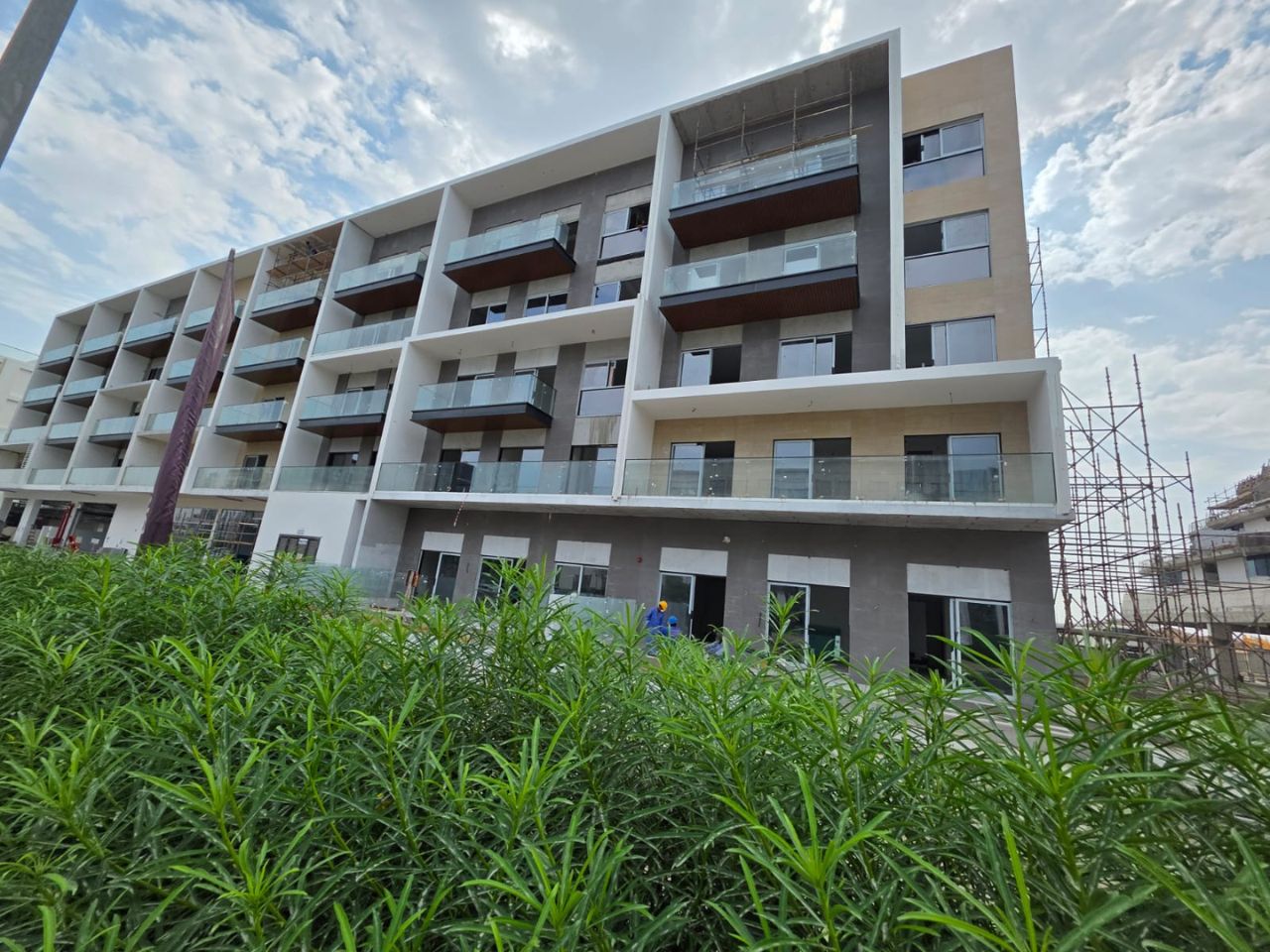
The primary goal of exterior building painting services is to provide a comprehensive seal against moisture, intense heat, and atmospheric pollutants. In the Middle East, this protective layer is the only thing standing between the substrate and the corrosive effects of salt and UV radiation. For most commercial assets in the UAE, we recommend a repainting cycle of 5 to 7 years. This interval ensures that the protective film remains intact before structural cracks can form. For specialized requirements involving vertical assets, our guide on exterior building painting dubai outlines the technical protocols necessary for high-rise maintenance.
Interior Painting: Aesthetics and Hygiene
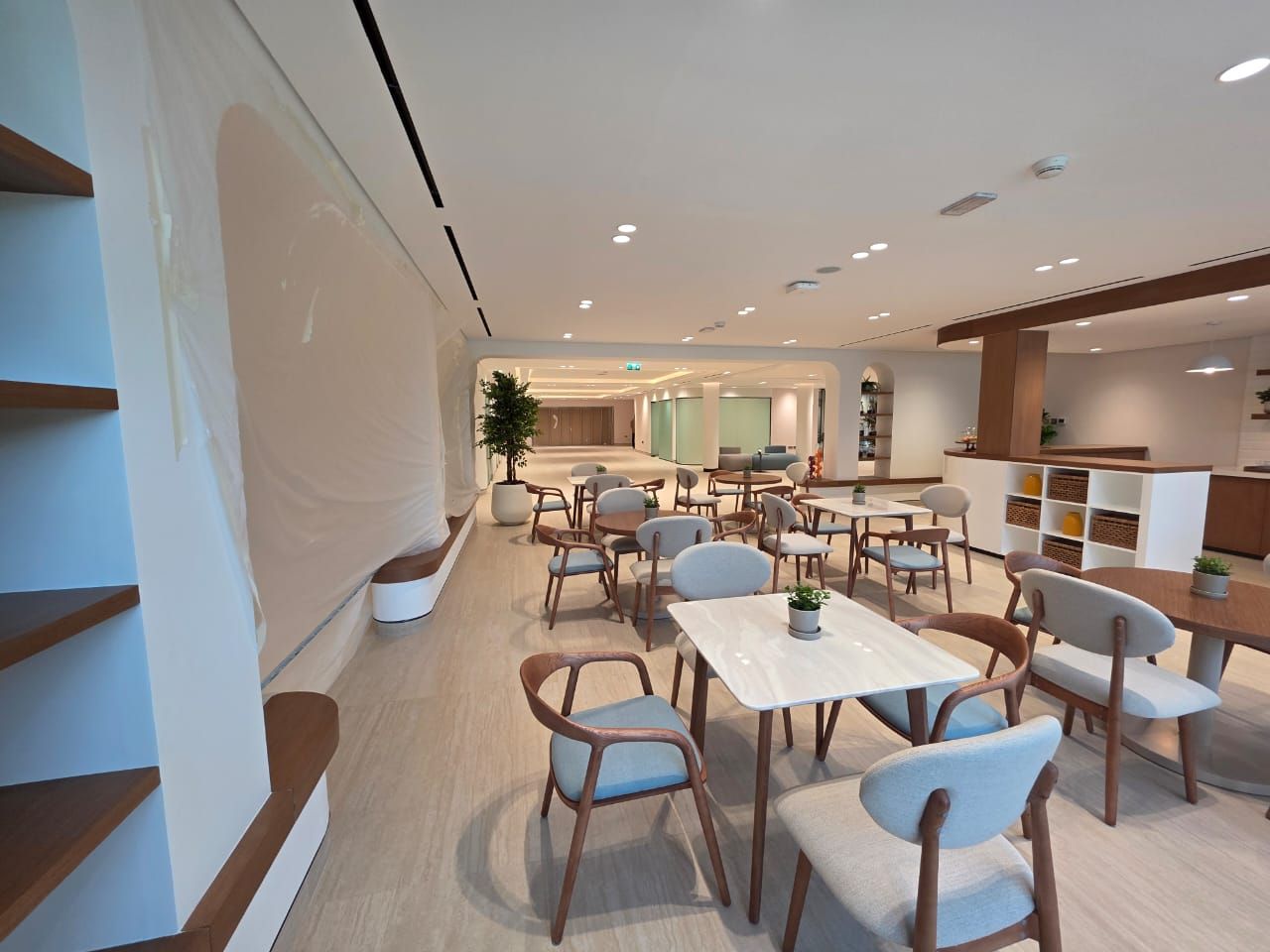
Interior maintenance cycles are categorized by the intensity of use within the facility. High-traffic areas, such as lobbies, lift banks, and main corridors, typically require a refresh every 2 to 3 years to maintain a premium brand image and ensure surface hygiene. In contrast, executive offices and low-traffic zones can often maintain their integrity for 5 to 7 years. When determining how often should a building be painted internally, we also evaluate the “scrub-rate” of the existing coating. If the paint begins to burnish or lose its pigment during standard cleaning, it’s a clear indicator that the protective resin has failed and a professional recoating is required to restore both aesthetics and surface durability.
Critical Indicators: When to Move from Observation to Action
Relying on a fixed calendar is a common error in facility management. Instead, identifying technical failure points through regular site inspections allows for proactive intervention before minor issues evolve into structural liabilities. Determining how often should a building be painted requires a shift from viewing paint as an aesthetic choice to seeing it as a functional component of the building envelope. When the integrity of this envelope is compromised, the cost of repair increases exponentially due to the risk of substrate damage.
Visual cues like bubbling and fading are the most obvious signs of a failing system. Bubbling occurs when the bond between the coating and the substrate is broken, typically by trapped moisture or thermal outgassing. Fading represents the photo-oxidation of the paint’s resin. Once the resin is depleted, the pigment is no longer held in a protective matrix, leaving the surface vulnerable to moisture absorption and chemical attack. Identifying these markers early ensures that your maintenance budget is spent on protection rather than remediation.
Biological growth and moisture markers also demand immediate attention. Mould or algae thrive in shaded, humid areas where the paint film has become porous. If you notice peeling specifically near window frames or rooflines, it indicates a failure in the joint seals or flashing. These areas act as entry points for water, which then migrates behind the paint film and causes widespread adhesion failure. We recommend a thorough audit of these junctions at least twice a year to maintain the asset’s structural health.
The “Chalk Test” for UV Damage
Binder degradation leads to the formation of a fine white powder on the surface, a process known as chalking. You can perform a simple rub test by wiping your hand across a dry exterior wall. If a white, chalky residue remains on your skin, the paint’s protective resin has eroded. This residue indicates that the coating is no longer waterproof and has become highly permeable. Chalking is a critical signal that the building’s technical shield is failing and requires a professional refresh to restore its water-shedding capabilities.
Identifying Efflorescence and Dampness
White salt deposits, or efflorescence, are often mistaken for simple dirt or dust. However, these crystalline deposits signal that water is migrating through the masonry and dissolving minerals as it moves. If you observe these salt crystals on your facade, it’s a clear sign that your waterproofing has failed, allowing moisture to push through the substrate from the inside out. Hairline cracks in stucco provide a direct path for CO2 and moisture to reach the internal steel, initiating the process of concrete carbonation. Our specialists provide comprehensive Villa Painting & Exterior Finishes that address these specific failure markers with high-durability systems designed to seal and protect your investment for the long term.
Optimising Longevity: The Professional Approach to Building Maintenance
Professional asset management views a building’s coating not as a one-time expense, but as a technical sacrificial layer. This layer is designed to bear the brunt of environmental assault so the underlying structure remains pristine. When boards evaluate how often should a building be painted, they must prioritize the total cost of ownership over the initial project quote. High-quality systems may require a higher upfront investment, but their durability often doubles the maintenance cycle, significantly improving the long-term return on investment. Cheap paint is a false economy that leads to frequent labor costs and potential substrate damage.
As Terraco Application Specialists, we advocate for the use of certified systems that offer superior adhesion and weather resistance. Surface preparation is the most critical phase of this process. We utilize high-pressure washing to remove salt deposits and perform structural crack repairs before any primer is applied. Without this rigorous preparation, even the most advanced protective painting systems will fail prematurely due to poor mechanical bonding. A well-prepared surface ensures the coating functions as a unified shield against the elements.
The Role of Specialized Protective Coatings
Specialized coatings provide specific technical advantages in the Middle East. Elastomeric coatings are engineered with high elasticity to bridge hairline cracks that naturally occur during thermal cycles. For concrete structures, anti-carbonation coatings prevent CO2 from reaching the internal reinforcement, which stops the cycle of rebar corrosion. Additionally, heat-reflective “cool roof” paints can reduce surface temperatures by 20 to 40°C. This thermal management can lead to a reduction in cooling costs by up to 30 percent, according to regional industry data.
Developing a Condition-Based Maintenance Plan
We recommend moving away from rigid “fixed-year” schedules in favor of annual expert assessments. This approach identifies localized failures before they compromise the entire facade. Regular cleaning of the building envelope removes abrasive sand and corrosive salt, which some industry professionals report can extend the lifespan of exterior finishes by approximately 20 percent. Integrating these checks into your broader building maintenance strategy preserves asset value. It ensures that the question of how often should a building be painted is answered by technical data rather than guesswork.
Securing Your Asset’s Structural Future
Protecting a commercial asset in the Middle East requires a shift from reactive repairs to a condition-based maintenance strategy. We’ve established that the question of how often should a building be painted is answered by the technical state of the substrate and the performance of its protective layers. Whether you’re managing a high-rise facade or a private villa, maintaining the integrity of the building envelope is the only way to prevent moisture infiltration and concrete carbonation. A well-executed coating system acts as a vital sacrificial layer against extreme heat and salinity.
NovoTech brings over 30 years of UAE experience to every project. As an Authorized Terraco Applicator, we specialize in high-performance high-rise and villa exterior finishes that withstand the region’s extreme UV levels. Our team ensures that your maintenance cycle is optimized for maximum longevity and structural safety. Request a Professional Building Condition Assessment from NovoTech to secure your property’s future. We’re ready to help you maintain a resilient and professional building profile for years to come.
Frequently Asked Questions
How many years does exterior paint usually last in Dubai?
Exterior paint in Dubai typically maintains its integrity for 5 to 7 years depending on the specific protective system applied. The region’s extreme UV index and intense thermal cycles accelerate the breakdown of standard binders compared to temperate climates. For high-value commercial assets, we recommend a technical audit every 4 years to identify early failure points. This proactive strategy ensures the building envelope remains a functional shield against the harsh desert environment.
Does the colour of the paint affect how often I need to repaint?
Yes, lighter pigments generally extend the interval of how often should a building be painted because they reflect a higher percentage of solar radiation. Darker shades absorb significant thermal energy, which increases the surface temperature and accelerates the chemical degradation of the paint’s resin. By choosing off-whites or light beiges, you reduce the building’s cooling load and preserve the structural integrity of the coating for a longer duration.
Can I paint over old, peeling paint to save on costs?
Painting over peeling layers is a technical error that leads to total adhesion failure. New paint requires a stable, clean substrate to form a mechanical bond. If the underlying layer is already delaminating, the weight of the new coating will simply pull it away from the wall. Proper surface preparation, including high-pressure washing and mechanical scraping, is essential to ensure the longevity of your investment and prevent premature failure.
How does humidity in coastal UAE cities affect the painting schedule?
High humidity in coastal regions like Dubai Marina or Palm Jumeirah traps moisture and salt against the building facade. This environment accelerates the oxidation of metal components and can lead to concrete carbonation if the paint film becomes porous. Buildings in these high-salinity zones require more frequent maintenance cycles and specialized anti-corrosive systems to prevent structural decay. These coastal assets often need recoating 1 to 2 years earlier than inland properties.
What is the best time of year to paint a building in the Middle East?
The optimal window for exterior painting in the Middle East is between November and March when ambient temperatures are moderate. Painting during peak summer is discouraged because extreme heat causes the paint to dry too rapidly, preventing the film from curing properly. This rapid evaporation leads to poor adhesion and a brittle finish that is prone to early cracking and peeling under the region’s intense thermal stress.
Is it necessary to repaint the entire building if only one side is faded?
While you can technically repaint a single elevation, we advise against it due to the difficulty of achieving a perfect color match. UV radiation causes existing paint to fade at different rates depending on sun exposure. Applying new paint to one side often highlights the degradation of the others. For commercial assets, repainting the entire facade ensures a uniform protective barrier and maintains a consistent, professional brand image across the property.
How do I know if my building needs waterproofing or just a new coat of paint?
Surface chalking indicates a need for a fresh coat of paint, whereas efflorescence or internal dampness signals a waterproofing failure. If you see white salt deposits or moisture stains on interior walls, water is migrating through the substrate. In these cases, a simple aesthetic refresh won’t suffice. You’ll need a comprehensive waterproofing solution to seal the structure before applying any decorative or protective finishes to prevent further decay.
What are the signs that a high-rise building needs immediate repainting?
Immediate signs of failure in high-rise buildings include widespread delamination, exposed concrete, and visible corrosion on metal fixtures. When the substrate is visible, the building is no longer protected from the elements, which can lead to rapid structural deterioration. If you notice these indicators, determine how often should a building be painted based on the severity of the damage rather than a pre-set calendar to avoid catastrophic repair costs.