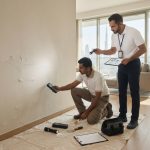
A paint snag that looks cosmetic may point to a wider surface issue. In Dubai, peeling, cracking, blistering or white powdery deposits can signal that a quick touch-up won’t be enough. Effective snagging and defect rectification painting Dubai starts with recording what’s visible, assessing the surface and addressing the cause before repainting.
When several rooms or surfaces need attention, vague notes make snags easy to overlook and hard to track. This checklist explains how to inspect painted areas, describe defects without guessing at their cause, and document each issue with useful notes and photographs. It also shows how to prioritise rectification and recheck the work when it’s complete.
NovoTech brings 30+ years of painting and maintenance experience to projects in Dubai, with expertise in paints and coatings suited to the UAE climate. Use the sequence that follows to inspect, document, assess, rectify and review each item.
Key Takeaways
- Record paint defects as clear observations, separating visible finish issues from concerns that may involve the surface or moisture.
- Describe symptoms such as peeling, blistering, cracking, uneven coverage or staining without assuming their cause.
- Prioritise snags by location, extent, recurrence and possible effects on nearby finishes.
- Use a defect register to track each issue’s location, description, photographs, status and follow-up notes.
- Follow a structured process for snagging and defect rectification painting Dubai, from surface assessment to rectification and reinspection.
What painting snags mean for Dubai property handover and maintenance
A painting snag is an observed issue with a painted finish, recorded for assessment and possible correction. It might be a visible roller mark or a sign that the surface needs closer attention. Describe what you can see before drawing conclusions. This gives owners, facility teams and project stakeholders a consistent record to review and follow up.
The distinction matters. A small, isolated patch of uneven coverage may be a finish imperfection. Peeling, recurring staining or a defect alongside dampness may call for closer assessment of the surface or moisture. Appearance alone doesn’t confirm the cause. A clear snag report separates observations from conclusions, helping the rectification plan address the condition rather than relying on a touch-up that may not resolve it.
What belongs on a painting snag list?
Make each entry specific enough for someone else to locate and review. Include:
- Location: Name the room, elevation and exact surface, such as the wall beside a window or the ceiling above a corridor entrance.
- Visible observation: Describe the issue neutrally. For example, write “paint is lifting near the window frame” rather than assigning a cause.
- Photographs: Where practical, take one image showing the area in context and a closer view of the finish.
Consistent records let stakeholders compare the original observation with the completed work. They also make it easier to track status, spot repeat issues and arrange a focused reinspection. “Paint problem in bedroom” is too vague to guide follow-up.
Why local conditions matter when reviewing painted surfaces
Dubai’s intense UV exposure, sand and humidity provide useful context when reviewing exterior paint. Sun-facing elevations may change differently from shaded areas, and exposed surfaces can accumulate dust and sand. Humidity may also be relevant when assessing staining, blistering or peeling. These conditions guide what to inspect and record, but don’t establish the cause of a specific defect.
For exterior work, consider the coating system alongside the local environment. NovoTech uses premium, UV-resistant, weather-proof, low-VOC paints and coatings specifically formulated for the UAE climate. This climate-specific expertise supports a considered approach to painting and maintenance, while assessment of the surface remains essential.
Location records are especially useful when owners, facility teams or project stakeholders are following up across multiple rooms or elevations. Note whether a defect is isolated or appears in several nearby areas, and keep the original observation for comparison after rectification. The same record can support handover and ongoing maintenance.
For more on exterior coating considerations, read NovoTech’s Dubai exterior building painting guide. A structured approach to snagging and defect rectification painting Dubai starts with accurate observations, followed by assessment and appropriate follow-up.
How to identify common paint defects before requesting rectification
Describe how the finish looks, not what you think caused the problem. A visible defect is evidence for assessment, but it doesn’t confirm whether the issue relates to the coating, surface preparation, moisture or another factor. Also note whether the mark is isolated or part of a pattern. One small patch on a wall differs from similar changes across a ceiling or exterior elevation.
For each observation, record the affected surface, approximate extent and whether nearby areas show the same symptom. This helps the person assessing the work understand its distribution. Procore’s Overview of Construction Defects and Their Impact discusses defects in the context of assessment and mitigation, reinforcing the value of documenting conditions before corrective work begins.
Paint peeling, blistering and cracking: what to record
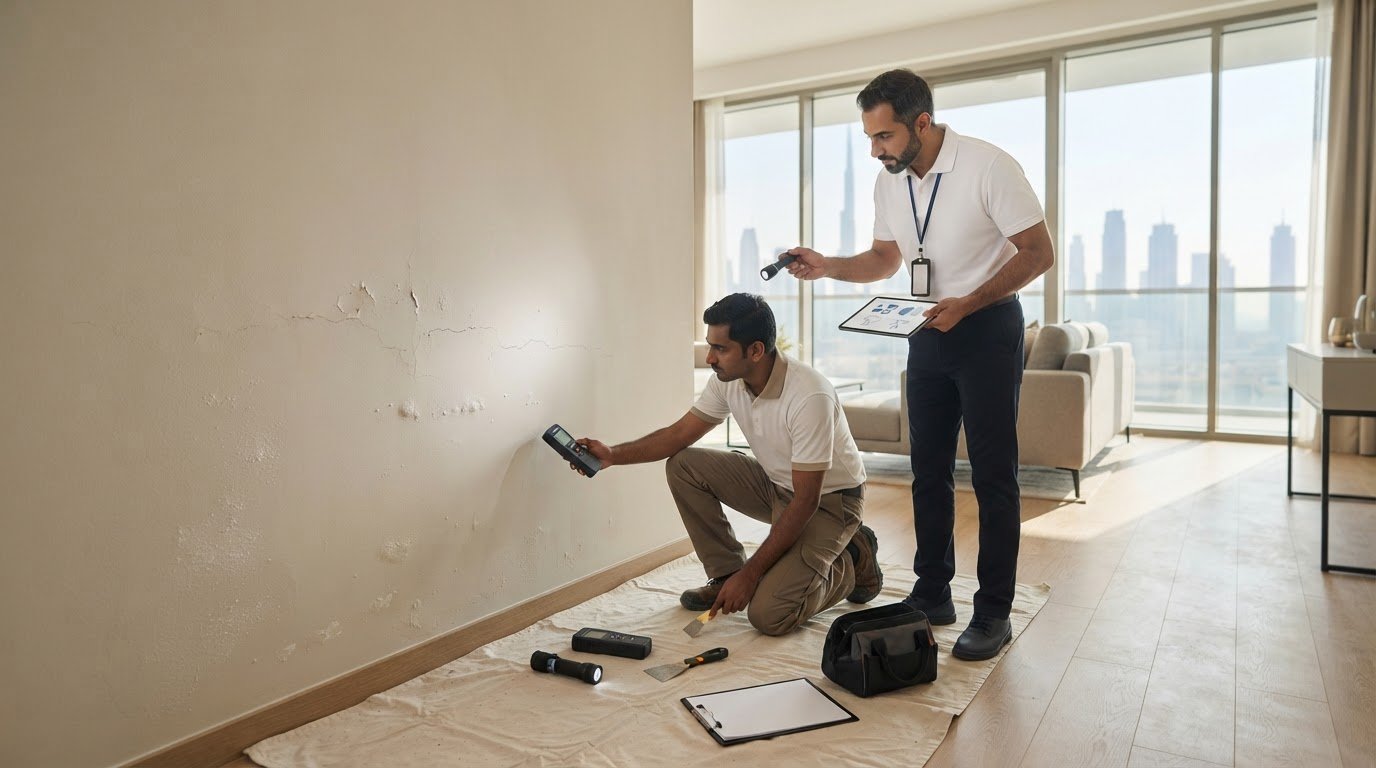
Describe the visible condition precisely. For peeling, note where the paint edge is lifting and whether the patch is isolated or extends along a seam. For blistering, record the location and whether bubbles appear in one area or across the surface. For cracking, describe whether the lines are fine or pronounced and whether they appear in one place or several. These are observations, not diagnoses.
Document the area before it is disturbed. Scraping, sanding or covering a defect can change its appearance and make later comparison harder. Record what you see, then leave conclusions about the cause and repair approach to the assessment.
Stains, patchiness and uneven paint coverage
Colour variation, roller marks and patchy coverage can look different as daylight or artificial lighting changes. Where possible, photograph the area under consistent lighting. Include a wider view showing its position on the wall or ceiling, and note nearby joints, previous repairs, corners or transitions as landmarks for follow-up.
Describe stains neutrally. Record their colour, outline and location, and whether they look damp, but don’t label them as water ingress or coating failure based on appearance alone. Flag damp-looking areas for assessment, especially if similar marks recur nearby. Moisture concerns can involve more than the visible paint layer, so NovoTech’s Dubai waterproofing guide offers related context on protecting building surfaces.
Use the same method indoors and outdoors: identify the symptom, map its extent, note any pattern and preserve the evidence for review. This gives the rectification team a useful starting point without treating a visible mark as a confirmed diagnosis. For snagging and defect rectification painting Dubai, NovoTech’s painting and maintenance services support a coordinated response from assessment through follow-up. Explore NovoTech’s painting and maintenance services.
How to prioritise paint snags and distinguish cosmetic from wider concerns
Not every paint imperfection needs the same follow-up. A small, isolated patch of uneven coverage may be a limited appearance issue. Peeling that recurs across a wall or staining alongside a damp-looking area deserves closer assessment. These are ways to organise observations, not confirmed diagnoses. Appearance alone may not establish the cause or the repair required.
Set priorities using four factors: location, extent, recurrence or spread, and whether adjacent finishes also appear affected. Log a mark in one small area for review. Repeated breakdown across a surface may merit earlier assessment to establish its extent. Don’t label a paint snag structural or hazardous without supporting assessment.
Cosmetic paint imperfections versus signs needing assessment
Use “cosmetic” as a provisional description, not a final classification. An isolated patch of uneven coverage, for example, can be recorded as an appearance concern. Repeated peeling across a surface, or similar changes in several locations, should be logged as a pattern for assessment. This helps teams direct attention without assuming a cause or prescribing a repair before reviewing the surface.
| Observation | Evidence to record | Priority | Assessment action |
|---|---|---|---|
| Small, isolated uneven patch | Exact location, approximate extent and clear view of the finish | Routine appearance review | Compare with nearby painted areas and assess the finish |
| Peeling or cracking in several areas | Locations, distribution and whether the affected areas appear to be expanding | Prompt review of the pattern | Assess the affected surface before planning rectification |
| Staining or damp-looking paint | Position, visible extent and any nearby affected finishes | Prioritise assessment before touch-up | Review the moisture concern separately from the paint finish |
| Coating breakdown on a metal surface | Area and extent of visible coating change | Prioritise surface assessment | Review the coating and metal surface before deciding the next step |
When paint defects may connect to moisture or metal corrosion
Staining or coating breakdown may warrant a broader review, particularly if it recurs or appears alongside damp-looking areas. A paint touch-up addresses appearance, but it shouldn’t replace assessment of a possible moisture concern. Similarly, record visible changes on metal surfaces for review rather than assuming they confirm corrosion. NovoTech’s UAE anti-corrosive paint guide provides related context on protective coatings for metal surfaces.
For snagging and defect rectification painting Dubai, separate what is visible from what still needs assessment. This helps owners and maintenance teams assign follow-up, avoid premature conclusions and plan rectification around each surface’s observed condition.

A Dubai painting snagging checklist for clear records and reinspection
A useful snagging record makes each observation easy to locate, assess and revisit after work is complete. Follow the same sequence across rooms, units or building elevations: inspect the finish, record what you see, classify the observation, assign the agreed rectification and reinspect. This gives owners, facility teams and project stakeholders a shared reference instead of vague notes that are difficult to close out.
Before starting, choose consistent location names. Use the same room name and wall reference in every entry, and identify exterior areas by elevation or another project reference. Note access constraints, such as a surface behind fixed furniture or an area requiring coordinated access. Record adjacent finishes that may need protection during rectification.
- Inspect: Review painted surfaces methodically and note visible defects without disturbing them.
- Record: Give each observation a unique reference and capture its location, description and supporting photographs.
- Classify: Mark whether the item is awaiting assessment, has an agreed action or is ready for rectification.
- Assign: Record the agreed rectification action and any access or protection considerations.
- Reinspect: Compare the completed area with the original record and document the outcome.
Build a useful paint defect register
A defect register should help someone who wasn’t at the first inspection understand exactly what needs review. Give each entry a unique reference, precise location and neutral description. Add photographs showing both the affected area and its position within the room or elevation. Include dates only when they’re supported by the project record.
Keep the register current as each item progresses. Useful fields include the assessment outcome, agreed action, completion status, follow-up notes and reinspection result. “Awaiting assessment” is more informative than an ambiguous “open,” particularly when several parties are tracking the same list. Preserve the original description so the follow-up can be compared with the condition first recorded.
Reinspect rectified areas consistently
Use the original location and photographs to find the repaired surface, then compare it with the surrounding finish under suitable lighting. Review coverage, edges, colour consistency and cleanliness. Check the overall appearance from a normal viewing position as well as up close. If a defect remains, record it separately with updated evidence and status rather than silently closing the original entry.
A structured register supports snagging and defect rectification painting Dubai by linking initial observations to agreed work and documented follow-up. NovoTech provides painting and maintenance services for coordinated rectification. Arrange painting defect rectification with NovoTech.
How NovoTech approaches painting defect rectification in Dubai
Effective rectification starts with understanding the recorded snag, not simply covering the visible mark. NovoTech handles painting defect rectification as a coordinated process: review the defect information, assess the affected surface, define the scope, carry out the agreed painting work and follow up on the completed area. This links the original observation to the work planned while keeping assessment distinct from assumptions about the cause.
Project requirements vary. A villa may have a small number of interior or exterior observations, while a high-rise residential or commercial building or managed facility may require coordination across multiple areas. NovoTech’s in-house team of 30 experts and tradespeople supports painting and maintenance projects. The company has 30+ years of experience and has delivered over 250 successful projects. These figures describe the company’s experience, not the scope of every project.
What to expect from a structured rectification scope
Recorded defects provide a starting point for assessing the surface and defining the work. The scope can distinguish between the visible paint finish and any wider surface concern identified during assessment. Preparation and rectification depend on the condition of the area, not the symptom alone. Location, extent, nearby finishes and access considerations all help shape a practical plan.
Paint and coating selection should reflect the UAE climate and the surface being treated. NovoTech uses premium, UV-resistant, weather-proof, low-VOC paints and coatings specifically formulated for the UAE climate. The appropriate system depends on the project and assessed surface. No coating choice removes the need to identify and address the observed condition.
For exterior or specialist coating requirements, NovoTech is an Authorized Terraco applicator in Dubai, Sharjah and UAE. This authorization complements its painting and maintenance expertise when Terraco application is relevant to the project scope. The agreed approach should clearly identify the surfaces and observations being addressed.
Discuss your Dubai painting snag list with NovoTech
Prepare the affected locations, photographs and current defect register for an initial discussion. Include notes on status, access constraints and adjacent finishes that may need protection. This gives the team a clear view of the work and helps frame assessment and rectification around the property’s actual condition.
NovoTech provides painting and maintenance services for villas, high-rise residential and commercial buildings, and facilities in Dubai. If you’re planning snagging and defect rectification painting Dubai, bring together the recorded observations and project context to organise the next steps.
Discuss painting snagging and rectification with NovoTech and share your property details and snag list.
Turn your snag list into a clear next step
A well-documented paint snag list gives your project team a practical starting point. Progress depends on turning observations into an appropriate assessment and rectification scope. Keep original records accessible, note any changes and make sure follow-up reflects the surface condition rather than closing an item after a touch-up alone.
For property owners, facility managers and project decision-makers, bring together the relevant information: affected locations, photographs, access considerations and each snag’s current status. NovoTech can use this context to discuss painting and maintenance requirements for your Dubai property and plan a coordinated route from assessment through follow-up.
Whether you’re addressing a handover list or maintaining painted surfaces over time, structured snagging and defect rectification painting Dubai makes decisions clearer and follow-up easier to manage. Discuss your painting snag list and rectification requirements with NovoTech to plan the next steps for your property.
Frequently Asked Questions
What is painting snagging?
Painting snagging is the recording of visible finish issues for assessment and possible rectification. For example, an entry might identify a mark on a bedroom ceiling without claiming it was caused by a leak or poor preparation. This keeps the record factual and useful to whoever reviews it. In a handover or maintenance file, a clear entry also connects the observation to later decisions and follow-up.
What paint defects should I look for during a Dubai property inspection?
Look for peeling, blistering, cracking, patchiness, uneven coverage and staining. Check whether similar symptoms appear elsewhere. During an exterior review, note whether affected areas are exposed or sheltered; Dubai’s UV exposure, sand and humidity provide context, not proof of a cause. Inspect in adequate light and record what’s visible before anyone alters the finish, preserving the initial condition for assessment.
Can paint defects indicate a moisture problem?
They can warrant a closer look, but staining, blistering or peeling alone doesn’t establish that moisture is present. Record whether the mark appears damp, where it sits and whether nearby finishes show related changes. If water ingress is suspected, treat it as a separate assessment concern rather than assuming paintwork alone will address it. This helps the rectification plan account for the broader surface condition before selecting a finish repair.
Is repainting always necessary to rectify a paint snag?
No. The right action depends on the observed defect, its extent and the condition of the underlying surface. A limited finish issue may call for localised work, while a wider or recurring symptom may need assessment before the scope is set. Repainting over a stain without reviewing the surrounding condition, for example, could conceal the mark without resolving the concern behind it. Assess first, then choose the appropriate rectification approach.
What should a painting snag list include?
Include a unique reference for each item, the room or elevation, a precise location, a factual description and supporting photographs where practical. Add fields for assessment, agreed action, current status and reinspection outcome. “Living room, north wall beside door” is more useful than “wall needs paint.” Distinct entries make it easier to assign follow-up and check whether each observation has been addressed.
How do I check whether a paint defect has been rectified?
Return to the recorded location and assess it against the original evidence. View the area under suitable lighting, check it from a normal viewing position and compare it with the surrounding finish. Look for visible differences, including at repair edges, and note any cleanliness issues. Update the register entry with the result. If something remains, keep it open or record a linked follow-up rather than marking it complete.
Can painting snags be rectified in high-rise buildings in Dubai?
Yes. NovoTech provides exterior building painting for buildings up to G+30. High-rise rectification needs a scope suited to the affected elevations, access requirements and coating system; a small interior repair approach may not apply. Identify the building location and specific areas involved in the snag list. This gives project decision-makers a practical basis for planning snagging and defect rectification painting Dubai around the building’s requirements.