Your luxury villa facade isn’t just suffering from a cosmetic glitch; it’s reacting to a complex interplay of thermal stress and subsurface moisture that standard repainting simply cannot fix. We understand the frustration of seeing a significant investment in your property’s exterior compromised by recurring bubbles and peeling, often just months after a fresh coat. When you’re troubleshooting paint blistering on exterior walls in Dubai, it’s vital to recognize that these failures are often signals of potential structural dampness rather than simple product defects.
This 2026 guide provides the authoritative framework for identifying whether your walls are suffering from solar heat expansion or critical moisture entrapment. We’ll outline the exact steps to remediate the substrate permanently and ensure your building complies with the latest Dubai Law No. (3) of 2026 building safety requirements. You’ll also learn how to select advanced coatings that meet Al Sa’fat 2.0 thermal standards, ensuring your facade survives the intense UAE climate for years rather than months. By shifting from reactive maintenance to integrated protective systems, we help you protect both your property’s value and your peace of mind.
Key Takeaways
- Distinguish between thermal expansion and moisture entrapment to target the specific failure point of your villa’s facade.
- Use the physical inspection method to determine if the substrate requires deep structural drying or advanced heat-reflective coatings.
- Professional troubleshooting paint blistering on exterior walls in Dubai must include the complete mechanical removal of salt efflorescence and degraded layers.
- Implement authorized protective systems that meet Al Sa’fat 2.0 standards to ensure long-term durability against extreme UV radiation and humidity.
- Transition from recurring cosmetic repairs to permanent remediation strategies that protect your property’s structural integrity and market value.
What is Paint Blistering on Exterior Walls?
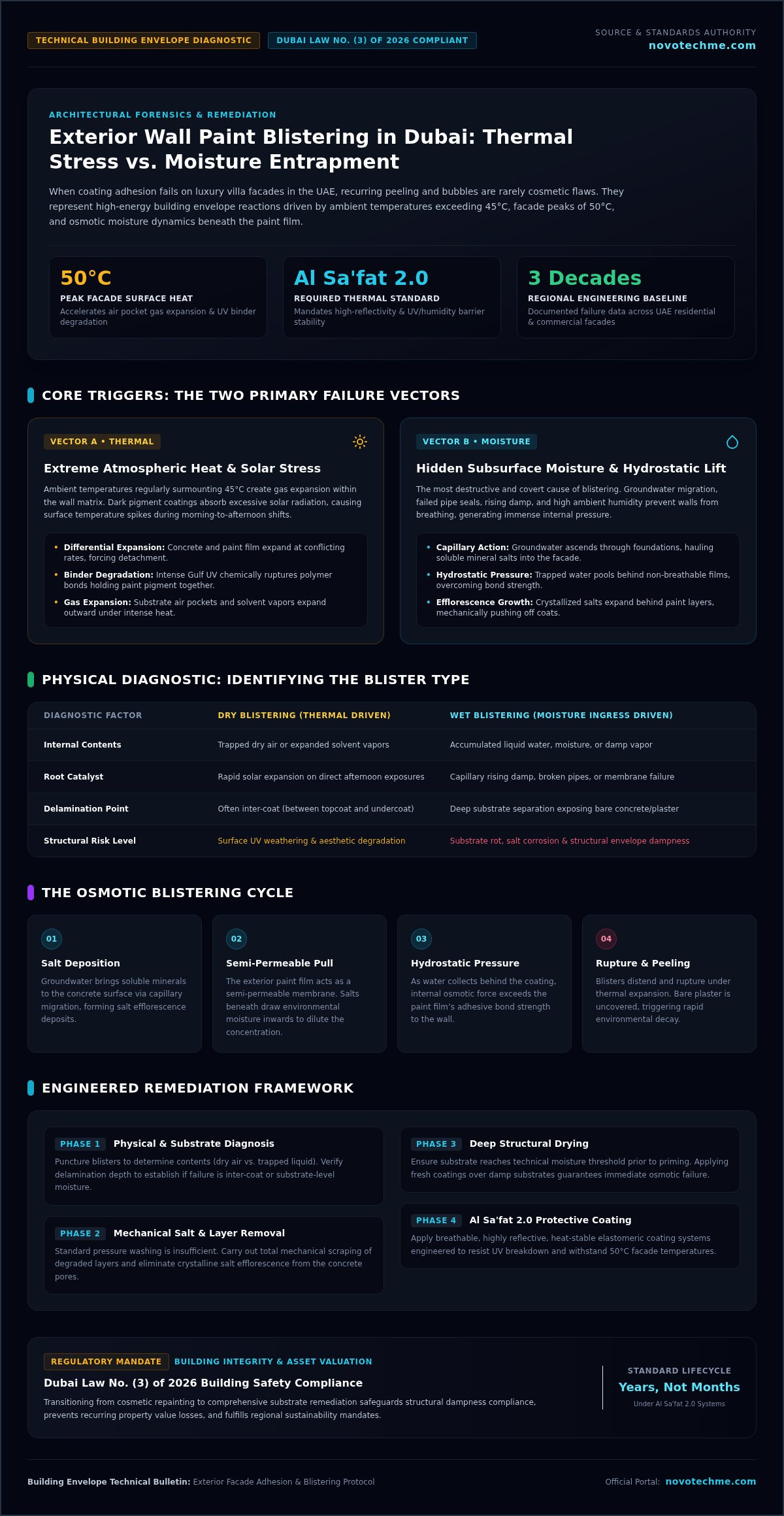
Paint blistering represents a localized failure of the coating system, characterized by the formation of bubbles or domes where the paint film has detached from the underlying substrate. In the technical environment of the UAE, this isn’t merely a surface defect; it’s a symptom of compromised adhesion. These blisters can contain air, water vapor, or liquid, and their presence indicates that the internal pressure beneath the film has exceeded the coating’s bond strength. When you’re troubleshooting paint blistering on exterior walls in Dubai, you must view these bubbles as data points that reveal how the building envelope is interacting with the region’s extreme climate.
The phenomenon occurs when the physical bond between the paint and the wall is interrupted. In luxury villas and high-rise structures across Dubai, this interruption is frequently driven by the Osmotic blistering process. This happens when microscopic salt contaminants on the concrete surface draw moisture through the semi-permeable paint film. As the water accumulates to dilute these salts, it creates hydrostatic pressure that forces the paint away from the wall. Without intervention, these small bubbles eventually rupture, leading to widespread peeling and exposing the bare substrate to further environmental degradation.
Physical Characteristics of Blistering
Blisters usually manifest in two distinct forms: dry or wet. Dry blisters are typically the result of thermal expansion, where intense heat causes air trapped in the substrate or the paint itself to expand. Wet blisters indicate a moisture ingress issue, often linked to rising damp, leaking pipes, or poor waterproofing. Identifying the contents of these bubbles is the first step in effective troubleshooting paint blistering on exterior walls in Dubai. If the failure occurs between coats of paint, it’s often a sign of poor surface preparation or incompatible materials. If the entire coating system lifts to reveal bare plaster, the issue is likely rooted in the substrate’s moisture levels or chemical composition.
NovoTech’s three decades of regional experience suggests that blistering in the Middle East is rarely a single-factor event. It’s usually a combination of high ambient temperatures, which can reach 50 degrees Celsius on a facade, and high relative humidity that prevents the substrate from “breathing.” We recognize that a facade is a dynamic system. When the coating lacks the necessary breathability or elasticity to handle these cycles, blistering is the inevitable outcome. Understanding this technical baseline is essential before attempting any remediation work on your property.
Core Causes of Exterior Paint Bubbling in Dubai
Dubai’s climate presents a unique set of stressors that accelerate coating failure. When troubleshooting paint blistering on exterior walls in Dubai, we categorize triggers into two primary vectors: atmospheric heat and subsurface moisture. Ambient temperatures frequently exceeding 45 degrees Celsius create a high-energy environment where air pockets within the substrate expand rapidly. This gas expansion exerts outward force against the paint film. If the coating lacks sufficient elasticity or is compromised by UV degradation, it detaches, forming the characteristic bubbles seen on many luxury villa facades. Darker pigment selections exacerbate this, as they absorb higher levels of solar radiation, resulting in localized surface temperatures that far exceed the ambient air temperature.
The Role of Extreme UAE Heat
Intense UV radiation in the Gulf region acts as a chemical catalyst, breaking down the polymer binders that hold paint pigments together. Once these binders weaken, the topcoat loses its structural integrity and its ability to adhere to the primer. Rapid surface temperature spikes, common during the transition from shaded mornings to direct afternoon sun, cause differential expansion rates between the wall and the paint. Thermal blistering occurs when intense solar radiation causes trapped air or solvent vapors to expand and push the paint film away from the substrate. To prevent this, our technical teams often recommend protective painting systems specifically engineered for high-reflectivity and thermal stability.
Hidden Moisture and Hydrostatic Pressure
While heat is a visible threat, moisture remains the most insidious cause of failure in Dubai. Groundwater can rise through the building’s foundation via capillary action, transporting dissolved minerals to the surface. This leads to salt efflorescence, where white crystalline deposits form behind the paint layer, physically prying the coating off the wall. Additionally, the stark temperature differential between chilled indoor spaces and the external desert heat creates interstitial condensation. This moisture becomes trapped behind non-breathable elastic films, which were originally designed to keep rain out but inadvertently seal internal vapor in.
- Faulty Infrastructure: Leaking AC condensate lines or microscopic plumbing fractures within the masonry force liquid water outward through the render.
- Substrate Curing: Applying coatings to new concrete before it has reached its full 28-day cure cycle traps residual moisture, leading to early-stage delamination.
- Incompatible Films: High-build elastic paints that lack vapor permeability prevent the natural evaporation of moisture from the wall.
Identifying these root causes requires a technical understanding of Dubai’s specific building physics. Failure to address the source of moisture or heat absorption ensures that any aesthetic repair will be temporary, leading to wasted expenditure on recurring maintenance cycles. We prioritize a diagnostic approach that looks beyond the surface to ensure the long-term integrity of the building envelope.
Diagnosing the Root Cause: Moisture vs. Thermal Blisters
Successful troubleshooting paint blistering on exterior walls in Dubai requires a transition from visual observation to forensic analysis. You cannot determine the appropriate remediation strategy simply by looking at a bubble from a distance. Instead, you must physically inspect the failure point to understand the underlying mechanics. We recommend selecting a representative blister and using a sharp blade to open it, which immediately reveals the level at which the adhesion failed. The condition of the substrate and the back of the paint film provide the technical data needed to differentiate between environmental heat stress and internal moisture ingress.
If slicing open the blister reveals bare concrete or plaster, moisture is the primary culprit. The water has exerted enough pressure to break the bond between the primer and the wall itself. However, if the underside of the bubble shows a previous layer of paint, the failure is likely due to poor inter-coat adhesion, often caused by painting over dust, chalking, or incompatible coatings. Dry blisters that lack any sign of liquid or salt crystals typically indicate thermal expansion or gas pocketing, where trapped solvents or air have expanded due to Dubai’s intense solar radiation. Identifying these nuances is a critical phase in troubleshooting paint blistering on exterior walls in Dubai, as it prevents the mistake of applying a new coating over a fundamentally unstable surface.
The Slice Test Protocol
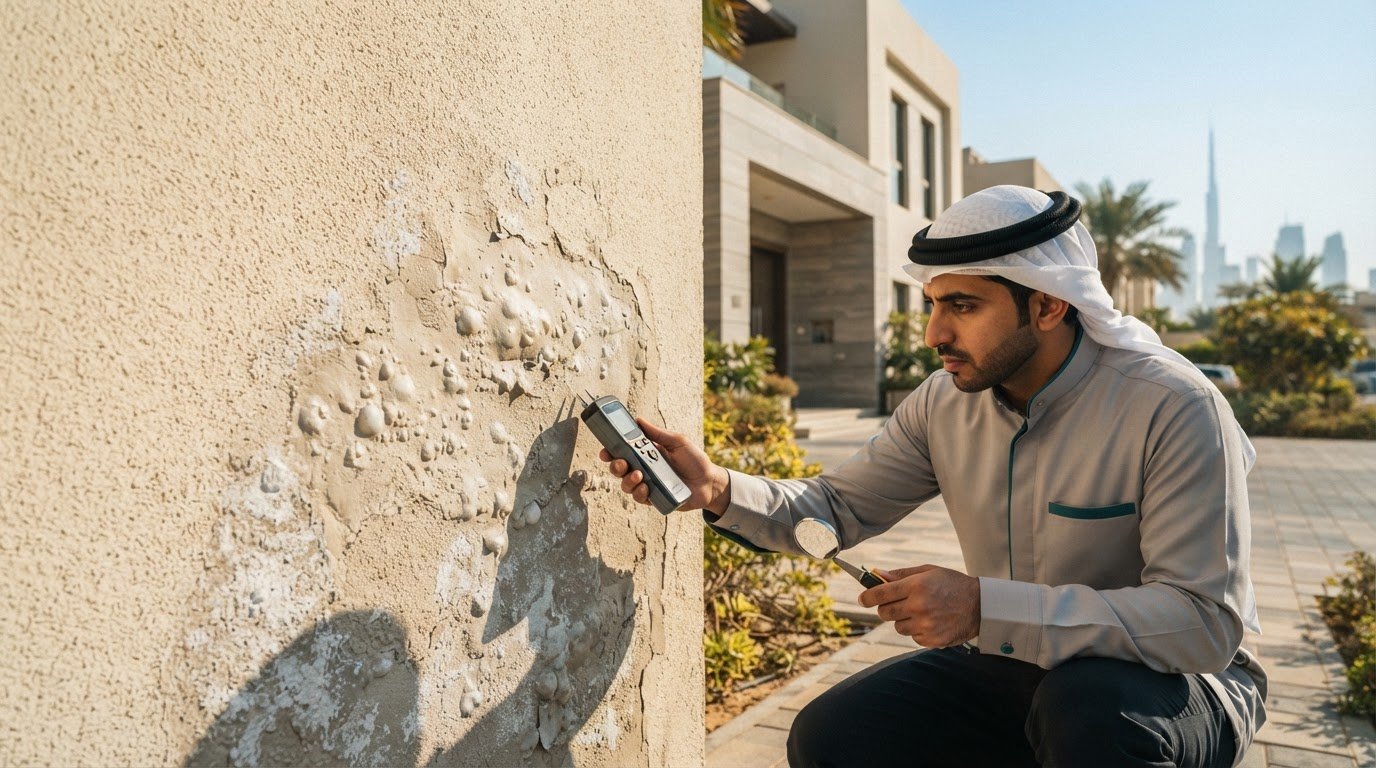
To perform a professional-grade diagnosis, carefully cut a mature blister using a sharp utility knife. Once you’ve peeled back a small section, examine the back of the paint film for signs of dampness or white, powdery salt crystals. These crystals, known as efflorescence, confirm that moisture is moving through the masonry and transporting minerals to the surface. You should also check the substrate for any darkening, which indicates active water saturation. Documenting these findings is essential for determining if a standard repainting job is sufficient or if the building requires a comprehensive waterproofing intervention before any aesthetic work begins.
Using Moisture Meters for Accurate Diagnostics
We utilize professional-grade moisture meters to eliminate guesswork during the diagnostic phase. Measuring the substrate moisture levels is a mandatory step before planning any costly exterior renovation works. Readings that exceed established safety thresholds, typically above 15% to 20% for masonry, indicate that the wall is too damp to accept a new coating. Attempting to paint over these areas will only lead to rapid re-blistering as the moisture attempts to escape. For properties displaying high moisture levels, we strongly advise collaborating with Expert Waterproofing Companies in Dubai: Protecting Structures in 2026 to resolve the structural ingress. Only once the substrate has reached a technically sound state of dryness should the final protective painting system be applied.
Step-by-Step Remediation Protocol for Blistering Walls
Remediating a compromised facade requires more than a simple aesthetic refresh; it demands a rigorous technical protocol to ensure the new coating system doesn’t succumb to the same environmental stressors. When troubleshooting paint blistering on exterior walls in Dubai, the first priority is the complete mechanical removal of all loose, bubbling, and degraded paint sections. Leaving even microscopic areas of failed adhesion creates a weak point that will eventually lead to systemic failure. Once the surface is stripped, we transition to a deep cleaning phase to eliminate salt efflorescence, dust, and chemical contaminants that have accumulated on the masonry.
Substrate Preparation and Washing
Pressure washing is a non-negotiable step in the Dubai environment. This process removes stubborn salt deposits that are the primary cause of recurring paint delamination. After washing, you must allow the masonry to dry completely under the Dubai sun before applying any primer. Painting over a damp substrate, even after cleaning, will trap moisture and trigger immediate osmotic blistering. During this drying phase, we meticulously inspect the facade to ensure all structural cracks are sealed with high-performance, climate-resilient exterior acrylic fillers. This prevents future water ingress pathways and stabilizes the building envelope against the region’s intense thermal cycles.
Selecting Climate-Proof Topcoats
The choice of finish determines the longevity of the remediation. You should avoid standard retail DIY paints, as they frequently lack the necessary elasticity and breathability specifications required for the UAE. Instead, we utilize advanced elastomeric coatings designed specifically for high thermal movement cycles. These systems allow the building to “breathe,” venting internal moisture vapor while remaining impermeable to external humidity and rain. For structures in coastal areas or industrial zones, integrating an Anti-Corrosive Paint in the UAE: High-Performance Protection for Extreme Climates provides an additional layer of defense against salt-laden air.
- Primer Selection: Apply a high-penetration, alkali-resistant primer to stabilize the underlying masonry plaster and neutralize pH levels.
- Technical Compliance: Ensure the topcoat meets Al Sa’fat 2.0 standards with a minimum Light Reflectance Value (LRV) of 50 to minimize heat absorption.
- System Integrity: Use a highly breathable, UV-stable exterior protective system to resist the 30% faster degradation rate typical of the Dubai climate.
Implementing this protocol ensures that your property remains compliant with the 2026 building safety regulations while significantly extending the maintenance cycle. To secure your property’s exterior against the elements, contact our team to discuss our specialized Exterior Building Painting Services.
Professional Structural Solutions with NovoTech
NovoTech leverages over 30 years of UAE regional technical painting expertise to resolve the root causes of facade degradation. Since our founding in 1993, we’ve specialized in high-performance coatings for luxury villas and complex high-rise structures up to G+30 levels. We understand that troubleshooting paint blistering on exterior walls in Dubai requires an engineering mindset that looks beyond the surface. Our teams provide comprehensive diagnostics to identify and remediate underlying moisture migration or thermal stress before any new protective system is applied. This methodical approach ensures that your building envelope remains structurally sound and aesthetically superior in the face of the Gulf’s environmental extremes.
Why Engineered Coating Systems Matter
We operate as an authorized Terraco applicator, providing access to premium protective textured coatings specifically engineered for the Middle East. These Terraco systems offer superior vapor permeability, which is the technical key to preventing the moisture-driven blistering failures discussed in earlier sections. Professional application is critical; our technicians ensure the exact dry film thickness required to withstand harsh coastal environments and intense UV exposure. For a deeper look at industry standards, consult our Exterior Building Painting Dubai: The 2026 Professional Guide. By utilizing these specialized systems, we provide a barrier that moves with the building rather than cracking under thermal stress.
Protect Your Dubai Property Asset Long-Term
Property owners often fall into an endless cycle of cheap, annual cosmetic repainting patches that fail within months. These reactive fixes don’t address the substrate’s health and ultimately cost more in cumulative maintenance and potential structural repair. We help you break this cycle by investing in durable, high-performance finishes that enhance both building value and long-term aesthetics. Our solutions align with Dubai Law No. (3) of 2026, ensuring your property meets all quality and safety certifications. Contact NovoTech today for an expert diagnostic assessment of your exterior walls and secure your investment with integrated excellence.
Securing Facade Longevity in Extreme Climates
Managing asset value in the Gulf region requires shifting from superficial cosmetic touch-ups to precise, engineered substrate solutions. Successful troubleshooting paint blistering on exterior walls in Dubai demands a technical understanding of the thermodynamic forces acting on your building envelope. By diagnosing moisture pathways and deploying vapor-permeable systems, you’ll protect your infrastructure from rapid atmospheric degradation.
We provide the specialized expertise needed to execute these complex remediation protocols permanently. As an authorized Terraco applicator with over 30 years of UAE experience founded in 1993, we possess the capabilities to manage assets ranging from premium villas up to G+30 high-rise structures. Our technical depth ensures your property doesn’t succumb to recurring failures. Schedule a Professional Exterior Wall Diagnostic with NovoTech to establish a resilient, high-performance facade that withstands the elements.
Frequently Asked Questions
Can I just paint over blistered exterior walls without scraping?
You shouldn’t paint over blistered surfaces without complete mechanical removal; doing so results in immediate coating failure. New paint requires a stable, clean substrate to achieve proper adhesion. If you skip scraping, the underlying air or moisture pockets will simply expand and rupture the new film within weeks. When troubleshooting paint blistering on exterior walls in Dubai, we always prioritize stripping failed layers to ensure the building envelope meets 2026 safety standards.
How long does exterior paint typically last in Dubai climate?
Standard retail coatings in the UAE typically last between three and five years. However, high-performance protective systems applied by professionals can extend this lifecycle to seven or ten years. The intense UV radiation and extreme heat cycles in the region degrade paint approximately 30% faster than in temperate climates. Utilizing UV-stable, elastomeric coatings is essential to mitigate this rapid degradation and maintain the aesthetic integrity of luxury villa facades.
Why does paint bubble on concrete walls even without rain?
Bubbling often occurs due to thermal expansion or interstitial condensation rather than direct rainfall. In Dubai, high relative humidity can trap microscopic droplets behind non-breathable films. Additionally, solar radiation causes air within the concrete pores to expand, exerting outward pressure. This gas expansion forces the paint away from the wall, creating dry blisters. Understanding these microclimate interactions is a core component of troubleshooting paint blistering on exterior walls in Dubai for high-rise structures.
Does AC condensation cause exterior wall paint to peel?
AC systems are a significant source of moisture-related paint failure in the UAE. Faulty condensate drain lines or poorly insulated pipes behind the masonry can leak liquid water directly into the render. This moisture migrates outward, creating hydrostatic pressure that pries the coating off the surface. If you notice localized peeling near AC units, it’s a strong indicator of an internal plumbing or insulation fault that requires structural remediation before repainting.
What is the best time of year to repaint a building exterior in Dubai?
The optimal period for exterior painting is during the cooler months, specifically from November to March. During this window, ambient temperatures are stable and humidity levels are generally lower, which facilitates proper coating curing. You should avoid application during the peak summer, as temperatures exceeding 45 degrees Celsius cause paint to dry too rapidly. This premature drying prevents the film from forming a cohesive bond, leading to future adhesion loss.
How do I know if my wall blisters are caused by a water leak?
You can identify a water leak by performing a slice test on a mature blister. If the underside of the peeled film is damp or if you observe white, powdery salt crystals, moisture ingress is the cause. We utilize professional moisture meters to measure substrate saturation levels accurately. Consistent readings above 15% indicate active moisture migration, suggesting an internal leak or rising damp that must be addressed to prevent recurring facade damage.
What are the benefits of using a certified Terraco applicator?
Engaging an authorized Terraco applicator ensures that your property receives high-performance systems designed for Middle Eastern environments. These specialists possess the technical training to apply vapor-permeable, textured coatings that prevent moisture entrapment. As an applicator with over 30 years of UAE experience, we guarantee that the specific dry film thickness is achieved for maximum UV resistance. This certification provides property owners with reliability, technical accountability, and a coating system that survives extreme desert conditions.