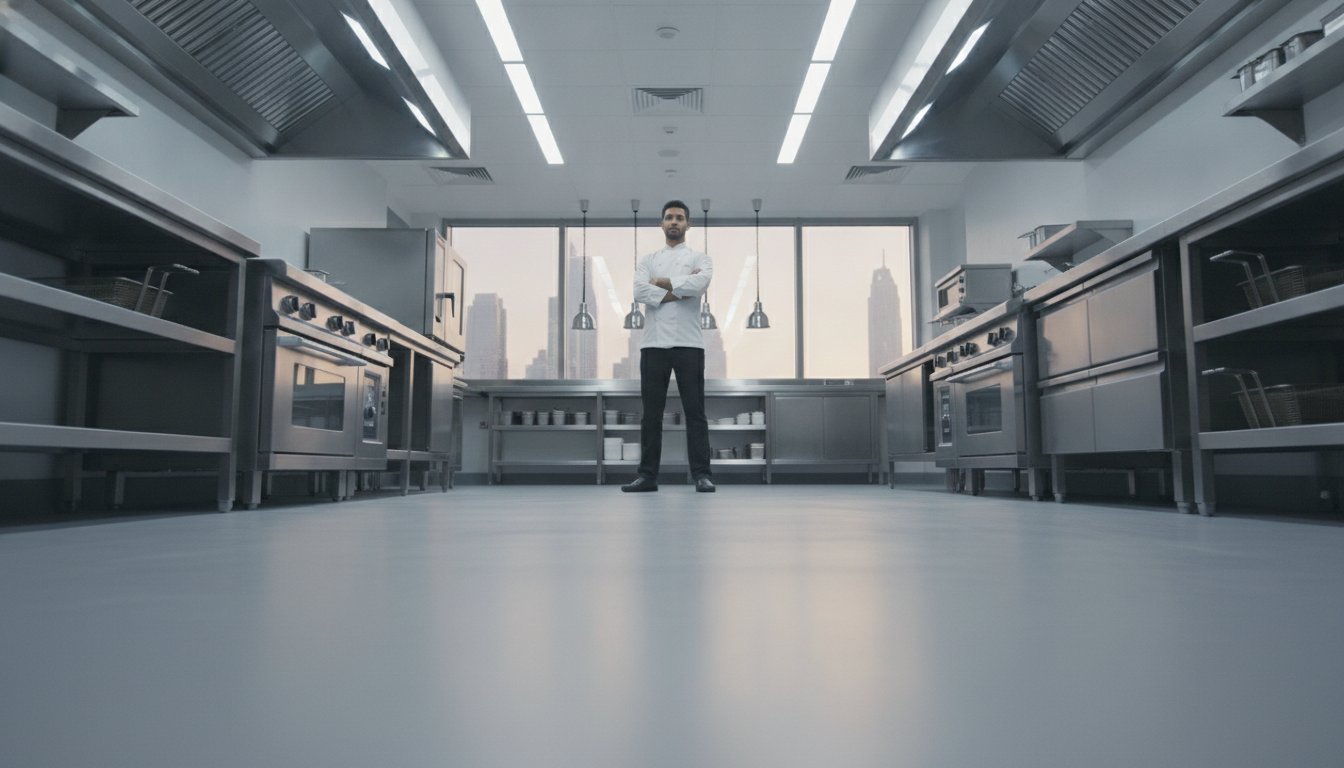
Could a single hairline fracture in your floor be the primary reason your facility fails its next Dubai Municipality health inspection? In the high-pressure environment of a professional kitchen, we recognize that your flooring is a technical safety system rather than just a surface finish. We understand the frustration of dealing with cracked tiles and porous grout lines that harbor bacteria and lead to costly operational downtime. When selecting epoxy flooring for commercial kitchens Dubai, you’re investing in a critical infrastructure component that must withstand extreme thermal shock and heavy equipment loads without compromising on hygiene.
We’ve designed this 2026 professional guide to help you navigate the technical complexities of modern hygiene standards and industrial durability. You’ll discover how to achieve full HACCP compliance and pass the FoodWatch digital audit with a seamless, easy-to-clean surface. We’ll preview the essential requirements for R-10 non-slip ratings and coved junctions that ensure your facility remains a safe, high-performance environment. Our objective is to provide the clarity you need to move away from traditional, high-maintenance tiling toward an integrated, long-term solution that protects both your staff and your bottom line.
Key Takeaways
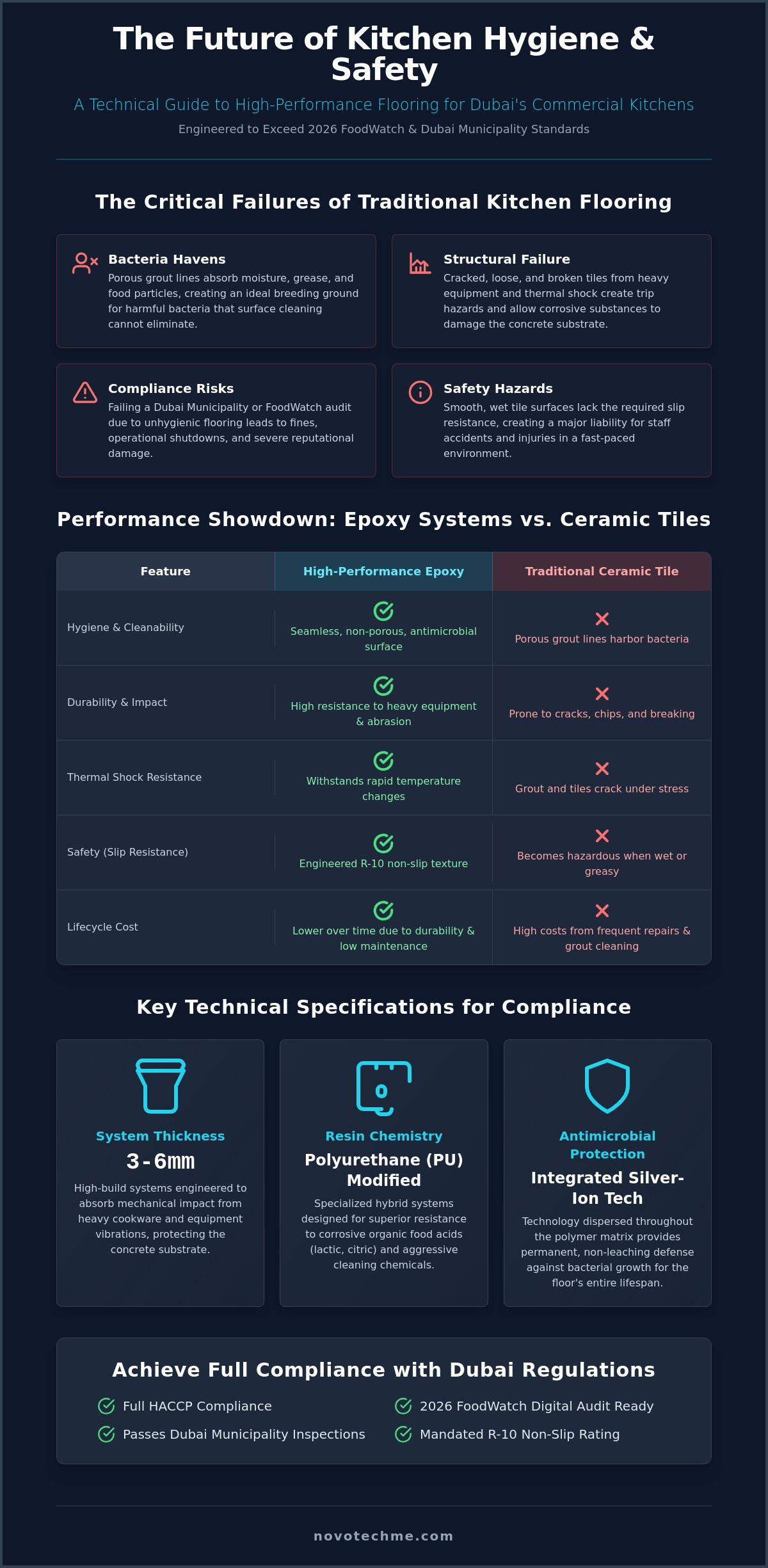
- Identify the critical technical specifications required for HACCP compliance, focusing on the transition from porous grout lines to seamless, antimicrobial resin systems.
- Compare the performance profiles of different resin chemistries to determine which systems offer the highest resistance to thermal shock and heavy equipment loads.
- Analyze the long-term financial advantages and lifecycle cost benefits of installing high-performance epoxy flooring for commercial kitchens Dubai over traditional ceramic tiling.
- Understand the essential requirements for mechanical substrate preparation and moisture testing to ensure your facility passes the 2026 FoodWatch Digital Audit.
- Learn how an integrated approach to installation, backed by 30 years of regional expertise, provides a durable surface that withstands the rigors of high-volume operations.
The Critical Role of High-Performance Flooring in Dubai’s Commercial Kitchens
In the demanding environment of a high-volume culinary facility, the choice of floor finish is a strategic decision that affects operational longevity and safety. Commercial-grade Epoxy resins are not simple coatings; they are multi-layered technical systems engineered for extreme chemical and mechanical resistance. Unlike residential finishes, epoxy flooring for commercial kitchens Dubai must withstand the constant movement of heavy equipment and the aggressive cleaning protocols required by the 2026 FoodWatch Digital Audit. We’ve observed that high-performance systems provide a seamless barrier that protects the concrete substrate from the corrosive effects of oils, fats, and industrial detergents.
Traditional ceramic tiles frequently fail in these settings because grout lines act as porous channels for moisture and organic matter. This creates a breeding ground for bacteria that no amount of surface scrubbing can fully eliminate. In Dubai, the challenge is amplified by high ambient humidity levels, which can cause osmotic blistering and bond failure if the substrate isn’t properly treated. We focus on creating a unified surface that eliminates these vulnerabilities, significantly reducing maintenance costs and preventing the kitchen downtime associated with repairing cracked or loose tiles.
Heat, Humidity, and High Volume: The UAE Kitchen Challenge
Dubai’s hospitality sector operates at an intensity that few other global markets match. Continuous 24/7 cycles mean floors never truly rest or dry out completely, which places immense stress on the bond between the coating and the concrete. Our 30 years of operational history in the UAE has shown that standard coatings often fail because they lack the specialized moisture vapor barriers required for the region’s unique climate. Thermal shock is the rapid expansion and contraction of the flooring material caused by extreme temperature fluctuations, such as the transition between high-heat ovens and walk-in freezers or the impact of boiling water during wash-downs.
The Cost of Non-Compliance: Health and Safety Risks
Safety is a non-negotiable metric for any professional kitchen. Integrated anti-skid textures are essential to meet the R-10 non-slip rating mandated for 2026 health inspections. Without these textures, spillages become major liabilities that lead to workplace accidents and potential legal complications. Hygiene risks are equally significant; porous surfaces can harbor pathogens that lead to failed Dubai Municipality inspections. The financial repercussions go beyond simple fines, as a single failed audit can result in temporary closure, which damages a brand’s reputation and immediately interrupts revenue streams. By installing epoxy flooring for commercial kitchens Dubai, operators ensure their facility remains compliant with the most stringent hygiene and safety standards.
Engineering Hygiene: Technical Specifications for Kitchen-Grade Epoxy
Selecting the correct resin chemistry is the first step in engineering a floor that survives the rigors of a professional culinary environment. While standard epoxy offers exceptional compressive strength and bond tenacity, many high-volume facilities in the UAE benefit from Polyurethane (PU) modified systems. These hybrid solutions are specifically designed to resist organic food acids, such as lactic acid from dairy or citric acid from produce, which can degrade lower-grade coatings over time. When specifying epoxy flooring for commercial kitchens Dubai, we prioritize high-build systems that range from 3mm to 6mm in thickness. This depth isn’t arbitrary; it’s necessary to absorb the mechanical impact of dropped heavy cookware and the constant vibration of industrial refrigeration units.
Modern hygiene standards also demand the integration of antimicrobial additives. Unlike topical treatments that wear away, we utilize systems where silver-ion technology is dispersed throughout the entire polymer matrix. This provides a permanent defense against bacterial proliferation, even if the surface sustains minor scratches. These technical requirements align with the FDA Food Code standards, which dictate that physical facilities must be non-absorbent and easily cleanable. To ensure your facility meets these global benchmarks, it’s often best to consult with experts in protective painting systems who understand the nuances of industrial resin application.
Thermal Shock Resistance and Durability
Thermal shock is a leading cause of floor delamination in commercial kitchens. When a floor at room temperature is suddenly hit with boiling water during a “wash-down” cycle, the material expands rapidly. If the resin’s coefficient of thermal expansion doesn’t closely match the underlying concrete substrate, the internal stress causes the bond to snap, leading to cracks and peeling. We mitigate this risk by selecting resins with high thermal stability that can handle the transition from the intense heat of a cookline to the sub-zero temperatures of a walk-in freezer. This precision ensures the floor remains intact despite the most aggressive temperature fluctuations.
Seamless Coving: The Secret to Total Hygiene
A truly hygienic floor is defined by what happens at the edges. HACCP standards require the elimination of 90-degree angles where the floor meets the wall, as these corners are notorious for accumulating grease, moisture, and pests. We achieve this through the installation of a radius cove. This involves hand-troweling a specialized epoxy mortar to create a smooth, curved transition from the horizontal floor to the vertical wall base. This seamless junction allows cleaning crews to easily sweep and sanitize the entire perimeter, ensuring there are no hidden pockets for cross-contamination to occur.
Comparing Commercial Kitchen Flooring: Why Epoxy Surpasses Traditional Tiles
While ceramic tiles have been the historical standard in food preparation areas, a technical analysis of a 10-year lifecycle reveals significant operational drawbacks. Tiles are inherently prone to fracturing under the impact of heavy kitchen equipment or dropped stainless steel cookware, creating sharp edges and safety hazards. In contrast, high-build epoxy flooring for commercial kitchens Dubai provides a monolithic surface that absorbs mechanical energy without cracking. The initial investment in a resin system is frequently offset by the elimination of frequent tile replacements and the ongoing labor costs associated with periodic regrouting.
Installation efficiency is another critical factor for the UAE’s fast-moving hospitality sector. Traditional tile installation is a multi-day process involving substrate leveling, adhesive curing, and grout setting. We utilize high-performance resin systems that cure rapidly, allowing for a faster return to service. This minimizes the financial impact of kitchen downtime, which is a primary concern for high-revenue restaurants in Dubai. Modern systems also offer aesthetic flexibility, allowing operators to achieve a sophisticated, professional look that complements the overall facility design without compromising on technical performance.
Seamlessness vs. Grout Lines
Grout is the weakest point of any tiled floor. It’s naturally porous, leading to water ingress that eventually compromises the structural integrity of the adhesive bond and the concrete sub-floor. Seamless epoxy systems remove this vulnerability entirely by creating an impermeable barrier that prevents sub-floor contamination. A seamless surface is approximately 50% faster to sanitize than a tiled floor because there are no recessed lines to trap organic debris or harbor bacterial colonies.
Slip Resistance Standards in the UAE
Maintaining a safe working environment requires strict adherence to slip resistance ratings. For commercial kitchens, we target an R10 to R13 rating depending on the specific zone and the expected volume of grease or liquid spills. We achieve this permanent grip by broadcasting specialized aggregates, such as quartz or aluminum oxide, into the wet resin during the application process. This creates a durable, textured profile that provides essential traction for staff while remaining smooth enough to facilitate efficient cleaning and squeegee use.
Navigating Dubai Municipality Standards and the Installation Process
Dubai’s regulatory environment for food and beverage establishments is among the most rigorous globally. Compliance isn’t merely a checkbox; it’s a fundamental operational requirement. Installing epoxy flooring for commercial kitchens Dubai involves a methodical engineering process designed to align with both global HACCP principles and local Dubai Municipality mandates. We approach every project through a structured five-stage lifecycle to ensure total project ownership and technical precision.
The process begins with rigorous substrate testing. We assess the concrete for moisture vapor emission rates and compressive strength, ensuring the foundation can support industrial-grade resins. Following this, mechanical preparation is executed using diamond grinding or captive shot-blasting. This stage is critical for removing laitance and surface contaminants, creating the necessary profile for a permanent mechanical bond. We then apply moisture-tolerant primers followed by high-build base coats. The final stages involve broadcasting functional aggregates for slip resistance and applying high-performance topcoats that provide chemical and UV stability. Most systems require a 24 to 48-hour curing window before light foot traffic is permitted, with full chemical resistance achieved after seven days.
Dubai Municipality and HACCP Compliance
Every professional kitchen in the UAE must adhere to strict hygiene and safety certifications. Dubai Municipality requires flooring to be non-absorbent, fire-proof, and light-colored to facilitate easy dirt detection. Our systems prioritize low-VOC (Volatile Organic Compound) formulations to maintain indoor air quality during and after installation. We ensure that every project meets local civil defense codes and health standards, providing the documentation required to pass the FoodWatch Digital Audit. For facilities seeking a seamless transition to these high standards, our team provides expert epoxy floor painting and coatings that guarantee long-term compliance.
The Importance of Professional Substrate Preparation
Industry data confirms that 90% of epoxy failures originate from inadequate surface preparation. Applying resin over contaminated or weak concrete leads to delamination and bond failure within months. We focus on removing laitance, which is the fragile layer of cement and sand that rises to the top during concrete pouring. By addressing existing cracks and structural joints with specialized flexible fillers, we create a stable, unified surface that prevents future movement from compromising the finish. Our status as an authorized Terraco applicator ensures that we utilize the most advanced preparation techniques and materials available for epoxy flooring for commercial kitchens Dubai.
Expert Execution: NovoTech’s Integrated Approach to Kitchen Epoxy Systems
Achieving technical excellence in a high-traffic culinary facility requires more than just high-quality materials; it demands a partner with deep regional expertise. Our three decades of UAE operational history allow us to anticipate the specific environmental challenges unique to the region. We don’t believe in a one-size-fits-all approach. When specifying epoxy flooring for commercial kitchens Dubai, our engineers evaluate the specific stresses of each zone, from the high-heat cookline to the heavy-load storage areas. This precision ensures that the resin chemistry and thickness are perfectly matched to the operational demands of your business. To explore how other forms of technology can further improve your business operations, click here.
Our status as an authorized Terraco applicator provides our clients with access to industrial-grade systems that exceed the performance of standard commercial products. We take total project ownership, managing every technical detail from the initial moisture testing to the final topcoat application. This integrated model eliminates the communication gaps that often occur when multiple contractors are involved, ensuring a seamless delivery that adheres to your timeline and quality standards. Our objective is to serve as a dependable strategic partner, providing the technical depth required to handle large-scale, comprehensive kitchen installations.
Industrial-Grade Coatings for Extreme Environments
We strictly avoid retail-grade paints that lack the solids content and chemical cross-linking necessary for industrial use. Our focus remains on high-solids industrial resins that provide superior resistance to abrasion and chemical exposure. For a deeper analysis of our technical capabilities across different sectors, you can explore our epoxy floor coating UAE pillar. Beyond the initial installation, we provide detailed maintenance guidance to help your facility managers preserve the floor’s integrity and slip-resistant properties over its entire lifecycle.
End-to-End Project Responsibility
Future-Proofing Your Facility’s Operational Standards
Transitioning to high-performance flooring is a strategic investment in your facility’s long-term operational health. By prioritizing technical specifications like thermal shock resistance and seamless coving, you eliminate the hygiene vulnerabilities inherent in traditional tiled surfaces. Achieving full HACCP-compliant solutions and passing the 2026 FoodWatch Digital Audit requires a precise combination of industrial-grade chemistry and expert substrate preparation. We understand that in a high-volume culinary environment, your floor is a critical piece of safety equipment that cannot be allowed to fail.
With 30 years of UAE experience and our status as an authorized Terraco applicator, we provide the technical depth necessary to engineer epoxy flooring for commercial kitchens Dubai that survives the most demanding environments. We manage every phase of the project through our “Integrated Excellence” model, ensuring that your facility meets all regional health and safety codes without compromising on productivity. Take the first step toward a more durable and hygienic workspace by consulting with our technical team. Request a Technical Site Survey for Your Dubai Kitchen to ensure your infrastructure is ready for the future of the hospitality sector. We look forward to securing your facility’s long-term success.
Frequently Asked Questions
Is epoxy flooring better than tiles for a commercial kitchen in Dubai?
Epoxy is superior to traditional tiling because it eliminates grout lines, which are the primary failure points in high-moisture environments. A seamless resin surface prevents bacterial growth and sub-floor contamination that often occurs when tiles crack or grout becomes porous. This technical advantage makes epoxy flooring for commercial kitchens Dubai the preferred choice for operators seeking long-term durability and simplified hygiene management.
How long does it take to install epoxy flooring in a restaurant?
A standard installation typically requires three to five days depending on the facility’s size and substrate condition. This timeframe encompasses mechanical surface preparation, the application of moisture-tolerant primers, and the final high-performance topcoats. While the system is ready for light foot traffic within 24 to 48 hours, we recommend waiting seven days for the resin to achieve full chemical resistance before resuming heavy operations.
Does Dubai Municipality require specific flooring for food preparation areas?
Dubai Municipality mandates that flooring in food preparation zones must be non-absorbent, non-slip, and light-colored to facilitate easy dirt detection. Regulatory standards also require a seamless finish and curved floor-to-wall coving to eliminate dirt traps. Compliance with these 2026 standards is essential for passing the FoodWatch Digital Audit and maintaining your professional operating license.
Can epoxy flooring withstand the high heat of commercial ovens and fryers?
Specialized industrial resins are engineered to withstand the thermal shock associated with commercial ovens and fryers. While standard coatings might delaminate under extreme temperature shifts, our PU-modified systems match the thermal expansion of the concrete substrate. This ensures the floor remains intact even when exposed to boiling water wash-downs or radiant heat from high-volume cooking equipment.
Is epoxy flooring slippery when wet or greasy?
Integrated anti-skid textures ensure that epoxy flooring for commercial kitchens Dubai remains safe even in the presence of grease or water. We broadcast specialized aggregates like aluminum oxide into the wet resin to achieve a certified R-10 to R-13 slip-resistance rating. This permanent grip profile provides essential traction for staff without making the surface difficult to sanitize during daily cleaning cycles.
How do I clean and maintain a commercial kitchen epoxy floor?
Cleaning is straightforward and requires only pH-neutral degreasers and hot water. We suggest using a soft-bristle brush for agitation and a squeegee to remove excess liquid toward the floor drains. It’s best to avoid using abrasive cleaning tools or harsh solvent-based chemicals that could dull the finish or compromise the protective topcoat over time.
Can epoxy be applied over existing kitchen tiles?
While epoxy can technically be applied over tiles, we generally advise against it for professional culinary environments. The bond is only as strong as the tile’s adhesion to the sub-floor; if a tile loosens, the epoxy will fail. For industrial-grade durability, we recommend removing existing tiles and diamond-grinding the concrete to ensure a permanent mechanical bond to the substrate.
What is the difference between kitchen epoxy and warehouse epoxy?
Kitchen systems are formulated with a focus on thermal stability and chemical resistance to organic food acids like lactic and citric acid. Warehouse epoxies are primarily designed for high compressive strength and resistance to heavy forklift traffic. Kitchen-grade resins also include antimicrobial additives and specific textures that balance slip resistance with the stringent hygiene requirements of the food industry.