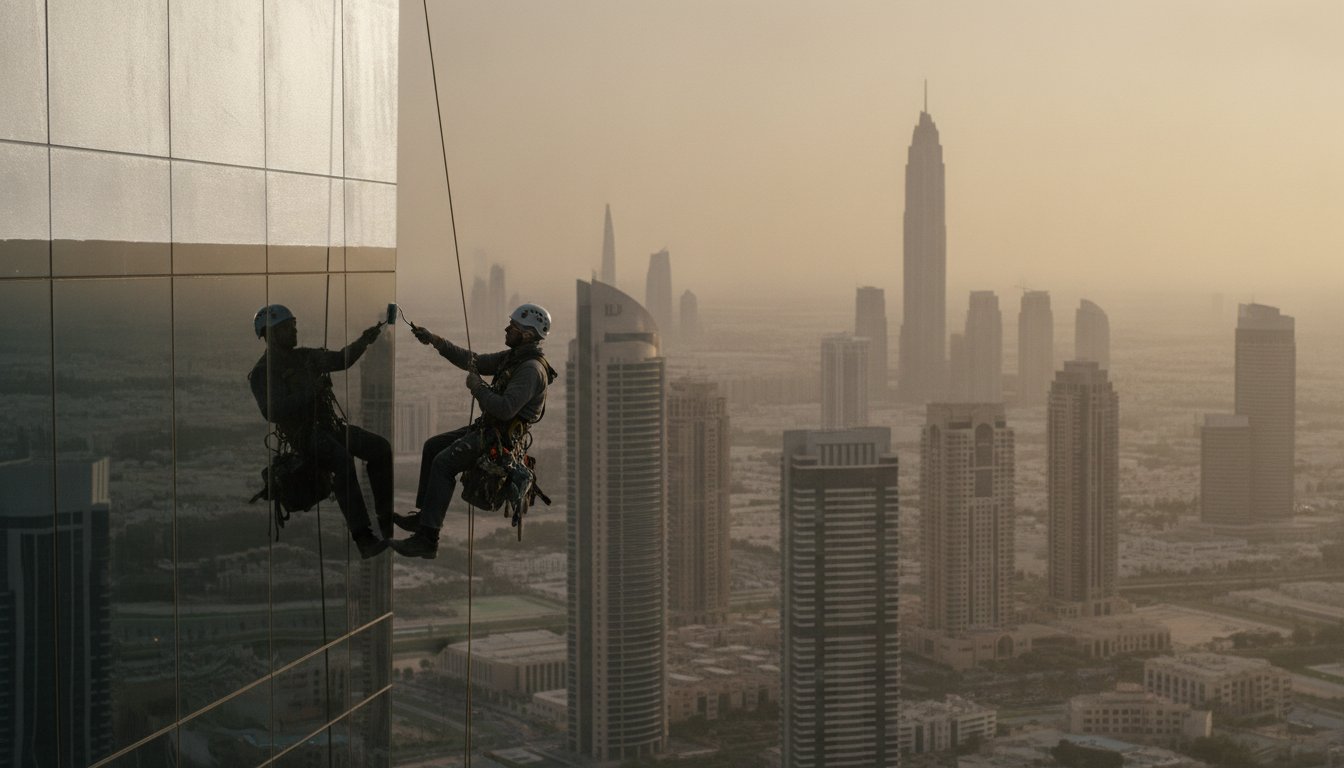
A skyscraper’s facade serves as the primary defense against the extreme thermal stresses of the Arabian Peninsula, where surface temperatures frequently exceed 50°C. Treating a repainting project as a simple cosmetic upgrade ignores the technical reality of asset preservation in a desert climate. We recognize that property managers often face significant budget uncertainty when evaluating the cost of high rise building painting in Dubai. Navigating complex Dubai Municipality requirements and IRATA safety protocols requires a strategic partner rather than a typical contractor.
We’ve designed this guide to help you master the logistical variables that define skyscraper maintenance in 2026. You’ll gain a clear understanding of how to achieve a 10 year durability cycle while remaining fully compliant with UAE safety laws. We’ll preview the critical cost drivers, from specialized UV resistant coatings to systems that can improve cooling efficiency by up to 20 percent. This roadmap ensures your facade renovation remains a high value investment that protects both your structural integrity and your long term budget.
Key Takeaways
- Identify why structures exceeding 35 meters require specialized pricing models that account for height, wind loads, and complex vertical logistics.
- Analyze the technical impact of IRATA-certified rope access versus Building Maintenance Units to determine the most efficient access strategy for your facade.
- Quantify the long-term ROI of high-performance systems, which defines the total cost of high rise building painting in Dubai through extended 10-15 year durability cycles.
- Mitigate financial and legal risks by adhering to Dubai Municipality permit requirements and selecting contractors with a proven 30-year operational history in the UAE.
- Discover how integrating UV-resistant and anti-corrosive coatings can significantly reduce building surface temperatures and lower annual cooling expenditures.
Understanding High-Rise Painting Economics in Dubai
In the Dubai skyline, a high-rise is technically categorized as any structure exceeding 35 meters. This verticality fundamentally shifts the financial landscape of property maintenance. Unlike residential villa projects, the cost of high rise building painting in Dubai is dictated by complex logistical variables rather than simple material volume. We utilize the square meter (sqm) industry benchmark to establish a baseline for UAE budgeting, yet the final estimate must account for wind loads, specialized safety equipment, and the sheer height of the asset.
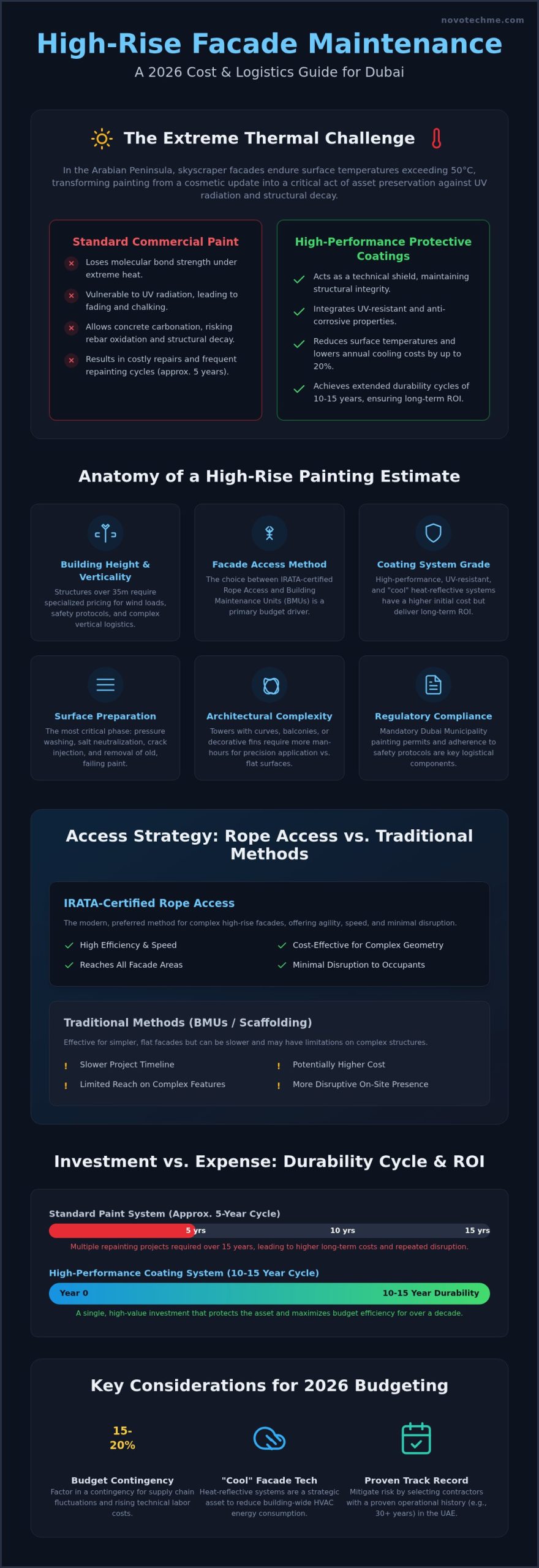
Dubai’s extreme thermal environment acts as a relentless catalyst for chemical degradation. When facade surface temperatures exceed 50°C during the peak summer months, standard commercial paints often lose their molecular bond strength. This reality forces a transition from seeing paint as a cosmetic choice to viewing it as a technical shield. High-rise maintenance in this region requires a deep understanding of how heat and humidity interact with concrete substrates over decades.
Asset Protection vs. Aesthetic Refresh
UV radiation in the UAE does more than just fade vibrant pigments. It penetrates the coating and begins to compromise the concrete substrate itself. If left unprotected, the facade becomes susceptible to concrete carbonation, which eventually leads to the oxidation of internal rebar. This structural decay is far more expensive to remediate than a proactive painting cycle. High-performance protective coatings serve as a critical barrier that maintains the structural integrity of the building envelope against aggressive environmental stressors. Delaying a project might save on this year’s budget, but it often results in exponential repair costs within five years.
The 2026 Market Outlook for Dubai Facades
For the 2026 fiscal year, we’re seeing a decisive shift toward sustainable and “cool” facade technologies. These heat-reflective systems are becoming strategic assets that help reduce building-wide HVAC energy consumption. However, global supply chain fluctuations still impact the availability of high-grade resins and specialized primers. We advise property managers to incorporate a 15-20% contingency into their logistics budgets to account for these variables and the rising cost of technical labor.
Access methodology remains the primary driver of the project budget. Most modern high-rise projects now favor Rope Access Techniques over traditional heavy scaffolding. This method offers the agility needed to navigate complex architectural features while minimizing disruption to building occupants. It’s a faster, safer, and more cost-effective alternative for towers where traditional cradles or Building Maintenance Units (BMUs) aren’t sufficient to reach every surface detail.
Technical Drivers of High-Rise Painting Estimates
Calculating the cost of high rise building painting in Dubai involves a sophisticated analysis of technical variables that extend far beyond simple surface area. While height is a baseline factor, building geometry and the current health of the substrate are the primary drivers of labor intensity. Towers featuring complex architectural curves, recessed balconies, or intricate decorative fins require significantly more man-hours for precision application compared to standard flat-surface structures. These geometric complexities dictate the movement speed of technical teams across the facade and influence the total duration of the project.
Surface Preparation: The Hidden Cost
In coastal districts like Dubai Marina or Jumeirah, surface preparation is the most critical phase of the project lifecycle. Atmospheric salt deposits are highly corrosive and must be neutralized through industrial-grade pressure washing before any primer is applied. Skipping this step often leads to osmotic blistering, where moisture trapped under the paint layer causes premature failure. Our technical teams prioritize substrate integrity, addressing concrete spalling and performing specialized crack injections to ensure a stable foundation for new coatings. The existing coating’s condition also plays a role; if previous layers are chalking or peeling, they must be mechanically removed to guarantee proper adhesion for Protective Painting Systems.
Dubai Municipality Permits and Compliance
Regulatory adherence is a major logistical component that many property managers overlook during the early budgeting phase. A mandatory painting and maintenance permit from the Dubai Municipality is required for all exterior projects, which currently carries a standard fee of AED 1,500. Beyond this fee, contractors must secure No Objection Certificates (NOCs) from master developers and adhere to strict environmental guidelines regarding paint disposal and Volatile Organic Compound (VOC) levels.
Safety compliance adds another layer of technical rigor to the estimate. Adherence to international safety benchmarks, including OSHA Safety Standards for powered platforms and cradles, ensures that the project remains within legal and safety boundaries. These third-party safety inspections are essential for project continuity and help prevent costly stop-work orders or municipality fines. By integrating these regulatory requirements into the initial scope, property managers can avoid the hidden costs that frequently arise from non-compliance or inadequate safety planning.
Access Methods and Their Impact on Your Budget
While material specifications and surface preparation define the foundation of a quote, the specific access strategy represents the single largest variable in the total cost of high rise building painting in Dubai. For structures exceeding 35 meters, traditional ground-based scaffolding is rarely a viable financial or logistical option. Instead, we analyze the building’s existing infrastructure, such as Building Maintenance Units (BMUs) and permanent cradles, against the agility of professional rope access teams. The goal is to minimize the “dead time” associated with mobilization and equipment setup, which can otherwise consume a significant portion of the project’s timeline.
According to the latest UAE Facade Market Report, the demand for specialized vertical maintenance is increasing as developers prioritize long-term asset value under the Al Sa’fat green building codes. This market growth has led to a wider variety of access solutions, yet rope access remains the preferred choice for the majority of Dubai’s vertical inventory. Mast climbers and heavy scaffolding are typically reserved for specific structural repairs or low-rise podiums, as their mobilization fees and footprint often prove cost-prohibitive for super-tall towers.
The ROI of Rope Access in Dubai
Rope access systems allow technicians to reach recessed architectural features and complex geometries that standard cradles often cannot access. By eliminating the need for bulky equipment at ground level, we ensure that retail operations and tenant entry points remain unobstructed throughout the project lifecycle. This operational continuity is a direct financial benefit that offsets the technical labor rates of certified technicians. The speed of deployment is another factor; a rope access team can begin work in hours, whereas scaffolding may take weeks to erect and certify, significantly inflating the overall labor budget.
Safety Standards as a Cost Factor
Safety is not merely a compliance checkbox; it’s a critical cost factor that protects the property owner’s legal and financial interests. We insist on IRATA-certified personnel, specifically requiring Level 3 supervisors for high-exposure projects in dense districts like Dubai Marina or Downtown. While uncertified “fly-by-night” crews might offer lower initial quotes, they lack the comprehensive liability insurance and rigorous training required for high-altitude work in the UAE. Rigorous safety certifications significantly reduce the long-term legal and financial risks associated with high-altitude maintenance operations. Investing in a certified team ensures that the project adheres to the highest international safety protocols, preventing the catastrophic costs associated with municipality stop-work orders or site accidents.
Estimating Your 2026 Project: Square Meter Rates and Material Grades
Accurate budgeting begins with a comprehensive measurement of the building’s entire envelope. It’s a mistake to calculate surface area based solely on the structure’s height and width. High-rise facades in Dubai often feature intricate geometries, including recessed balconies, decorative ledges, and architectural fins that significantly expand the total paintable surface. These features require more precise manual application, which influences the total cost of high rise building painting in Dubai. A granular survey ensures that every architectural detail is accounted for before mobilization, preventing mid-project budget adjustments.
We structure our technical recommendations around two primary material grades to align with different asset management strategies. Tier 1 systems involve high-performance elastomeric coatings designed to bridge hairline cracks and resist extreme UV exposure for 10 to 15 years. Tier 2 represents standard commercial-grade protection, suitable for 5 to 7 year maintenance cycles. While Tier 1 coatings require a larger upfront allocation, they significantly reduce the frequency of expensive mobilization and permit fees over the asset’s lifecycle, offering a lower total cost of ownership.
The Terraco Factor: Why Material Grade Matters
As an authorized Terraco applicator, we provide access to high-performance systems specifically engineered for the Gulf’s thermal stresses. These coatings offer superior anti-carbonation and anti-fungal properties, which are essential for maintaining substrate health in high-humidity coastal environments. Utilizing Anti-Corrosive Paint in the UAE ensures that your facade remains protected against the high salinity characteristic of districts like Jumeirah or Dubai Marina. Choosing a Tier 1 system also allows for extended manufacturer warranties, providing long-term peace of mind for owners’ associations and facility managers.
Energy Efficiency and ROI
Modern “thermal-shield” paints are no longer just an aesthetic choice; they’re a strategic energy asset. Coatings with a high Solar Reflectance Index (SRI) reflect a greater percentage of solar radiation, which can reduce facade surface temperatures by up to 15°C. Verified industry data suggests that this thermal reduction can improve building cooling efficiency by 10 to 20 percent. This lowers the building’s carbon footprint and provides a tangible return on investment through reduced utility expenditures. By selecting high-albedo coatings, property managers can transform a standard maintenance expense into a long-term energy-saving initiative.
For a precise technical evaluation of your facade’s requirements and material options, you can consult with our team for Exterior Building Painting Services.
The NovoTech Advantage: Integrated Excellence in Facade Maintenance
We’ve spent over three decades establishing our position as a technical leader in the UAE’s construction and maintenance sector. This 30-year operational history isn’t just a milestone; it’s a foundation of regional expertise that allows us to navigate the unique logistical challenges of Dubai’s vertical landscape. We provide end-to-end project ownership, managing every variable from the initial Dubai Municipality permit acquisition to the final technical inspection. When property managers analyze the cost of high rise building painting in Dubai, they’re often looking for a partner who can mitigate risk while ensuring long-term durability. We deliver this through a model of integrated excellence that treats every skyscraper as a high-value engineering asset rather than a simple painting job.
Our Strategic Approach to High-Rise Projects
Our technical process begins with a comprehensive site audit and substrate analysis. We don’t believe in surface-level estimates. Instead, we identify potential failure points such as concrete carbonation or previous coating delamination before the first drop of paint is applied. This level of precision is why we’re recognized as authorized Terraco application specialists. We align our workflows with strict international quality benchmarks, ensuring that our Exterior Building Painting Dubai Pillar solutions meet the highest standards of the industry. For Owners’ Association (OA) boards, we provide transparent project management and detailed reporting, ensuring that financial allocations are backed by technical justification and measurable progress.
Secure Your Asset’s Future
Investing in a professional facade assessment today prevents the exponential costs of structural remediation tomorrow. We design customized maintenance plans that go beyond the initial application, providing a roadmap to extend the life of your protective systems in the 50°C summer heat. This strategic foresight is what defines the true cost of high rise building painting in Dubai, shifting the focus from short-term expenditure to long-term asset appreciation. Our status as a dependable strategic partner means we’re committed to the structural health of your building long after the final coat has dried. Securing your tower’s future requires a partner who understands the complex engineering behind the aesthetics.
We encourage you to Request a comprehensive high-rise painting consultation to secure a technically accurate and compliant roadmap for your building’s 2026 renovation.
Strategic Facade Management for 2026
Managing a skyscraper’s exterior requires a shift from viewing maintenance as a recurring expense to seeing it as a technical investment in asset longevity. We’ve explored how height, complex geometry, and vertical access logistics fundamentally dictate the cost of high rise building painting in Dubai. Selecting high-performance systems and prioritizing IRATA-certified safety compliance aren’t just regulatory requirements; they’re the primary drivers of a 10 year durability cycle. By integrating these technical factors into your 2026 budgeting, you ensure that your building remains a resilient and energy-efficient landmark in the Dubai skyline.
With 30 years of UAE experience as an authorized Terraco applicator, we provide the technical precision required for large-scale vertical projects. Our team’s commitment to IRATA safety protocols and end-to-end project ownership ensures that your renovation is both compliant and cost-effective. We’re ready to serve as your dependable strategic partner in preserving your property’s structural integrity and aesthetic value. Consult with our High-Rise Painting Experts today to secure a detailed technical assessment. We look forward to helping you protect your asset’s future with confidence and precision.
Frequently Asked Questions
How much does high-rise building painting cost per square meter in Dubai?
Market rates for professional facade painting typically range from AED 15 to AED 30 per square meter. The final cost of high rise building painting in Dubai depends on the structure’s height, the complexity of its architectural features, and the grade of the protective coating selected. While standard commercial paints are more affordable initially, high-performance elastomeric systems offer a lower total cost of ownership by extending the maintenance cycle to over a decade.
Does rope access increase the total cost of painting a building?
Rope access generally reduces the total project budget by eliminating the high mobilization fees and rental costs associated with heavy scaffolding. It offers a more agile solution that requires minimal setup time and causes zero disruption to ground-level retail operations. While technical labor rates for certified technicians are higher, the significant reduction in equipment duration and man-hours often results in a more cost-effective renovation compared to traditional cradles.
How long does it take to repaint a 40-storey tower in Dubai?
A comprehensive repainting project for a 40-storey tower typically requires between three to six months to complete. This timeline includes essential phases such as industrial pressure washing, substrate repair, and the application of specialized primers and topcoats. Variables such as extreme summer temperatures, wind speeds at high altitudes, and the intricacy of the building’s geometry can influence the daily production rates of our technical teams.
What type of paint is best for Dubai’s high-rise buildings?
High-performance elastomeric coatings with superior UV resistance are the most effective choice for the Gulf’s extreme climate. We recommend systems from specialized manufacturers like Terraco, which provide essential anti-carbonation and anti-fungal properties. These professional-grade coatings are engineered to bridge hairline cracks and maintain their molecular bond despite surface temperatures exceeding 50°C. Using these advanced materials ensures that the building envelope remains protected against structural decay and aesthetic fading.
Are there specific permits required for high-rise painting in Dubai?
Yes, all exterior painting projects require a mandatory maintenance permit from the Dubai Municipality, which carries a standard fee of AED 1,500. Property managers must also secure No Objection Certificates from master developers and adhere to strict environmental regulations regarding VOC levels and waste disposal. Failure to obtain these approvals before commencing work can lead to significant municipality fines or immediate stop-work orders that disrupt the project timeline.
How often should a high-rise building in the UAE be repainted?
Buildings in the UAE typically require a professional repainting cycle every five to seven years to combat the effects of high salinity and intense sun. However, utilizing Tier 1 protective systems can extend this durability window to 10 or 15 years. Regular inspections are vital for identifying early signs of coating failure, such as chalking or delamination, which can lead to expensive concrete repairs if not addressed promptly.
What is the difference between IRATA-certified and standard painting crews?
IRATA certification ensures that technicians have undergone rigorous training in international safety protocols for industrial rope access. Unlike standard crews, IRATA-certified teams operate under the supervision of Level 3 experts and carry comprehensive liability insurance specifically for high-altitude work. This specialized certification is a critical requirement for high-rise projects in Dubai, as it significantly reduces the legal and physical risks associated with complex vertical maintenance operations.
Can exterior painting help reduce building cooling costs?
Yes, the cost of high rise building painting in Dubai is often offset by significant energy savings when using heat-reflective technology. Coatings with a high Solar Reflectance Index can reduce facade surface temperatures by up to 15°C. This thermal reduction can improve overall building cooling efficiency by 10 to 20 percent, leading to a measurable decrease in monthly utility expenditures and a smaller carbon footprint for the property.