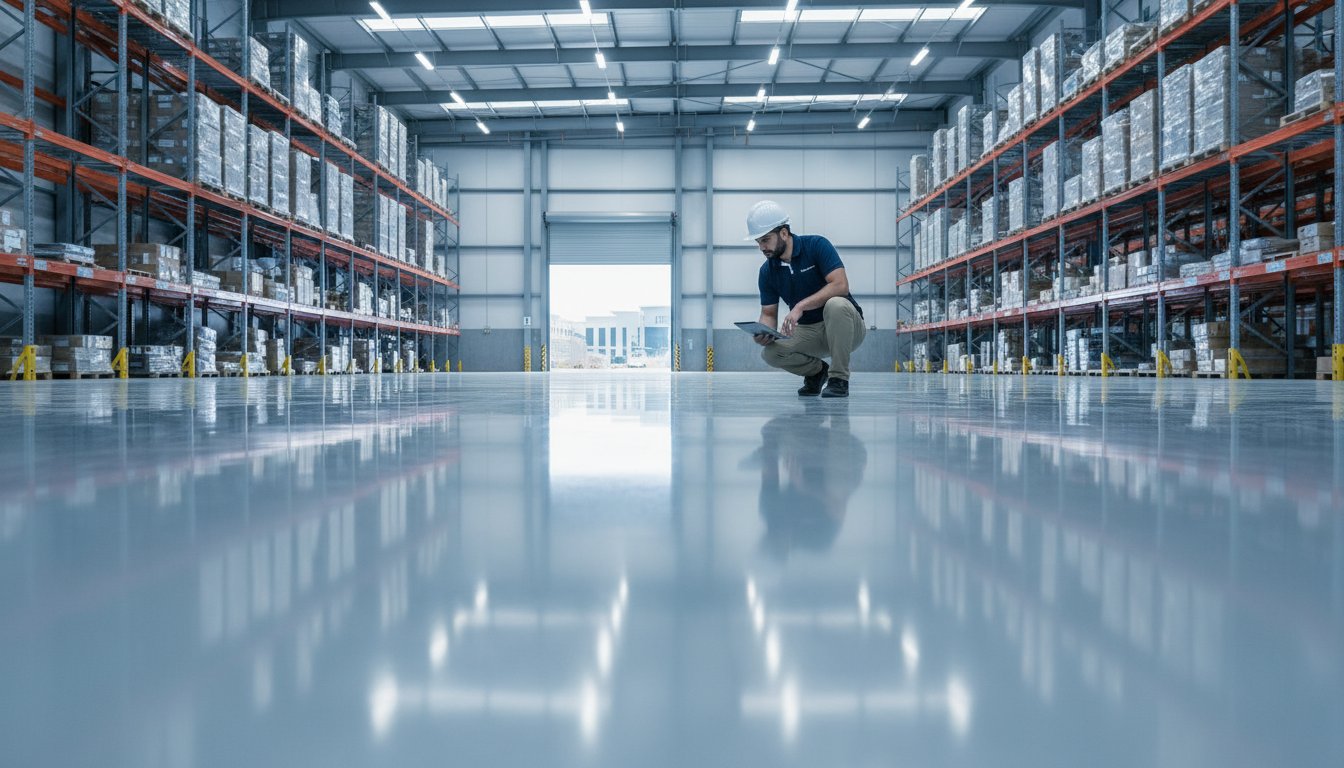
Can a single millimeter of high-performance polymer determine the operational success of a 50,000 square foot logistics hub? In the high-stakes industrial zones of the Middle East, the answer is a definitive yes. Selecting the right industrial epoxy flooring Jebel Ali solution isn’t just about aesthetics; it’s a critical engineering decision that impacts your long-term ROI. Industry data suggests that 40% of floor failures in regional warehouses are caused by moisture vapor transmission and extreme thermal shock during peak summer months.
You’ve likely experienced the frustration of surface delamination or the stress of aligning with JAFZA safety standards while trying to maintain 24/7 operations. We understand that operational downtime is a luxury your facility can’t afford. This 2026 engineering guide demonstrates how specialized industrial epoxy coatings protect your infrastructure from heavy logistics and aggressive chemical exposure. We’ll explore the technical protocols required to achieve a seamless, 10-year operational lifespan and total compliance with Dubai Municipality regulations through advanced, turnkey application methods.
Key Takeaways
- Understand how high-performance resin systems mitigate the structural risks posed by Jebel Ali’s unique environmental challenges, including high salinity and extreme thermal expansion.
- Learn to specify the optimal industrial epoxy flooring Jebel Ali facilities require by comparing resin chemistries and selecting appropriate thickness levels for heavy-duty logistics.
- Evaluate the performance benchmarks of epoxy against polyurethane and polished concrete to determine the most durable solution for high-traffic warehouse environments.
- Discover precision installation protocols, such as dustless diamond grinding and moisture testing, that ensure maximum adhesion while minimizing critical operational downtime.
- Identify the strategic advantages of leveraging advanced protective coating technology and three decades of regional engineering expertise for long-term facility protection.
Why Jebel Ali Facilities Require Specialized Industrial Epoxy Flooring
Industrial epoxy flooring Jebel Ali represents a fundamental engineering requirement for facilities operating within the Middle East’s most active logistics corridor. Rather than a simple surface coating, modern industrial epoxy is a sophisticated, multi-layered resin system designed to bond chemically with concrete substrates. These systems leverage advanced epoxy resin technology to provide a structural shield that withstands the rigors of heavy industry. By 2026, the benchmark for flooring excellence has moved beyond simple durability to include bespoke formulations that address the specific chemical and physical stressors of the Jebel Ali Free Zone.
The transition toward 2026 engineering standards emphasizes a commitment to sustainable infrastructure. Regulatory frameworks now demand higher VOC compliance, moving away from solvent-heavy applications toward water-based or 100% solids systems. These sustainable resin formulations don’t just protect the environment; they provide superior long-term stability in high-traffic zones. Facilities that ignore these updated standards face increased maintenance cycles and potential non-compliance with the UAE’s evolving green building codes, which now mandate specific indoor air quality metrics for industrial spaces.
The Impact of the Jebel Ali Micro-Climate
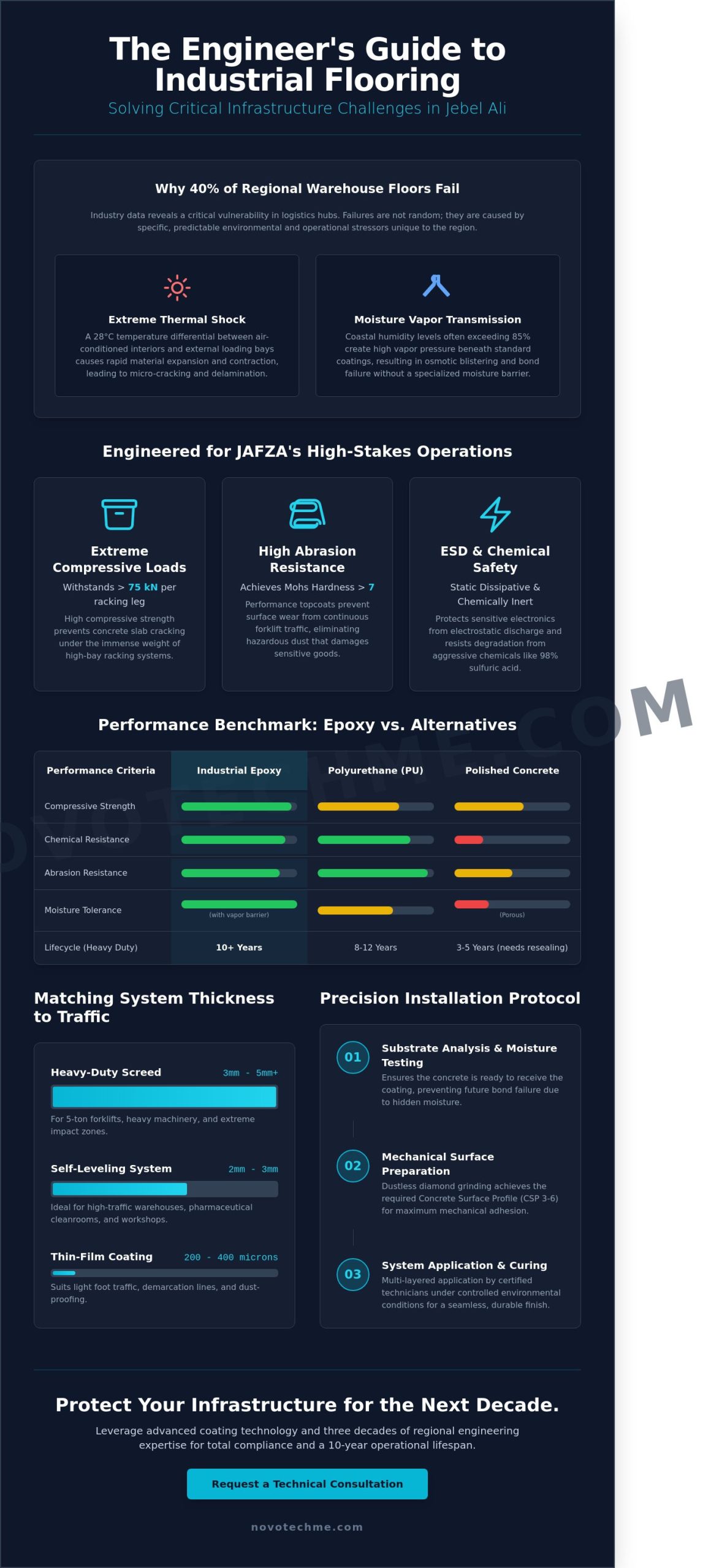
The coastal location of Jebel Ali creates a challenging environment for standard industrial surfaces. Humidity levels frequently exceed 85%, creating a high risk for osmotic blistering if the epoxy system doesn’t include a dedicated moisture vapor barrier. Our engineering approach accounts for these conditions during the curing phase to ensure permanent adhesion. The 28°C temperature differential between air-conditioned warehouses and external loading bays can cause significant thermal shock. Without high-build, flexible epoxy systems, this expansion leads to micro-cracking and eventual floor failure. In port-adjacent zones, the high salinity in the air accelerates concrete carbonation, making anti-corrosive epoxy properties essential for preserving the building’s structural foundation.
Just as maritime vessels require advanced hull coatings from seacoat.com to withstand harsh oceanic conditions, industrial facilities in Jebel Ali must utilize specialized resins to combat coastal salinity.
Operational Demands of JAFZA Warehousing
JAFZA’s high-bay logistics centers demand flooring that can handle extreme compressive loads. Racking systems often exert pressures exceeding 75 kN per leg, necessitating a floor with high compressive strength to prevent slab cracking. Beyond weight, abrasion resistance is vital. Continuous forklift traffic can grind down unprotected concrete, creating fine dust that damages sensitive ICT hardware and pharmaceutical products. To mitigate this, we implement high-performance topcoats that achieve a Mohs hardness rating of 7 or higher. For facilities handling electronics or volatile chemicals, integrated static dissipative (ESD) flooring is no longer optional. These systems provide a controlled path to ground, ensuring that sensitive components remain protected from electrostatic discharge throughout the supply chain.
Technical Specifications: Choosing the Right Coating System
Selecting the optimal coating for industrial epoxy flooring Jebel Ali requires a rigorous analysis of chemical composition and substrate preparation. Engineers must distinguish between Bisphenol A and Bisphenol F resins. While Bisphenol A serves as the industry standard for general durability, Bisphenol F provides superior resistance to aggressive solvents and lower viscosity for better wetting of the substrate. This distinction becomes critical in chemical processing plants where spill containment is a primary design requirement.
System thickness dictates the floor’s lifecycle performance. Thin-film coatings of 200 to 400 microns suit light foot traffic. Heavy-duty 5mm screeds are necessary for facilities utilizing 5-ton forklifts or heavy machinery. Achieving a successful bond depends on the Concrete Surface Profile (CSP). We specify a CSP 3 for thin coatings and up to a CSP 6 for heavy-duty mortars to ensure mechanical interlocking. Chemical resistance profiles must be matched to specific operational hazards. In Jebel Ali’s petrochemical sector, coatings must withstand 98% sulfuric acid and various hydrocarbon solvents without softening or delaminating.
Self-Leveling vs. Mortar Epoxy Systems
Self-leveling epoxy systems, typically applied at 2mm to 3mm, create a seamless surface ideal for pharmaceutical and electronics manufacturing. These systems eliminate joints where bacteria can proliferate. Conversely, epoxy mortar systems use a high ratio of graded sand to resin. These are essential for reconstructing eroded concrete in Jebel Ali’s older warehouses. High-build systems mitigate the stress of constant vibration in automated sorting centers. Our engineering team at Novotech ensures each specification aligns with the facility’s specific load-bearing requirements.
Specialized Additives for Industrial Safety
Safety protocols in 2026 demand more than just a durable surface. Anti-slip aggregates like aluminum oxide or quartz are integrated into the topcoat to meet OSHA safety standards for traction. In loading docks at Jebel Ali South, UV-stable aliphatic polyurethane topcoats prevent the ambering and chalking caused by intense solar radiation. For food-grade facilities, we incorporate silver-ion antimicrobial agents that inhibit 99.9% of bacterial growth, ensuring compliance with international health regulations. These additives don’t compromise the floor’s aesthetic; they enhance its functional longevity and operational safety.
Industrial Epoxy vs. Alternative Flooring in the UAE
Selecting a surfacing solution for high-capacity facilities in the Jebel Ali Free Zone requires a technical evaluation of load-bearing capacities and environmental variables. While polished concrete and polyurethane (PU) are common benchmarks, industrial epoxy flooring Jebel Ali stands out because of its unique chemical bond with the concrete substrate. Unlike polished concrete, which remains porous and susceptible to deep-stain contamination, epoxy creates an impermeable barrier that protects the structural integrity of the slab.
Polyurethane systems offer higher elasticity, which is useful for extreme thermal shock in industrial cold storage. However, the ambient industrial environments typical of Jebel Ali benefit more from epoxy’s superior compressive strength. A standard 3mm epoxy system can withstand up to 10,000 psi, which is nearly triple the capacity of standard industrial concrete. Over a 10-year life-cycle, the return on investment is quantifiable. Facilities utilizing epoxy floor coating uae report a 40% reduction in floor-related maintenance costs compared to facilities using acrylic or untreated concrete finishes.
Performance Matrix: Load and Impact
The technical superiority of epoxy is most evident in its tensile and flexural strength. Industrial resin floors are engineered to distribute weight across the surface, preventing the point-load fractures common in brittle materials. This is vital for 24/7 logistics operations where heavy machinery is constant. Maintenance protocols are equally streamlined; these floors require only mechanized scrubbing with pH-neutral detergents. Because the surface is non-porous, it prevents the sub-surface migration of oils and hazardous chemicals that typically degrade concrete over time.
Climate Resilience and Longevity
Jebel Ali’s coastal location introduces high levels of Moisture Vapor Transmission (MVT). Without a resilient barrier, rising dampness can cause floor coatings to delaminate or bubble. Modern industrial epoxy flooring Jebel Ali formulations include specialized primers that manage MVT rates up to 15 lbs per 1,000 square feet. This resilience extends to “hot tire pickup,” a phenomenon where warm tires from delivery fleets bond to and pull up inferior coatings. Epoxy’s high cross-linking density prevents this failure. Additionally, low-emission epoxy systems contribute to LEED v4.1 credits, supporting the UAE’s 2050 Net Zero goals through sustainable, low-VOC building materials.
The NovoTech Installation Process: Minimizing Operational Downtime
Our approach to industrial epoxy flooring Jebel Ali revolves around precision engineering and operational continuity. We recognize that in a high-velocity logistics hub like JAFZA, every hour of floor unavailability impacts the bottom line. NovoTech utilizes a four-stage turnkey framework designed for maximum durability and rapid return-to-service. This isn’t a simple paint job; it’s a technical integration of high-performance polymers into your facility’s infrastructure.
- Phase 1: Precision substrate preparation using dustless diamond grinding to achieve a Concrete Surface Profile (CSP) of 3 or 4.
- Phase 2: Rigorous moisture testing according to ASTM F1869 standards followed by high-penetration primer application for maximum adhesion.
- Phase 3: Multi-layered resin application, including specialized top-coats designed for chemical resistance or anti-slip properties.
- Phase 4: Controlled curing protocols and a final quality inspection to ensure 100% compliance with JAFZA safety and environmental regulations.
Substrate Preparation Excellence
Industry data indicates that 80% of epoxy coating failures in Dubai are caused by poor surface preparation rather than product quality. In the older workshops of Jebel Ali, concrete often harbors deep-seated oil contaminants and hydraulic fluids. We utilize industrial-grade degreasers and mechanical grinding to extract these impurities. Our team also prioritizes repairing expansion joints using semi-rigid polyurea fillers. This step is critical to prevent future floor cracking when heavy VNA (Very Narrow Aisle) trucks or forklifts traverse the surface 24/7.
Phased Execution for 24/7 Facilities
Operational downtime is the primary concern for logistics managers. To mitigate this, we implement sectional application strategies that allow your warehouse to remain partially active. We divide the floor area into strategic zones, ensuring that movement and storage continue while we transform the surface. For projects with zero margin for delay, we offer rapid-cure polyaspartic options. These systems reduce the traditional 7-day wait time for full mechanical loading to just 24 hours. Because the Middle East climate presents unique challenges, we manage the installation environment with portable cooling and dehumidification. This ensures the chemical cross-linking process reaches its peak structural integrity regardless of external humidity levels.
NovoTech provides the technical depth required for complex industrial environments. Partner with NovoTech for your next facility upgrade to ensure a seamless, high-performance flooring transition.
NovoTech: Your Strategic Partner for Jebel Ali Industrial Flooring
NovoTech brings over 30 years of localized expertise to the UAE’s most demanding industrial sectors. We’ve spent three decades refining our application techniques to withstand the unique thermal and mechanical stresses found in the Middle East. As an authorized Terraco applicator, we utilize advanced protective coating technology that exceeds standard market offerings. Our role as a technology integrator means we don’t just apply coatings; we engineer environments. Every project follows a rigorous turnkey methodology. This process begins with an exhaustive initial survey and continues through precision application to dedicated post-installation support. We prioritize total structure protection by integrating anti-corrosive paint uae standards into our flooring protocols. This ensures your facility remains shielded from the aggressive oxidation typical in Jebel Ali’s coastal environment.
JAFZA and Dubai Municipality Compliance
Operating within the Jebel Ali Free Zone necessitates strict adherence to evolving regulatory frameworks. We ensure your industrial epoxy flooring Jebel Ali project meets all current Dubai Municipality health, safety, and environmental codes. Our team manages the complex documentation required for compliance, providing you with a clear audit trail. We offer robust warranties that protect your capital investment against premature failure. Because rising damp is a frequent cause of floor delamination in the region, we leverage our status among top waterproofing companies in dubai to secure your substrate. We address moisture vapor transmission at the source, ensuring the bond between the epoxy and the concrete remains unbreakable for years.
Bespoke Engineering for Every Facility
Modern logistics and manufacturing require more than a gray floor. We deliver bespoke engineering solutions tailored to your specific operational flow. This includes custom color coding for safety zones, heavy-load pathways, and pedestrian walkways. Our systems are designed to integrate with your existing building maintenance schedules, minimizing downtime during both installation and future cleaning cycles. We focus on high-value outcomes including:
- High-build epoxy systems for heavy-duty forklift traffic.
- Electrostatic discharge (ESD) flooring for sensitive electronics storage.
- Chemical-resistant barriers for specialized processing plants.
- Slip-resistant textures that maintain safety without compromising cleanability.
NovoTech provides a decisive advantage as a technology-driven integrator by unifying advanced material science with precision execution to future-proof 2026 industrial assets.
Future-Proofing Your Facility Infrastructure
As Jebel Ali continues its trajectory as a global logistics hub toward 2026, facility managers can’t afford the operational risks of substandard surfaces. High-performance industrial epoxy flooring Jebel Ali systems are no longer an optional upgrade. They’re a technical necessity for maintaining safety and structural integrity in high-traffic zones. We leverage 30+ years of UAE industrial expertise to deliver coatings that withstand the unique thermal and chemical stresses of the region.
As an Authorized Terraco Applicator, NovoTech implements turnkey project management that eliminates the friction of multi-vendor coordination. Our engineering-first approach ensures your facility meets the rigorous technical specifications required for heavy-duty operations while we focus on minimizing operational downtime. Choosing a strategic partner means securing your asset’s longevity with a bespoke solution designed for the Middle East’s demanding environment. We’re ready to transform your operational space into a high-performance asset.
Request a Technical Site Survey for Your Jebel Ali Facility
Let’s build a foundation that supports your industrial growth for the next decade.
Frequently Asked Questions
How long does industrial epoxy flooring last in Jebel Ali warehouses?
Industrial epoxy flooring in Jebel Ali typically lasts between 10 and 15 years when subjected to standard 24/7 warehouse operations. This longevity depends on the initial dry film thickness specified during installation. For facilities managing heavy forklift traffic, a 4mm multi-layer system ensures structural integrity beyond the 10 year mark. Regular maintenance protocols, such as pH-neutral cleaning, extend the surface life by up to 25 percent compared to neglected floors.
Is epoxy flooring resistant to the heavy chemicals used in Jebel Ali manufacturing?
Our high-performance resins resist 98 percent of industrial chemicals, including sulfuric acid and caustic degreasers used in Jebel Ali manufacturing plants. We utilize Novolac epoxy technology for environments handling aggressive solvents. These systems prevent sub-base contamination by maintaining a non-porous barrier. Engineering teams specify these coatings to meet ASTM D1308 standards for chemical spot testing, ensuring the floor remains intact during accidental spills or prolonged exposure.
What is the typical cure time for industrial epoxy in the Dubai climate?
Most industrial epoxy systems require 24 hours for light foot traffic and 7 days for a full chemical cure in Dubai’s ambient temperatures. While the 40 degree Celsius summer heat accelerates initial setting, we manage the exothermic reaction to prevent flash setting. Controlled application environments allow 48 hour turnaround for heavy vehicle access. This timeline ensures the polymer chains link correctly, reaching a compressive strength of 85 MPa as per international testing benchmarks.
Can epoxy flooring be applied over old, damaged concrete in JAFZA facilities?
We apply industrial epoxy flooring Jebel Ali over aged concrete by first executing mechanical grinding or shot blasting to reach an International Concrete Repair Institute profile of 3 or 4. Our team repairs structural cracks using high-modulus epoxy injectors before the main application. This process transforms 20 year old JAFZA facility floors into seamless, high-load surfaces. Proper substrate preparation accounts for 80 percent of the coating’s long-term adhesion success.
How does epoxy flooring help in meeting JAFZA safety regulations?
Epoxy systems help JAFZA tenants comply with Dubai Civil Defense Fire and Life Safety Codes by providing Class 1 fire-rated surfaces. We integrate demarcations for emergency exits and hazard zones directly into the resin layer. These permanent markings don’t peel like floor tape, ensuring 100 percent visibility for safety audits. This integrated approach reduces workplace accidents by clearly defining pedestrian and machinery zones within high-density logistics hubs.
Does NovoTech offer anti-slip options for high-traffic loading bays?
NovoTech provides bespoke anti-slip textures for loading bays by broadcasting calcined bauxite or colored quartz into the wet base coat. These aggregates achieve a Pendulum Test Value of 36 or higher, which qualifies as a low slip risk in wet conditions. We customize the grit size based on the specific incline and traffic volume of your Jebel Ali facility. This ensures maximum traction for heavy-duty reach trucks while remaining easy to clean.
What is the cost difference between standard epoxy and heavy-duty industrial screeds?
Heavy-duty industrial screeds require a higher investment than standard thin-film coatings because they use 5 to 10 times more material by volume. A 6mm polyurethane or epoxy screed offers superior impact resistance compared to a 1mm coating. While the initial capital expenditure is higher, the lifecycle cost of a screed is lower for 24 hour manufacturing plants. Screeds withstand 12 ton point loads that would typically fracture standard industrial epoxy flooring Jebel Ali.
How do you handle moisture issues in coastal Jebel Ali flooring projects?
We address the high water table in coastal Jebel Ali by installing specialized moisture vapor barriers that tolerate up to 98 percent relative humidity in the concrete. These primers prevent osmotic blistering, which is a common failure in seaside facilities. Our technical team uses Tramex moisture meters to verify substrate conditions before application. This data-driven approach ensures the bond strength exceeds 1.5 MPa, even in environments with significant hydrostatic pressure from the nearby Gulf.