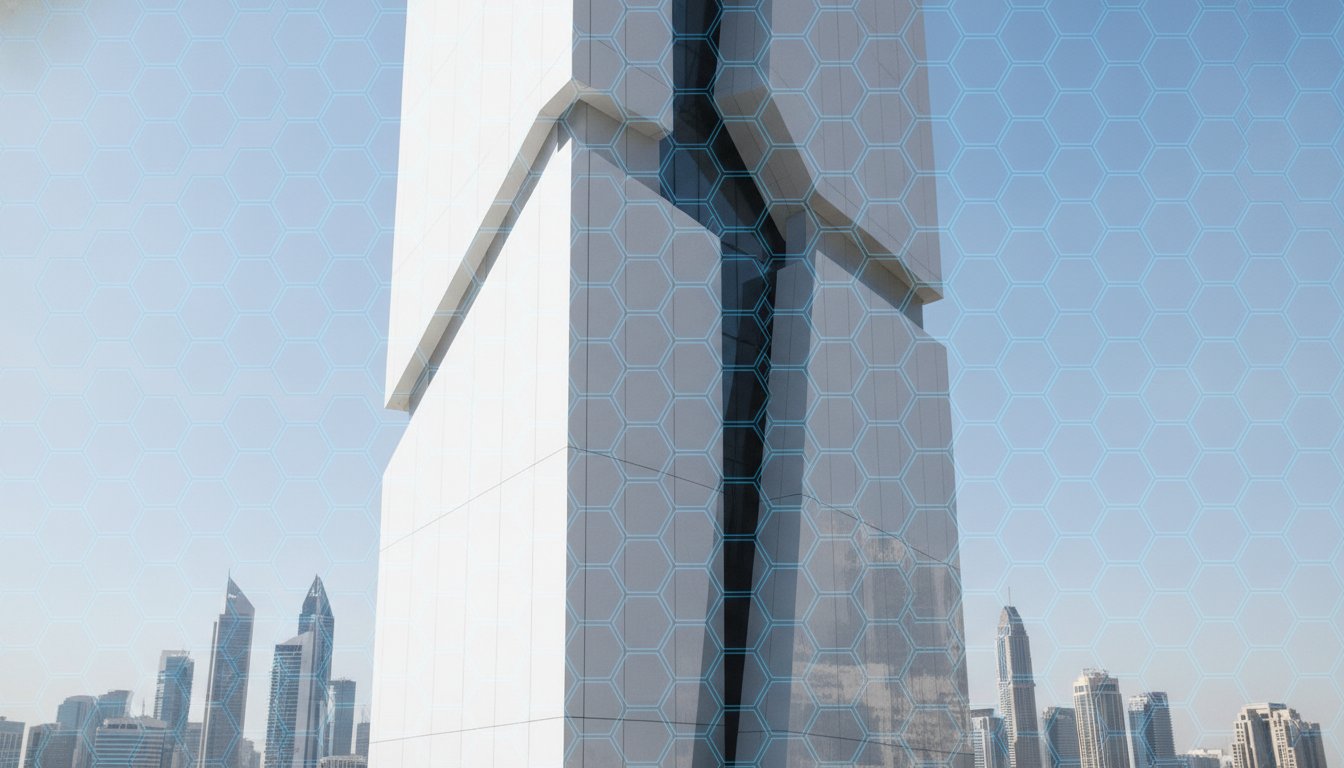
In 2026, the cost of a failing facade on a Dubai skyscraper has officially shifted from a maintenance headache to a potential million-dirham liability. We recognize that property managers and developers aren’t just battling 50°C heat and aggressive salt corrosion anymore. You’re now navigating a landscape where structural integrity is tied directly to Law No. 3 of 2026 and mandatory Al Sa’fat Silver ratings. Selecting the right protective coatings for high rise buildings uae has become a mandatory form of structural insurance rather than a simple cosmetic choice.
We understand the pressure to prevent rapid paint chalking and the deeper, more dangerous threat of concrete carbonation that leads to rebar failure. This guide provides a technical roadmap to safeguarding your assets using advanced systems that offer over a decade of durability. You’ll discover how specialized application techniques and high-performance materials can help you avoid the AED 1 million fines associated with poor building performance. We’ll outline the exact steps to achieve long-term compliance, reduce lifecycle costs, and ensure your high-rise remains a benchmark of engineering excellence in the Emirates.
Key Takeaways
- Understand the critical impact of Law No. 3 of 2026 and Al Sa’fat Silver ratings on facade compliance and the mitigation of regulatory penalties.
- Explore the technical role of anti-carbonation and elastomeric systems in shielding high-rise structures from chemical attack and environmental stress.
- Evaluate the long-term ROI of advanced protective coatings for high rise buildings uae, including extended 15-year maintenance cycles and improved energy efficiency.
- Determine the optimal access strategies and safety frameworks, from rope access to meteorological monitoring, necessary for vertical application precision.
- Recognize the strategic value of collaborating with authorized applicators to secure comprehensive product warranties and expert technical execution.
The Strategic Importance of High-Rise Protective Coatings in the UAE
In the context of the UAE’s vertical skyline, we define protective coatings as high-performance, engineered barriers designed to isolate a building’s structural envelope from aggressive chemical and environmental stressors. These aren’t merely decorative layers. They’re sophisticated polymer systems that prevent the ingress of moisture, carbon dioxide, and chloride ions into the concrete substrate. For a skyscraper in Dubai or Abu Dhabi, the facade is the first line of defense against a climate that actively seeks to dismantle structural integrity through accelerated weathering.
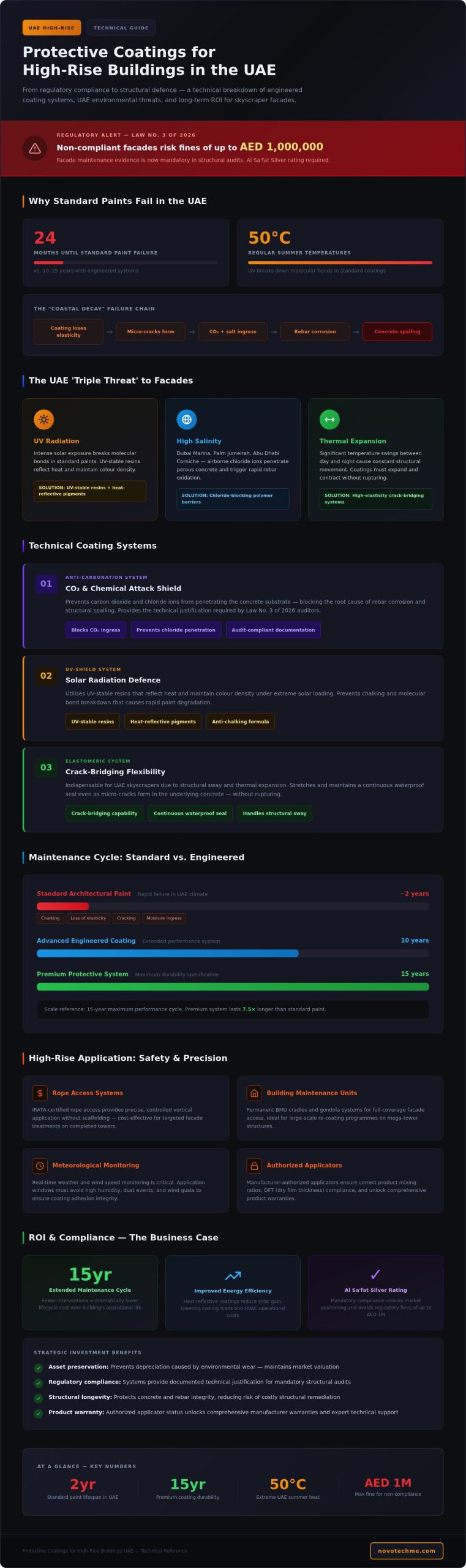
The transition from standard architectural paint to specialized protective coatings for high rise buildings uae is now a baseline requirement for asset preservation. Standard finishes often fail within 24 months in this region, exhibiting rapid chalking and loss of elasticity. When a coating loses its ability to flex, it cracks, allowing the “coastal decay” cycle to begin. We focus on systems that extend maintenance cycles to 10 or 15 years, ensuring that the building remains both aesthetically pristine and structurally sound.
Compliance with Law No. 3 of 2026
The regulatory environment has fundamentally shifted with the full implementation of Law No. 3 of 2026. This legislation mandates strict operational safety and lifecycle performance standards for all high-rise assets. Building owners are now required to provide evidence of proactive facade maintenance as part of mandatory structural audits. Under this framework, negligence isn’t just a maintenance oversight; it’s a legal liability. Non-compliance can result in severe penalties, including fines reaching up to AED 1 million for failures that compromise building safety.
By utilizing advanced protective coatings for high rise buildings uae, developers ensure their assets pass these rigorous inspections. These systems provide the technical justification required by auditors, proving that the building envelope is shielded against the carbonation that leads to rebar corrosion and eventual spalling.
Combating the UAE’s Extreme ‘Triple Threat’
High-rise structures in the Emirates face a unique convergence of environmental pressures that we categorize as the ‘Triple Threat’:
- UV Radiation: With summer temperatures regularly exceeding 50°C, intense UV exposure breaks down the molecular bonds in standard paints. Our specified systems utilize UV-stable resins that reflect heat and maintain color density under extreme solar loads.
- High Salinity: For assets in Dubai Marina, the Palm Jumeirah, or Abu Dhabi’s Corniche, airborne salt is a constant threat. Saline moisture penetrates porous concrete, triggering the rapid oxidation of internal steel reinforcements.
- Humidity and Thermal Expansion: UAE high-rises experience significant thermal movement between day and night. Protective systems must possess high elastomeric “crack-bridging” capabilities to expand and contract with the building without rupturing the protective seal.
We view the application of these systems as a strategic investment. It’s the difference between a building that depreciates through environmental wear and one that maintains its value through technical resilience.
Technical Coating Systems: Anti-Carbonation, UV-Shields, and Elastomerics
Effective protective coatings for high rise buildings uae represent a fundamental shift from traditional aesthetics to advanced chemical engineering. While standard decorative paints rely on simple pigments, engineered systems utilize specialized resins to create a resilient building envelope. These systems must align with the Dubai Municipality safety standards, which emphasize the longevity and fire-rated performance of facade materials. We prioritize the selection of chemistries that offer both structural protection and environmental efficiency.
Elastomeric systems are indispensable for UAE skyscrapers due to the inevitable structural sway and thermal expansion caused by extreme temperature fluctuations. Unlike rigid paints, elastomeric coatings possess “crack-bridging” capabilities. This allows the coating to stretch and maintain a continuous seal even as micro-cracks form in the underlying concrete. Without this elasticity, the facade becomes vulnerable to moisture ingress, which is the primary catalyst for structural degradation in coastal environments.
We also integrate thermal-reflective technology to support Al Sa’fat energy ratings. By utilizing coatings with a high Solar Reflectance Index (SRI), we can significantly reduce the surface temperature of the building envelope. This reduces the heat transfer into the structure, lowering the cooling load on HVAC systems and providing a measurable return on investment through reduced utility expenses.
The Science of Anti-Carbonation Protection
Concrete is naturally alkaline, which protects internal steel reinforcements from rusting. However, atmospheric carbon dioxide (CO2) gradually penetrates the concrete, lowering its pH level in a process called carbonation. Once the pH drops below 9, the protective “passivity” layer around the rebar vanishes, leading to rapid corrosion and concrete spalling. Anti-carbonation coatings act as a semi-permeable membrane that blocks CO2 while allowing moisture vapor to escape. This technical balance is essential; it stops the chemical attack while preventing internal pressure buildup that could cause the coating to blister or peel.
UV-Resistance and Color Retention
The intensity of UAE solar radiation necessitates a move away from organic dyes, which break down quickly under 50°C+ heat. We specify systems using inorganic, metal-oxide pigments that maintain their molecular structure under heavy UV loads. For the highest level of protection, we often deploy aliphatic polyurethane topcoats. These resins are chemically stable and don’t yellow or chalk over time, ensuring the building retains its premium appearance for a decade or more. Our specialized approach to anti-corrosive paint in the UAE combines these UV shields with robust chemical barriers.
Ensuring your asset meets the 2026 technical benchmarks requires a deep understanding of these polymer interactions. To determine the most resilient system for your specific facade, you can consult with our technical team for a comprehensive site assessment.
High-Rise Application Logistics: Safety and Precision
Applying protective coatings for high rise buildings uae requires a logistical framework that extends far beyond traditional painting methods. At elevations exceeding 100 meters, environmental variables like laminar wind flow and extreme verticality dictate the technical approach. We don’t just consider the chemistry of the coating; we engineer the entire delivery process to ensure every square meter of the facade receives a uniform, high-performance shield. This precision is essential for maintaining compliance with the UAE Fire and Life Safety Code, which governs the fire-rated performance of building envelopes.
The choice between suspended cradles and industrial rope access depends on the building’s architectural geometry and the required depth of repair. While suspended cradles provide a stable platform for heavy-duty substrate restoration, rope access offers the agility needed for complex facades and rapid deployment. Regardless of the method, wind speed monitoring is a non-negotiable safety protocol. High-altitude gusts can cause coating drift and compromise technician safety, making real-time meteorological data a cornerstone of our operational strategy.
Surface preparation at this scale is equally critical. We utilize high-pressure washing to remove salt deposits and calcification that accumulate on UAE skyscrapers. Without a pristine substrate, even the most advanced protective coatings for high rise buildings uae will fail to bond correctly. We also manage application timing to avoid peak humidity windows, ensuring that the substrate remains within the specified dew point range to prevent moisture entrapment and future delamination.
Rope Access and Safety Protocols
Our high-rise teams operate under strict IRATA certification standards, which represent the global benchmark for industrial rope access safety. This methodology allows us to navigate the vertical landscape with minimal impact on building occupants. Unlike bulky scaffolding, rope access systems are deployed and retracted daily, maintaining the aesthetic and functional integrity of the property during the project. Our specialized approach to exterior building painting in Dubai prioritizes this blend of technical safety and operational efficiency.
Substrate Integrity and Repair
Before any coating is applied, we conduct a comprehensive facade audit to identify “spalling” concrete—areas where internal rebar corrosion has caused the concrete to crack or break away. We address these defects through high-pressure crack injection and structural mortars that restore the substrate’s profile. This phase is followed by rigorous surface profile testing to guarantee that the adhesion values meet or exceed the manufacturer’s technical requirements. By resolving structural weaknesses early, we ensure the protective system performs as a continuous, impenetrable barrier for its entire design life.
ROI and Sustainability: The ROI of High-Performance Coatings
We view facade maintenance through the lens of asset lifecycle management. For a UAE skyscraper, the traditional five-year repainting cycle is increasingly obsolete. When you account for the massive mobilization costs of rope access and cradle systems, the material price of the coating becomes a secondary concern compared to its service life. By specifying 15-year protective coatings for high rise buildings uae, asset managers can consolidate three maintenance events into one. This shift stabilizes operational budgets and prevents the recurring disruption of tenant services. It’s a strategic move that transforms a maintenance expense into a long-term capital improvement.
Property value preservation is intrinsically linked to the building’s exterior health. A facade that shows signs of chalking or peeling immediately impacts the perceived quality of the asset, affecting both rental yields and resale valuations. More importantly, using advanced protective coatings for high rise buildings uae ensures that the underlying concrete remains pristine. This prevents the structural degradation that can lead to expensive, invasive repairs. A technically sound facade is a hallmark of a well-managed property, providing confidence to stakeholders and investors alike.
Energy Savings and Al Sa’fat Compliance
Energy efficiency is no longer an optional sustainability goal; it’s a regulatory mandate. The Al Sa’fat 2.0 green building system requires a minimum Silver rating for all new Dubai permits as of 2026. High-performance coatings with a superior Solar Reflectance Index (SRI) play a critical role here. These systems reflect a significant portion of solar radiation, preventing the building envelope from acting as a thermal battery. By reducing the surface temperature of the concrete, we directly lower the energy required for HVAC systems to maintain internal comfort levels. This reduction in cooling loads is essential for meeting the mandatory energy reduction targets set by the Dubai Municipality.
Low-VOC (Volatile Organic Compound) systems further align with these green building standards. Transitioning to waterborne, eco-friendly formulations doesn’t just meet environmental benchmarks; it ensures a safer environment for application teams and residents alike. It’s a holistic approach to building performance that protects the structure while optimizing its carbon footprint and operational costs.
Extended Maintenance Cycles
Predictive maintenance relies on the stability of the building’s protective layers. High-performance systems, such as those provided by authorized Terraco applicators, offer a documented history of performance in desert climates. Generic alternatives often lack the resin density required to withstand 15 years of coastal salinity and UV exposure. Investing in technical excellence today prevents the catastrophic structural repairs that arise when a cheap coating fails prematurely. To see how these systems fit into your 2026 compliance strategy, schedule a technical consultation with our specialist team.
Partnering with Specialists: NovoTech as Your Terraco Applicator
The technical efficacy of protective coatings for high rise buildings uae is fundamentally dependent on the precision of their application. Even the most advanced polymer systems will fail if the substrate preparation or film thickness deviates from engineering specifications. We bridge the gap between high-end material science and vertical execution. With a 30-year operational history in the Emirates, we’ve refined a delivery model that treats the building envelope as a critical infrastructure component rather than a simple aesthetic surface. Our role as a strategic partner is to ensure that your asset remains a high-performing, compliant, and durable landmark.
Integrated excellence defines our approach. We combine a deep understanding of regional environmental stressors with the rigorous labor standards required for high-altitude projects. This synergy ensures that every phase of the project, from initial cleaning to the final topcoat, is executed with technical transparency. By managing the entire lifecycle of the application, we provide building owners with a sense of total project ownership. You aren’t just hiring a contractor; you’re engaging a specialist team that understands the strategic business goals behind your maintenance investment.
Our process is methodical and data-driven. We begin with a comprehensive technical audit to assess the current state of the facade, identifying underlying structural issues before they’re masked by new coatings. This is followed by a customized specification phase where we select the resin chemistry best suited for your building’s specific exposure and geometry. The final handover includes a documented record of the application, providing the necessary evidence for structural audits and regulatory compliance under Law No. 3 of 2026.
The Advantage of Terraco Systems
Terraco has established a global reputation for developing formulations specifically engineered for the Middle Eastern climate. These systems are designed to withstand the intense thermal cycling and high salinity levels unique to the UAE. As an authorized applicator, we provide the essential link between the manufacturer and the asset owner. This status is critical for securing product warranties, as manufacturers only back their performance claims when the system is applied by certified professionals. You can learn more about our specialized role as a Terraco applicator in the UAE and how we maintain these high standards.
Your Next Steps for Asset Protection
Securing your high-rise against the 2026 regulatory and environmental landscape requires proactive planning. We recommend starting with a technical facade audit to determine your current compliance status with Al Sa’fat energy ratings and structural safety laws. Our team provides the expert guidance necessary to navigate these complex requirements while optimizing your maintenance budget for the next decade. To begin the process of safeguarding your vertical assets with protective coatings for high rise buildings uae, you can Contact NovoTech for a high-rise coating consultation today.
Future-Proofing Your Vertical Assets
The 2026 regulatory landscape has fundamentally redefined the role of facade maintenance in the Emirates. It’s no longer enough to simply refresh a building’s appearance; owners must now demonstrate structural resilience and energy efficiency to remain compliant with Law No. 3 of 2026. By deploying advanced protective coatings for high rise buildings uae, you ensure your asset is shielded against the specific chemical and thermal stressors of the region while securing the mandatory Al Sa’fat Silver ratings. This technical shift from decorative painting to structural preservation is the only way to avoid substantial penalties and maintain long-term asset value.
As an authorized Terraco applicator with over 30 years of UAE expertise, we provide the technical precision required for complex high-altitude projects. We bridge the gap between engineering standards and operational execution, ensuring every square meter of your facade contributes to the building’s lifecycle performance. Our process is designed to mitigate risk, stabilize maintenance budgets, and preserve the structural integrity of your vertical investments through integrated excellence. We’re committed to being your strategic partner in navigating these evolving standards.
Don’t wait for a structural audit to reveal hidden vulnerabilities. Secure Your Asset with a Professional Facade Audit from NovoTech and take the first step toward a more resilient future. We’re ready to help you protect your investment with confidence and technical precision.
Frequently Asked Questions
What is the difference between standard paint and protective coatings for high-rises?
Standard architectural paint is designed primarily for aesthetics, while protective coatings for high rise buildings uae are engineered as functional barriers against chemical and environmental attack. These systems feature higher resin density and specific polymer additives that resist carbonation, chloride ion penetration, and extreme UV degradation. While standard paint may chalk or peel within 24 months in the UAE climate, high-performance coatings maintain their structural and color integrity for over a decade.
How often should a high-rise building in the UAE be recoated?
A high-rise utilizing advanced engineered systems typically requires recoating every 10 to 15 years. This extended cycle is possible through the use of UV-stable and elastomeric resins that manage thermal expansion without cracking. In contrast, buildings using standard decorative finishes often require maintenance every 3 to 5 years to address rapid chalking and moisture ingress. Regular technical audits help determine the exact timing based on the facade’s specific environmental exposure.
Does Law No. 3 of 2026 apply to residential high-rises or only commercial?
Law No. 3 of 2026 applies to all building types, including residential, commercial, and mixed-use high-rise structures. The regulation focuses on the safety, quality, and lifecycle performance of the building envelope regardless of its occupancy type. Owners of residential towers are equally liable for structural audits and must ensure their facades meet the mandated safety standards to avoid potential penalties for non-compliance.
Can protective coatings really reduce my building’s energy bills?
High-performance coatings can significantly reduce energy consumption by utilizing high Solar Reflectance Index (SRI) technology. These systems reflect a large percentage of solar radiation away from the facade, preventing the concrete from absorbing heat. This lower surface temperature reduces the thermal transfer into the building interior, allowing HVAC systems to operate more efficiently. Implementing these thermal-reflective protective coatings for high rise buildings uae is a key strategy for meeting Al Sa’fat energy reduction targets.
What are anti-carbonation coatings and why are they necessary?
Anti-carbonation coatings are specialized membranes that prevent atmospheric carbon dioxide from penetrating concrete and lowering its natural alkalinity. This protection is necessary because carbonation triggers the corrosion of internal steel reinforcements, leading to structural instability and spalling. These coatings are engineered to be breathable, meaning they block CO2 molecules while allowing internal moisture vapor to escape, preventing the coating from blistering while maintaining a dry, protected substrate.
How long does a high-rise painting project typically take in Dubai?
A typical high-rise painting project in Dubai ranges from 3 to 6 months, depending on the tower’s height and architectural complexity. Factors such as the required level of substrate repair, seasonal weather conditions, and the chosen access method influence the timeline. We provide a detailed project schedule during the technical audit phase to ensure operational transparency and minimal disruption to building occupants or surrounding infrastructure.
What safety certifications should a high-rise coating contractor have?
Contractors must hold IRATA certifications for all technicians working at height to ensure global safety benchmarks are met. Additionally, valid Dubai Municipality trade licenses and specific permits for high-rise exterior work are mandatory. It’s also critical to verify that the contractor is an authorized applicator for the specified coating system, as this ensures adherence to the manufacturer’s technical safety and application protocols.
Are Terraco coatings suitable for the extreme humidity of coastal UAE areas?
Terraco systems are specifically formulated for the Middle Eastern climate, making them highly effective in the extreme humidity and salinity of coastal areas like Dubai Marina or Palm Jumeirah. These coatings feature robust anti-fungal properties and chloride resistance to prevent salt-driven decay. As authorized Terraco applicators, we ensure these specialized formulations are applied under the correct environmental conditions to guarantee long-term adhesion and structural protection in high-moisture zones.