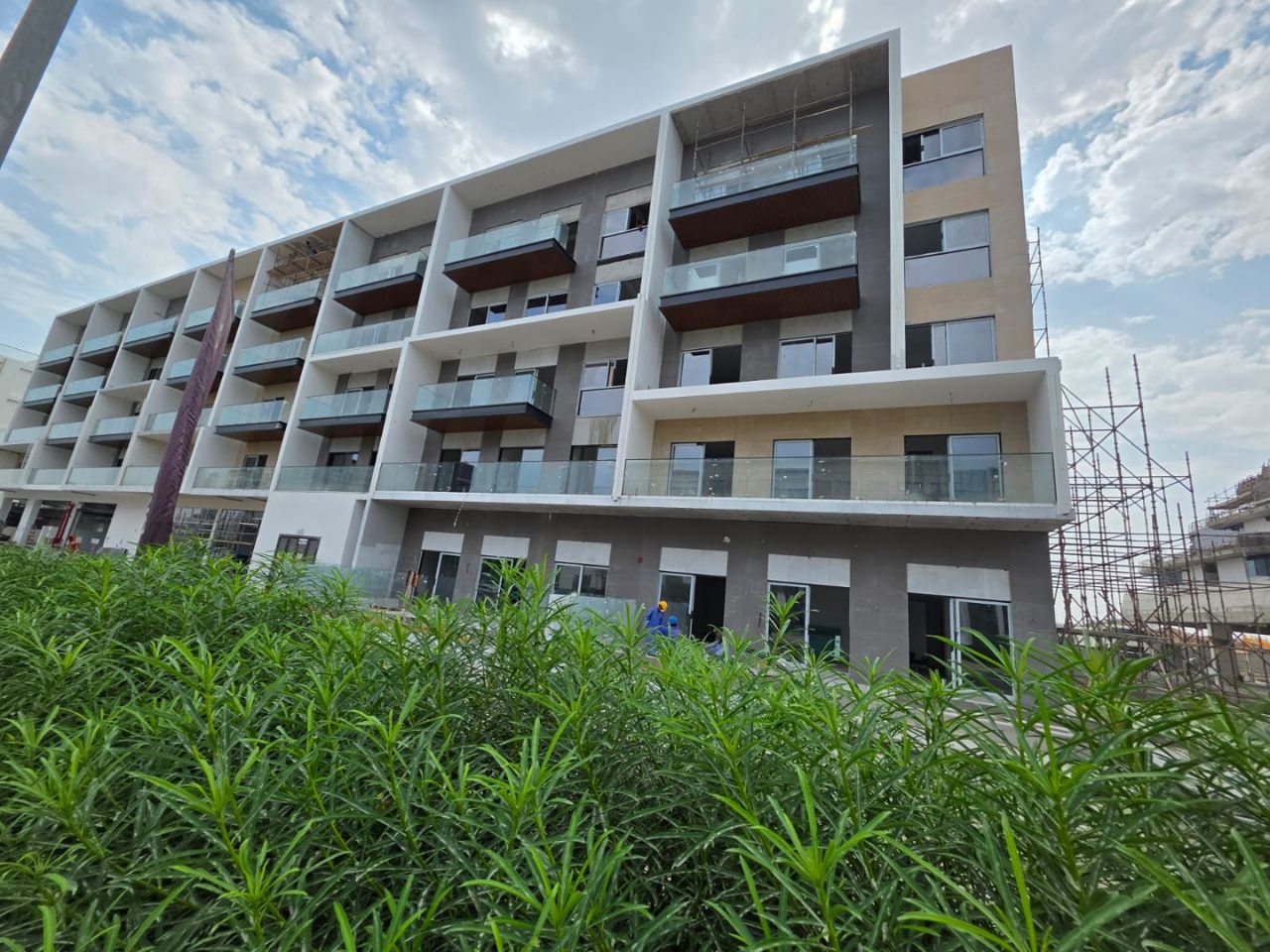
Fine desert sand can leave Dubai car paint dull and marked with micro-scratches. For drivers considering sandstorm damage paint repair services in Dubai, the key distinction is whether scratches are limited to the clear coat or reach deeper layers: polishing may remove clear-coat damage, but panels with less than 30 microns of clear coat shouldn’t be polished.
It’s easy to focus on visible marks and rush into polishing or repainting. Documenting the damage in good light before sanding gives you a clearer record of the original condition and helps guide the repair assessment.
This guide explains what sandstorm paint damage looks like, how to document it before work starts, and what to assess in the finished repair. You’ll also learn what affects repair and curing timelines, so you can understand each stage before deciding what comes next.
Key Takeaways
- Map marks panel by panel and capture their location and appearance before repairs so the original damage is clearly recorded.
- Assess the completed finish in consistent lighting, looking for an even colour match, smooth surface, and clean panel transitions.
- Repair duration depends on the damage and the work required; follow the refinishing system’s curing guidance before applying protective film.
- Choose polishing or repainting based on damage depth: surface-level clear-coat marks may respond to polishing, while deeper damage can require refinishing.
Inspecting and documenting paint damage before repairs
In the UAE, 15 to 25 significant dust events occur each year, with the most severe haboobs typically from March to June. Fine particles can abrade exposed exterior coatings, leaving dull patches, fine scratches, or areas where paint has loosened. Inspect the walls before sanding or scraping begins. Early documentation distinguishes existing storm damage from changes made during preparation.
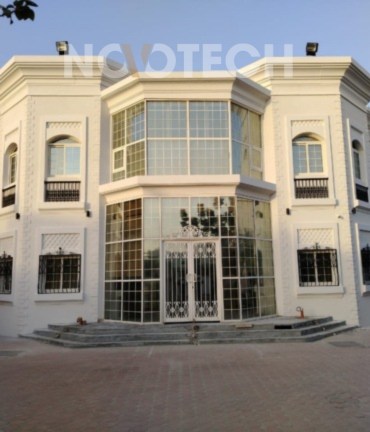
Start in good lighting and inspect one elevation at a time. View each wall from several angles, then examine marked areas closely. Look for differences in sheen, colour, texture, and adhesion. A broad dull zone may indicate surface abrasion, while lifting edges or exposed substrate point to coating failure. Record each condition separately rather than describing the entire façade as damaged.
Create a clear visual record before repairs. Photograph each elevation, then take close-ups of individual defects. Include fixed reference points, such as a window, corner, or balcony, so each location remains identifiable. Note the date, wall orientation, and nearby features on a simple elevation sketch. This record helps you compare the same area after preparation and painting.
- Mark each affected area on an elevation plan, using a consistent label.
- Photograph cracks, peeling, abrasion, and colour changes as separate defects.
- Record existing repairs or visibly different paint beside the damaged area.
Focus the assessment on the coating and its substrate. Check whether the paint is merely dulled or has blistered, flaked, or exposed the underlying surface. Note cracks and joints separately, as they may need attention beyond repainting. Avoid sanding before taking initial photographs; abrasion can alter the surface and erase evidence of its original condition.
Good documentation also supports a more precise repair scope. A regional haboob in Dubai can last 6 to 8 hours, so exposed elevations may show different levels of wear. Compare sheltered sections with open walls, and record the contrast rather than assuming every side needs identical work. A location-by-location record gives the repair assessment a practical basis.
For vehicle paint, rinse sand off with water before washing to avoid dragging abrasive particles across the finish. After hail damage, check the car’s glass and safety before planning repairs. Repair dents before painting and shape any filler properly; compare complete hail-damage repair estimates before authorising work.
Inspecting the repair finish
For car panels, Dubai workshops start with the factory paint code. A code may have approved variants, and sunlight can age the existing finish. Comparing a prepared colour sample with the adjacent panel helps assess the colour and appearance.
On an exterior wall, inspect the repaired area both up close and across the full elevation. Check whether the colour and sheen look consistent beside the original coating. A patch that appears to match from directly in front may look different from an angle, especially as daylight changes.
Use the damage locations recorded during the initial inspection as a comparison map. At each marked spot, look for sanding marks, rough edges, pinholes, peeling, or paint that bridges cracks unevenly. A repaired patch beside a window, for example, should meet the surrounding wall cleanly, without a raised ridge or abrupt colour boundary.
- Compare repaired and original areas in daylight, then view them from different angles.
- Check corners, window edges, joints, and other transitions for clean, even coverage.
- Look for runs, missed areas, dust trapped in the coating, or differences in surface texture.
- Match each finished location against its before-repair photograph and elevation record.
Inspect the whole wall, not just the central repair. A difference in sheen can make a patch stand out even when its colour seems close. Check the repaired section and surrounding surface, including boundaries where preparation may have extended beyond the visible damage. For a fair comparison, examine similar areas under the same lighting.
For a vehicle respray, inspect panel transitions and colour consistency beside adjacent panels. A factory code is a reference, not a guarantee of an exact match, because approved variants and sun exposure affect appearance. For wall coatings, assess colour, texture, coverage, and edges instead. Record each visible defect with its location and a clear comparison photograph to provide a specific basis for discussing corrective work.
Paint repair timelines and curing
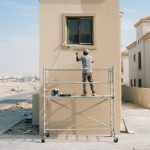
Exterior wall repairs involve distinct stages: surface preparation, patching, coating application, and curing. The sequence matters because each layer needs suitable conditions before the next stage begins. Applying finish paint over a damp repair, for example, can affect the final surface. The schedule depends on the damaged area, preparation required, coating system, and site conditions.
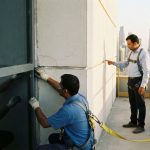
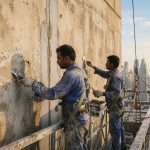
Preparation may include removing loose paint, cleaning dust, and repairing cracks or exposed substrate. A small isolated patch follows a different workflow from a full elevation with widespread peeling. The repair area also affects access and setup, especially on high walls. These factors shape the work period before paint application begins.
Drying and curing are not the same. A surface may feel dry while the coating still needs time to develop its intended performance. Follow the selected coating system’s application and curing guidance, including instructions for recoating. Heat, direct sun, airflow, and surface condition influence the work, so crews plan application around the actual wall and its exposure.
- Confirm that cleaning and repairs are complete before coating begins.
- Allow each layer to reach the required stage before applying the next.
- Keep the repaired area clear of dust, contact, and disturbance during curing.
- Assess colour and sheen only after the finish has settled as directed.
A repaired wall beside an exposed corner, for example, may need careful sequencing across adjoining surfaces. Stopping at an arbitrary edge can leave a visible transition; extending the work across a larger section may change preparation and application time. The scope should account for both the defect and the area needed to achieve a consistent finish.
Ask for the planned stages and when the surface can return to normal use. These milestones are more useful than a single total-duration estimate. If protective film is being applied to refinished vehicle paint, wait until the refinish system’s curing guidance allows it. This vehicle-specific step does not apply to exterior walls, but it shows why coating compatibility and curing instructions matter.
A single-stage machine polish at a body shop is typically a half-day job. For refinished paint, PPF application should follow the refinish system’s curing guidance, not precede it.
Repair sandstorm damage: polish or repaint?
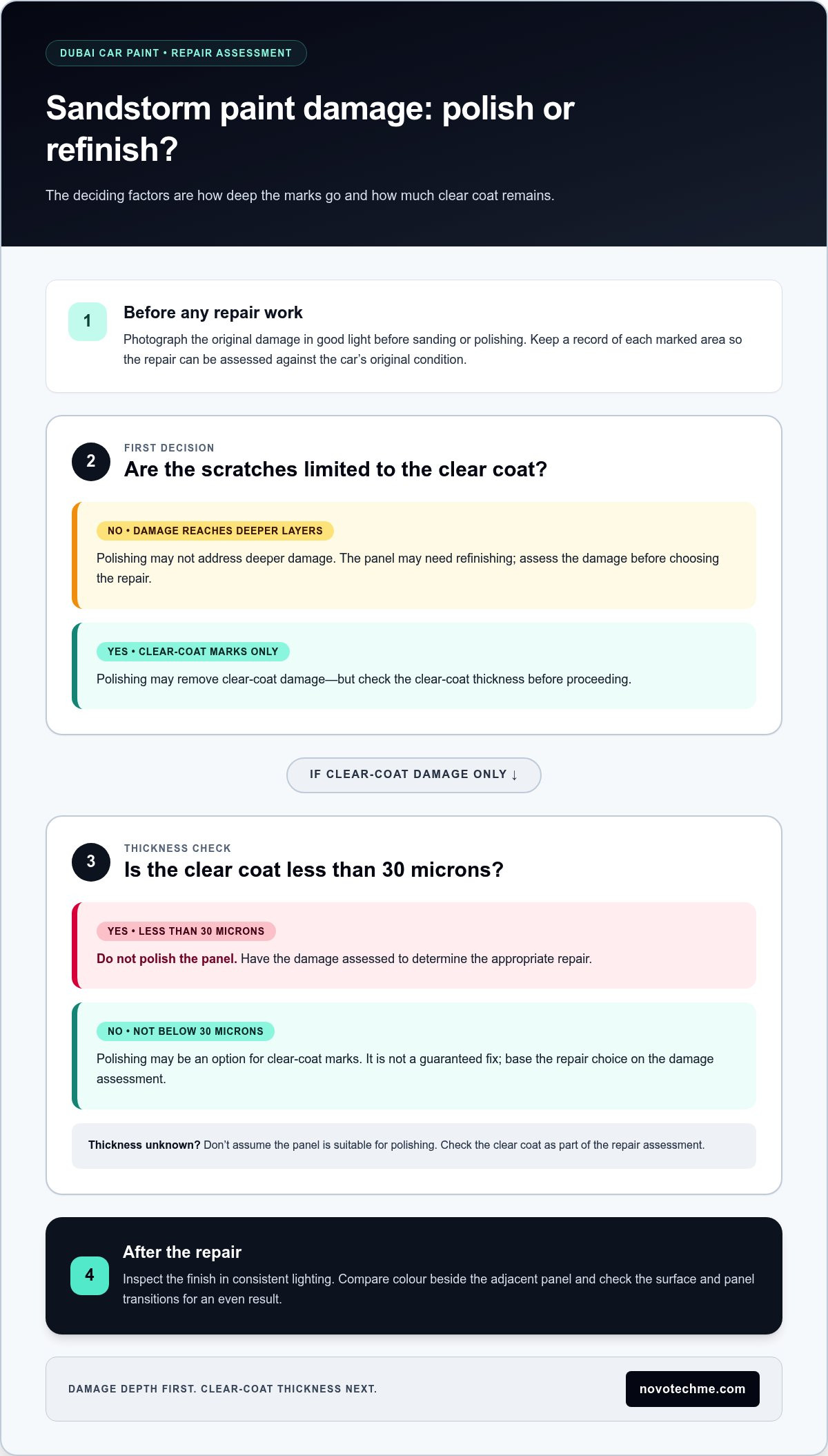
Choosing sandstorm damage paint repair services in Dubai starts with identifying the affected surface. Polishing may suit certain vehicle paint defects, but it does not repair exterior walls. Fine desert sand can leave micro-scratches in a car’s clear coat, which polishing may help if the marks remain within that layer. Wall coatings need a separate assessment for abrasion, peeling, or exposed substrate.
On a car, clear coat is typically 40 to 60 microns thick. Polishing removes some of that layer, so repeated machine polishing can reduce its remaining protection. Avoid polishing a panel if its clear coat measures below 30 microns. For scratches limited to clear coat, polishing may remove visible damage without repainting.
For building owners, sandstorm damage paint repair services in Dubai should address the wall coating’s condition, not rely on car-polishing methods. A dull but intact wall may need a coating assessment; peeling, flaking, or exposed substrate calls for preparation and repainting of the affected area. Broad abrasion may also call for repainting if it changes the surface colour or texture.
- Use polishing only for suitable vehicle clear-coat scratches, not wall coatings.
- Check whether wall paint remains intact or has lifted from the surface.
- Prepare damaged areas before applying a compatible exterior coating.
- Compare the repaired wall’s colour and texture with the surrounding finish.
Isolated scuffs on a wall with sound paint differ from flakes that expose the surface beneath. The latter requires removing unstable coating before repainting. On a vehicle, a scratch reaching the colour coat or primer is deeper than clear-coat damage and needs a different repair approach.
If sand abrasion has left exterior walls visibly worn, explore exterior building painting as a route for restoring the coating.
NovoTech: Exterior Building Painting Services
NovoTech provides Exterior Building Painting Services for properties with sandstorm-worn exterior walls. When inspection shows peeling, exposed surfaces, or broad abrasion, repainting can restore the exterior coating after suitable preparation. The scope can cover affected sections or larger exterior areas, depending on the building’s condition. Villa Painting & Exterior Finishes address villa exteriors, while high-rise projects can use NovoTech’s exterior building painting services. This is a practical next step when the damage extends beyond a minor mark and requires a coordinated painting scope. Contact NovoTech to discuss exterior wall painting for your property.
Plan the next step for your property
Base the repair decision on the surface’s condition, not simply how visible the marks are. For building owners considering sandstorm damage paint repair services in Dubai, a clear scope helps align preparation, coating work, and the finished result with the property’s needs. It also helps determine whether the work involves an exterior wall, a villa finish, or interior areas affected during wider maintenance.
NovoTech offers Exterior Building Painting Services, Interior Painting Solutions, and Villa Painting & Exterior Finishes. These services can support a focused exterior repair or a broader painting project. Describe the affected areas to NovoTech to discuss the work your property needs.
Contact NovoTech about paint repair to discuss your project and move forward with a considered plan.
Frequently Asked Questions
What Does Sandstorm Damage Actually Look Like?
On exterior walls, sandstorm damage can appear as fine, scattered abrasions, a powdery surface, or uneven patches where the finish has worn away. Compare exposed sections with sheltered areas in the same light; wind-facing walls may show more visible wear. For example, a balcony recess may retain its original appearance while the adjacent open wall looks rougher. Loose dust can be removed, but persistent texture changes point to coating damage.