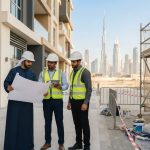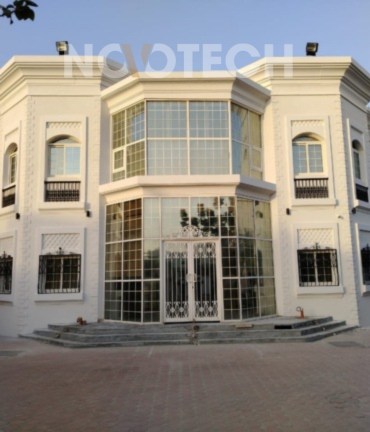
Under Dubai Law No. (3) of 2026, failing to maintain your building’s exterior is no longer just a cosmetic oversight; it’s a statutory violation that can trigger administrative fines of up to AED 1,000,000. For many property managers and owners, the challenge isn’t just the physical labor, but the intricate process of navigating Dubai Municipality building painting regulations without facing costly project delays or permit rejections. It’s a high-stakes environment where a single unapproved color swatch or a missing No Objection Certificate can stall a renovation for months.
We understand that managing large-scale infrastructure requires precision and a deep alignment with municipal standards. This guide provides a comprehensive roadmap for mastering the complexities of exterior painting permits, from understanding Al Sa’fat 2.0 sustainability mandates to choosing coatings that withstand the UAE’s high-UV climate. You’ll gain the technical insight needed to secure approvals efficiently while ensuring your building remains legally sound and structurally protected. We’ll explore the critical differences between DM and Trakhees jurisdictions, the mandatory safety protocols for scaffolding, and the strategic selection of protective systems that guarantee long-term compliance.
Key Takeaways
- Identify the specific documentation required, including Minor Works permits and Master Developer NOCs, to maintain project legality across different Dubai jurisdictions.
- Master the technical requirements for navigating Dubai Municipality building painting regulations to prevent administrative fines and ensure smooth project progression.
- Align your material selection with Al Sa’fat 2.0 sustainability standards, focusing on VOC limits and Solar Reflectance Index requirements for long-term facade durability.
- Secure necessary Work at Height and RTA clearances for scaffolding to maintain site safety and avoid public right-of-way violations.
- Leverage the expertise of licensed contractors to manage the entire approval lifecycle, from initial permit application to the final municipal inspection.
Understanding the Regulatory Landscape for Exterior Painting in Dubai
The Dubai Municipality (DM) serves as the regulatory backbone for the city’s rapid urban expansion, ensuring every high-rise and villa aligns with stringent aesthetic and structural standards. When you’re navigating Dubai Municipality building painting regulations, you’re engaging with a framework designed to preserve the longevity of the emirate’s infrastructure. While interior renovations are often viewed as private enhancements, exterior painting is categorized as a building alteration. This distinction is critical; the facade is a public-facing element that must comply with the Dubai Urban Master Plan 2040, which prioritizes a harmonious, sustainable urban landscape. This plan isn’t just about looks; it mandates that building envelopes contribute to energy efficiency and urban heat reduction.
Jurisdictional Oversight: DM vs. Trakhees
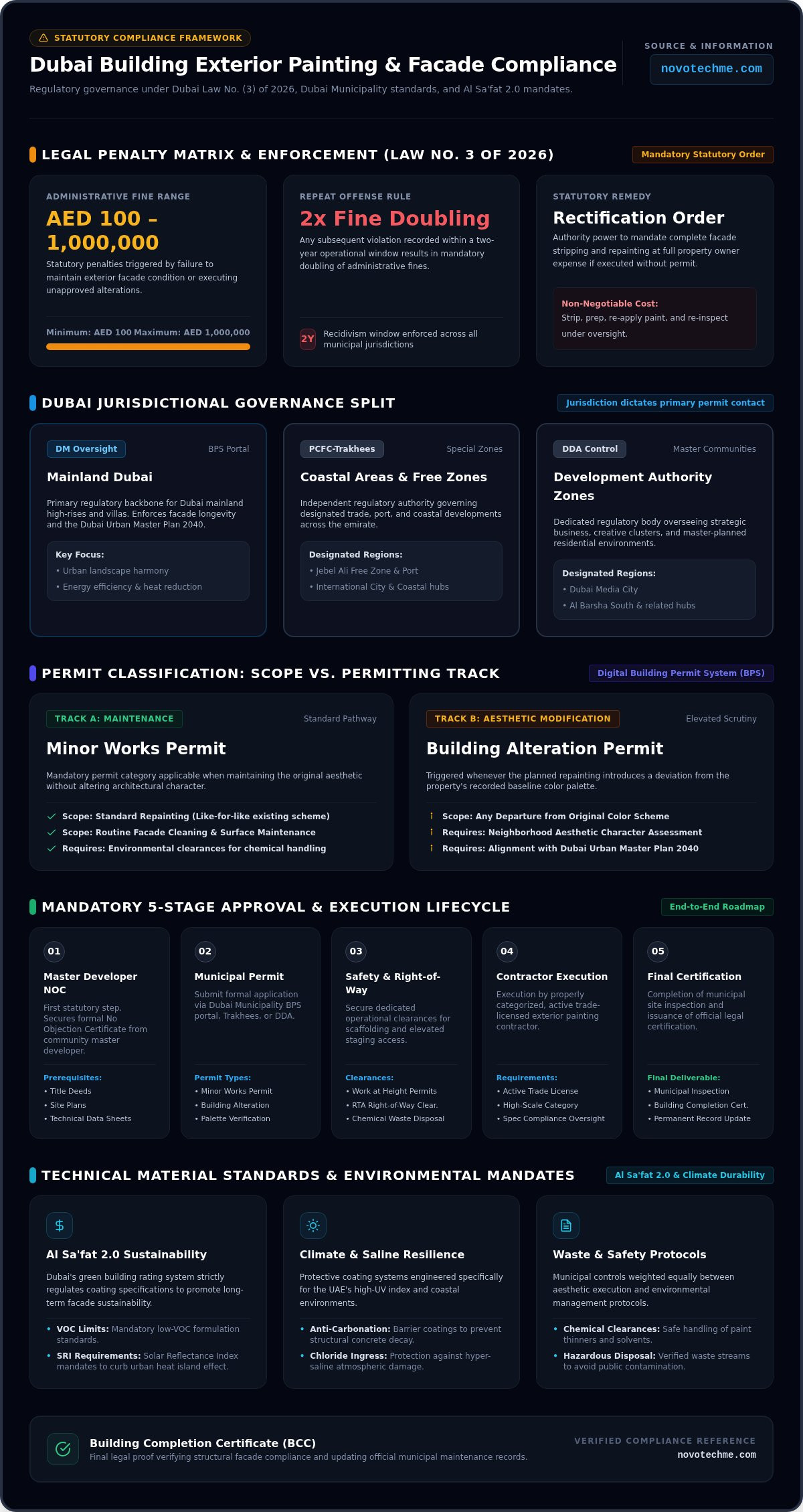
Understanding which authority governs your property is the first step toward compliance. While the DM manages the majority of mainland Dubai, specific zones fall under the jurisdiction of PCFC-Trakhees, particularly coastal areas and free zones like Jebel Ali or International City. Additionally, the Dubai Development Authority (DDA) oversees master-planned communities such as Dubai Media City and Al Barsha South. Your geographical location dictates your primary regulatory contact, and failing to apply to the correct body can result in immediate permit rejection. NovoTech’s 30-year history in the region has shown that successfully navigating Dubai Municipality building painting regulations requires a proactive approach to these jurisdictional nuances to avoid administrative friction.
Consequences of Non-Compliance and Unauthorised Alterations
The legal implications of unauthorized exterior work are substantial. Under Law No. (3) of 2026, administrative fines for building safety and facade violations can range from AED 100 to AED 1,000,000, doubling for repeat offenses within two years. Beyond financial penalties, the DM may issue a ‘rectification order,’ requiring you to strip and repaint the entire facade at your own expense if the color palette wasn’t pre-approved through the digital Building Permit System. This often happens when owners bypass the No Objection Certificate (NOC) process required by master developers. A Building Completion Certificate serves as the final legal verification that a structure meets all approved engineering and maintenance standards, effectively linking current maintenance records to the property’s legal status.
We’ve observed that high-rise projects often face the strictest scrutiny due to their impact on the city’s skyline. Authorities prioritize buildings that use approved protective systems to prevent carbonation and chloride ingress, which are common in our hyper-saline environment. By ensuring your project meets these baseline regulatory requirements, you protect your investment from both legal penalties and structural decay.
Key Permits and NOCs Required for Building Repainting
Standard repainting and facade cleaning typically fall under the ‘Minor Works’ permit category in the Dubai Building Permit System. However, if your project involves a departure from the original color scheme, the DM requires a ‘Building Alteration’ permit. This ensures that any visual change aligns with the neighborhood’s aesthetic character and the broader urban vision. Beyond visual permits, environmental clearances for the management of paint chemicals and hazardous waste disposal are mandatory. Navigating Dubai Municipality building painting regulations involves a multi-layered approach where environmental safety is weighted as heavily as aesthetic compliance.
The NOC Application Process
Securing a No Objection Certificate (NOC) from the master developer is the critical first step in the regulatory lifecycle. You’ll need to submit title deeds, site plans, and a technical data sheet for all proposed coatings to ensure they meet community standards. The Dubai Municipality official portal facilitates the subsequent permit application through the digital Building Permit System (BPS). It’s vital that your contractor’s trade license is active and specifically categorized for high-scale exterior building painting services. This alignment between owner, developer, and contractor is what prevents the administrative delays that often plague unmanaged projects.
Jurisdiction-Specific Requirements
Technical requirements vary significantly between the DM and Trakhees. In free zones like JAFZA or Dubai Maritime City, Trakhees mandates ‘Concept Design’ approvals to ensure that exterior finishes don’t interfere with industrial operations or maritime safety protocols. In mainland Dubai, the DM enforces strict color palettes in heritage areas like Al Fahidi to preserve cultural identity, whereas modern districts allow for more contemporary, high-performance finishes. For complex commercial assets, a lead consultant is usually required to oversee the technical submittals, ensuring that anti-carbonation and SRI-compliant coatings meet the 2026 standards for structural durability.
Managing these overlapping approvals requires a partner who understands the granular details of the BPS portal and developer-specific mandates. By coordinating these permits early, we ensure that the technical execution of your project remains uninterrupted by legal hurdles or municipal stop-work orders.
Material Standards and Color Approval Guidelines
Under the Al Sa’fat 2.0 sustainability framework, material selection is dictated by rigorous environmental performance metrics. Architectural coatings must satisfy Volatile Organic Compound (VOC) limits of less than 50 g/L to minimize atmospheric impact and ensure indoor air quality standards are met. Additionally, the Solar Reflectance Index (SRI) is a mandatory technical requirement for exterior envelopes. High-SRI coatings are engineered to reflect a greater portion of solar radiation, which mitigates the urban heat island effect and reduces the thermal load on the building’s HVAC systems. Navigating Dubai Municipality building painting regulations in 2026 requires this level of technical precision to secure final inspection and certification.
Performance Requirements for UAE Climates
Facades in the emirate endure extreme UV cycles and hyper-saline humidity that can lead to rapid coating degradation. For high-rise structures and coastal assets, anti-carbonation coatings are essential to protect concrete reinforcement from chloride ingress and carbon dioxide penetration. This is why anti-corrosive paint in the UAE is a regulatory necessity for buildings in proximity to the shoreline. We frequently utilize specialized Terraco coatings to meet these durability standards, as they offer the elastomeric properties required to bridge micro-cracks caused by thermal expansion. Ensuring these high-performance systems are applied correctly involves strict adherence to scaffolding safety protocols, maintaining both site safety and technical compliance.
Aesthetic Harmony and Color Palettes
Aesthetic consistency is a core component of Dubai’s urban identity. Master-planned communities such as Downtown Dubai or Emirates Living operate under standardized color palettes that preserve a cohesive visual environment. If a property owner intends to deviate from these pre-approved schemes, the process involves submitting a formal design proposal supported by high-resolution architectural renderings. The Dubai Municipality or the relevant master developer typically requires the application of on-site ‘mock-up’ samples. These physical swatches allow municipal engineers to evaluate how the proposed color interacts with neighboring structures under natural light conditions. Navigating Dubai Municipality building painting regulations for custom finishes is a methodical process that prioritizes community harmony over individual preference.
Adhering to these material and aesthetic standards is not merely a legal requirement; it is a strategic investment in the building’s lifecycle. By selecting certified, high-performance coatings, owners can extend the interval between maintenance cycles while ensuring full compliance with the latest 2026 sustainability codes.
Safety Protocols and Scaffolding Regulations
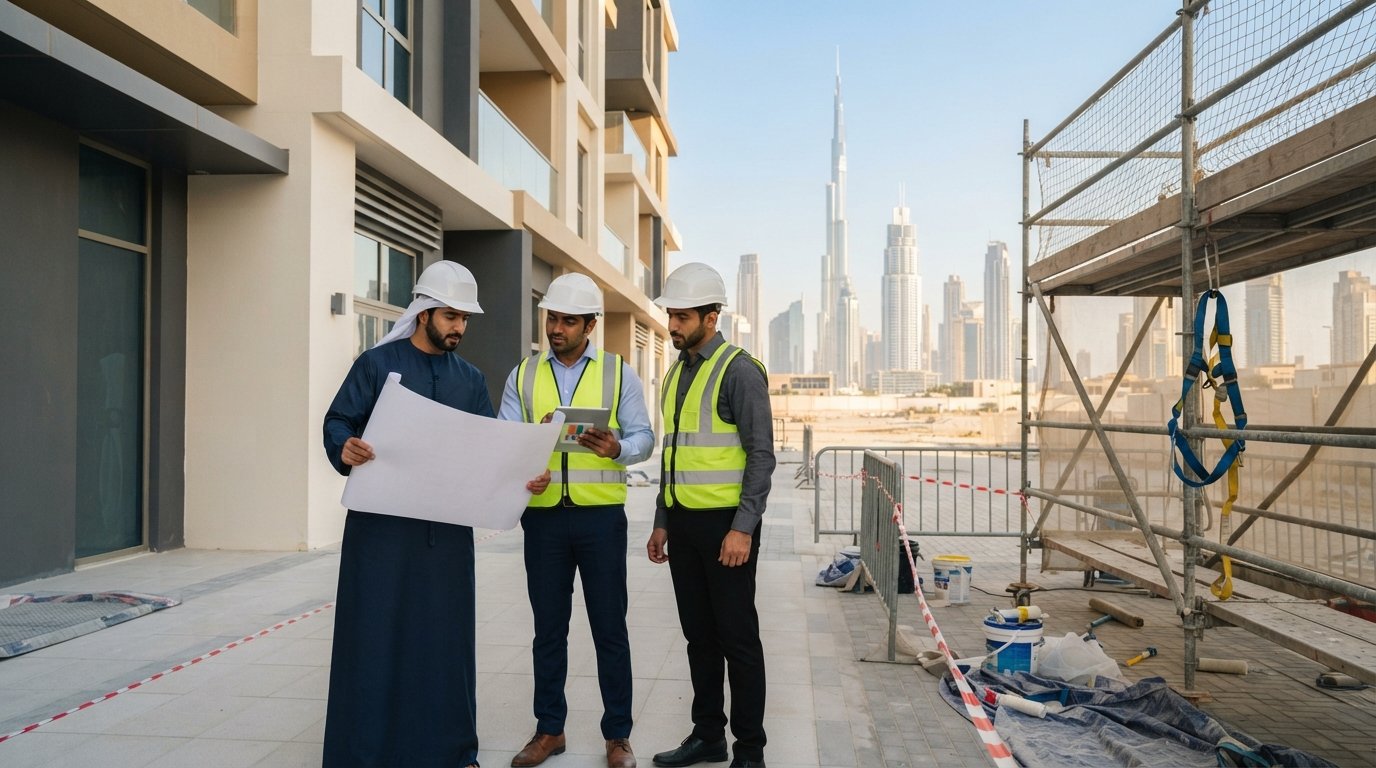
Successfully navigating Dubai Municipality building painting regulations requires more than just permit paperwork; it demands a rigorous commitment to site safety and public protection. For any high-rise project, the ‘Work at Height’ permit is a non-negotiable prerequisite that outlines the specific access methods and fall-prevention systems in use. When scaffolding or mobile elevated work platforms (MEWPs) must be positioned on public footpaths or roads, a dedicated Right-of-Way (ROW) NOC from the Roads and Transport Authority (RTA) is mandatory. This ensures that pedestrian flow is maintained and traffic management plans are strictly followed. Failure to secure these clearances can result in immediate site closure and heavy administrative penalties from both the DM and RTA.
High-Rise Access and Public Safety
Modern exterior renovations often utilize a mix of boom lifts, spiders, and rope access technicians to reach complex facade geometries. Each of these methods requires specific operator certifications and equipment maintenance logs that DM Health and Safety Department (HSE) inspectors review during site visits. Implementing ‘Safety Exclusion Zones’ at the ground level is essential to protect the public from falling debris or paint overspray. Third-Party Certification is a mandatory validation process where an independent, DM-approved engineering firm inspects and tags scaffolding or cradle systems to confirm they meet the structural safety factor of 4:1 before any work commences. These inspections must be repeated every seven days and after any adverse weather event, such as the sandstorms or heavy rains common in the UAE.
Environmental and Waste Management Compliance
The DM Waste Management Department enforces strict protocols for the handling and disposal of industrial materials. Used paint cans, hazardous thinners, and chemical stripping agents cannot be disposed of in standard municipal skips. Instead, they must be collected by authorized waste management contractors who provide ‘Waste Disposal Certificates’ for the project’s final audit. During the surface preparation phase, contractors must prevent groundwater contamination by using containment bunds and filtration systems for pressure washing runoff. The Safety Officer on a Dubai painting site acts as the primary liaison for these environmental standards, ensuring that every technician follows the approved Material Safety Data Sheets (MSDS). Secure your project’s compliance and safety by partnering with our team for professional exterior high rise building painting solutions.
Adhering to these safety and environmental mandates is a critical component of project management. By maintaining a clean, certified site, you eliminate the risk of legal hurdles while protecting the long-term integrity of your asset and the safety of the surrounding community.
Ensuring Compliance Through Professional Project Management
Execution is the final frontier of regulatory compliance. While the previous sections detailed the technical and administrative requirements, the actual implementation determines whether a project concludes with a final municipal sign-off or a series of rectification orders. Unlicensed contractors or DIY attempts are the primary drivers of municipal fines in the emirate. The Dubai Building Permit System requires that all permit applications be linked to a contractor holding a valid trade license with the specific engineering classification for building maintenance. Without this professional alignment, obtaining the necessary NOCs becomes impossible, leaving the property owner legally exposed.
Professional project management acts as a technical bridge between the property owner’s vision and the city’s urban mandates. This end-to-end oversight ensures that every phase, from the initial surface preparation to the final coating application, is documented and compliant. Integrating these standards into a broader strategy for building maintenance in the UAE is essential for preserving the asset’s value and ensuring that the decennial Building Quality and Safety Certificate remains valid under Law No. (3) of 2026.
Selecting a Compliant Contractor
Verifying a contractor’s credentials is a critical step in risk mitigation. A valid trade license from the Department of Economy and Tourism (DET) must explicitly include ‘Building Maintenance’ or ‘Painting Works’ as an approved activity. Furthermore, for projects requiring high-performance finishes, selecting an authorized Terraco applicator is often a prerequisite for warranty validation and permit approval. These specialized applicators possess the technical training to apply complex protective systems that meet DM durability standards. Reviewing a contractor’s history with municipal approvals provides tangible proof of their ability to handle the bureaucratic nuances of the Dubai Building Permit System.
The NovoTech Advantage: Integrated Excellence
NovoTech brings a 30-year legacy of operational history to every renovation project. We position ourselves as a collaborative ally, managing the entire lifecycle of navigating Dubai Municipality building painting regulations on behalf of our clients. Our team handles all NOC and permit applications as an integrated component of our exterior building painting services, removing the administrative burden from property managers. By combining regulatory expertise with high-performance execution, we ensure that your building’s facade is both aesthetically superior and legally sound. We invite you to contact our technical team for a professional renovation assessment to determine the optimal compliance and coating strategy for your property.
Success in Dubai’s real estate landscape requires a commitment to precision and long-term structural integrity. By choosing a partner that understands the granular details of municipal law and material science, you guarantee a seamless transition from project inception to final engineering approval.
Securing Your Asset’s Legacy Through Technical Compliance
Adhering to Dubai’s 2026 building codes is a strategic investment in structural longevity and legal security. It’s a process that demands technical precision over mere aesthetics. The transition toward statutory lifecycle maintenance under Law No. (3) of 2026 means owners must remain vigilant with their documentation and material choices. Successfully navigating Dubai Municipality building painting regulations requires a deep understanding of Al Sa’fat 2.0 sustainability standards and the automated Building Permit System. By aligning your project with these mandates, you protect your property from administrative fines while contributing to the city’s sustainable urban vision.
NovoTech provides the technical depth and operational history needed to manage these complexities. With over 30 years of UAE experience and our status as an authorized Terraco applicator, we offer a complete permit management model that handles everything from developer NOCs to final municipal inspections. We take total project ownership so you don’t have to manage the bureaucratic friction. Schedule a regulatory compliance consultation for your building project today to ensure your renovation is executed with expert precision. We look forward to helping you achieve a flawless, compliant finish for your property.
Frequently Asked Questions
Do I need a permit to repaint the exterior of my private villa in Dubai?
Yes, any modification to a building’s exterior, including a fresh coat of paint, requires a formal permit from Dubai Municipality or the relevant free zone authority. For private villas, owners must typically secure a Minor Works permit via the Building Permit System (BPS) portal. This process ensures that the proposed finish complies with community aesthetic standards and technical safety requirements. Engaging a licensed contractor is mandatory to facilitate the application and ensure the project remains legally sound.
How long does it typically take to get painting approval from Dubai Municipality?
The processing time for a Painting and Maintenance Permit generally ranges from three to seven working days once all documentation is submitted. This timeline depends on the completeness of your application, including the necessary No Objection Certificates (NOCs) from master developers. Utilizing the digital BPS portal has significantly improved efficiency. However, delays often occur if material specifications or color swatches don’t meet the initial compliance checks required by municipal engineers.
Can I change the color of my building to any shade I want?
No, color selections are strictly regulated to maintain the visual harmony of Dubai’s neighborhoods. If you intend to change the building’s original color, you must submit a ‘Building Alteration’ application accompanied by architectural renderings and physical mock-ups. These samples are reviewed against the Dubai Urban Master Plan 2040 and community-specific guidelines. Authorities strictly bar unilateral color changes, and non-compliance often results in mandatory repainting orders to restore the original or approved palette.
What are the fines for painting a building without a permit in Dubai?
Fines for undertaking unauthorized exterior work are substantial under Law No. (3) of 2026. Administrative penalties start at AED 100 and can escalate to AED 1,000,000 depending on the scale of the violation and the building’s location. Repeat offenses within a two-year window can see these fines double. Beyond the financial impact, the DM can issue stop-work notices and suspend access to future building permits until the site is fully rectified and compliant.
Is a separate permit required for scaffolding or cradles?
Yes, high-rise projects require specific access permits beyond the standard painting approval. A ‘Work at Height’ permit is essential for any project involving scaffolding, cradles, or rope access. Additionally, if the equipment encroaches on public sidewalks or roads, an RTA Right-of-Way NOC is required. All suspended platforms must also receive mandatory third-party certification from a DM-approved firm to verify they meet the statutory 4:1 safety factor before technicians begin work.
What is the SRI rating, and why does it matter for Dubai building permits?
The Solar Reflectance Index (SRI) is a technical metric indicating how well a coating reflects solar energy and releases absorbed heat. Under Al Sa’fat 2.0 sustainability standards, high-SRI coatings are mandatory for exterior envelopes to mitigate the urban heat island effect. Navigating Dubai Municipality building painting regulations involves selecting certified materials that meet these thermal performance benchmarks. These coatings are essential for reducing the building’s cooling load and ensuring long-term structural durability in high-UV environments.
Do I need to inform my neighbors before starting an exterior painting project?
While the DM doesn’t always mandate direct neighbor notification, master developers and HOAs frequently require it as part of the NOC process. Informing adjacent property owners is a professional best practice, particularly when projects involve scaffolding or spray-painting that could cause dust or overspray. Proactive communication reduces the likelihood of community complaints, which can lead to municipal inspections and potential project delays if safety or nuisance protocols are questioned by the authorities.
How often does Dubai Municipality require buildings to be repainted?
Dubai Law No. (3) of 2026 links repainting to the mandatory Building Quality and Safety Certificate. Buildings under 40 years old must renew this certificate every 10 years, while those 40 or older require renewal every 5 years. Navigating Dubai Municipality building painting regulations effectively means maintaining the facade to these standards. In the UAE’s harsh climate, high-performance protective coatings typically require a refresh every 5 to 7 years to prevent resin failure and structural decay.