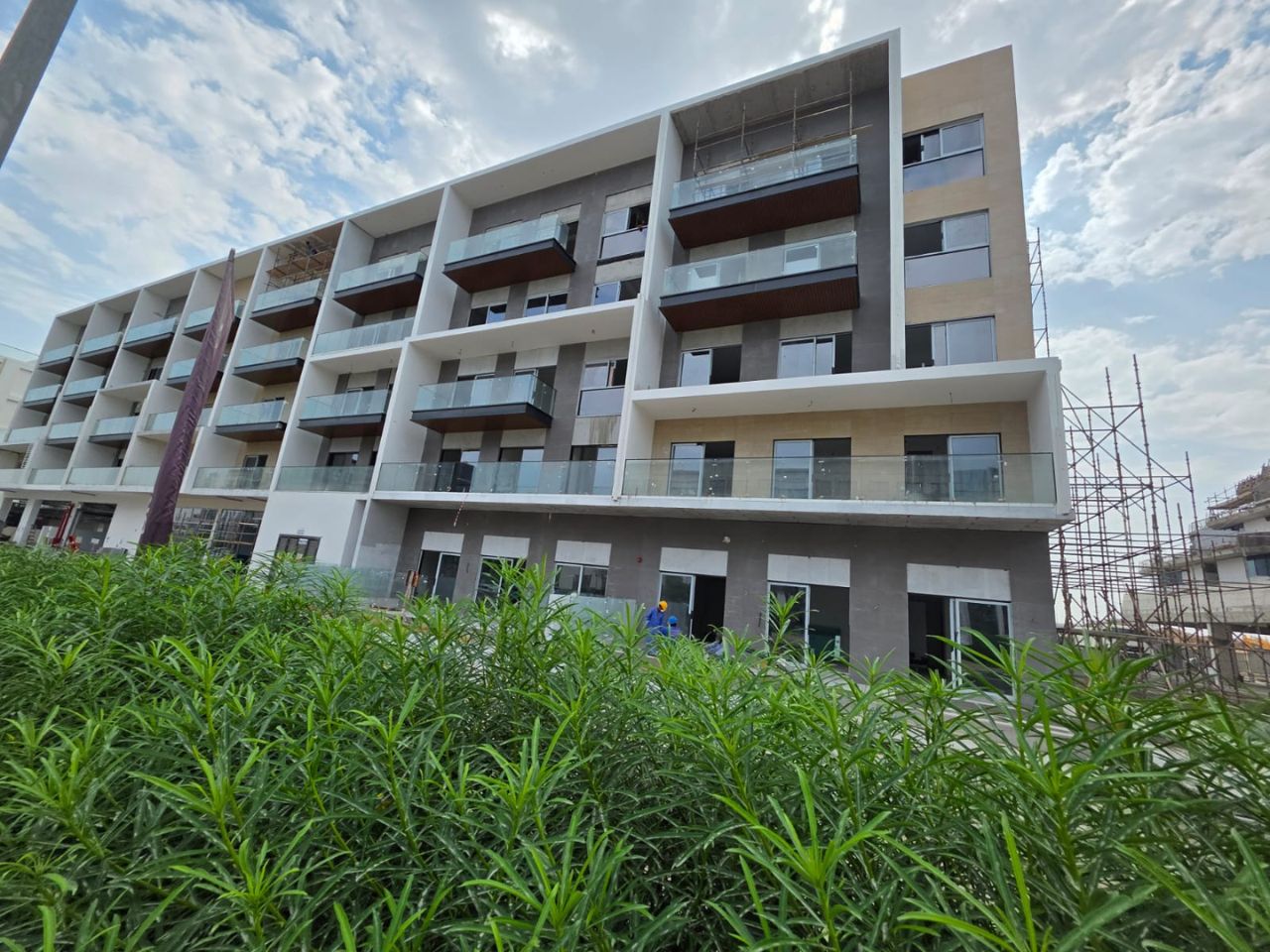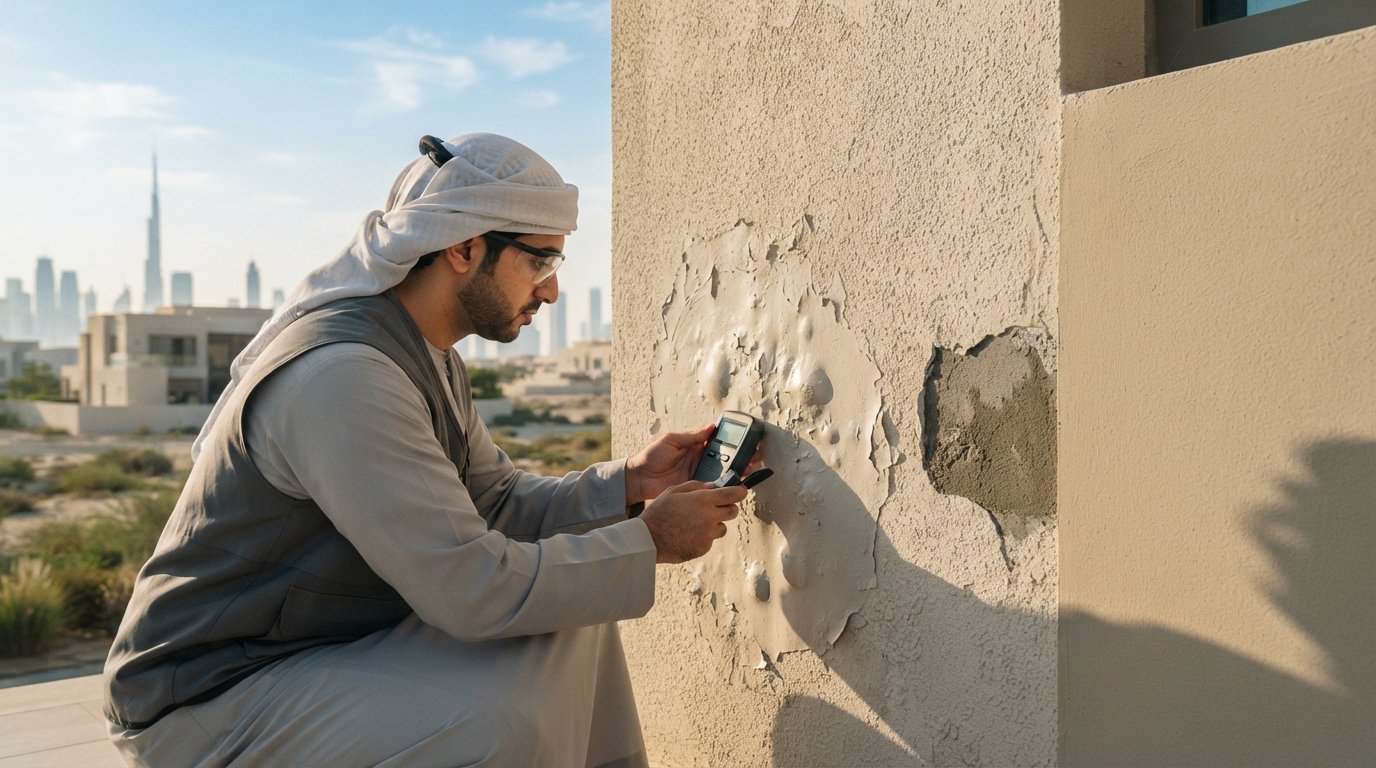
A failing coat of paint isn’t a cosmetic flaw; it’s an engineering failure of the building’s protective envelope. When architectural finishes blister, flake, or exhibit uneven sheen, property owners understandably worry about hidden substrate degradation and the frustrating prospect of paying twice for superficial cover-ups. Recognizing the critical signs of a bad paint job and how to get it fixed requires looking beyond surface aesthetics to evaluate the structural bond between coating and substrate, particularly under intense environmental conditions like extreme UV exposure and persistent humidity.
You shouldn’t have to accept recurring delamination or settle for contractors who merely mask substrate flaws with another fragile layer. In this guide, we examine the precise diagnostic indicators of paint failure, uncover root causes ranging from moisture entrapment to insufficient surface profiling, and outline the technical remediation protocols needed to restore your property permanently. Ahead, you’ll explore industry inspection benchmarks, professional preparation standards, and the exact engineering criteria required to achieve a resilient, durable finish.
Key Takeaways
- Learn how to differentiate superficial aesthetic defects from severe substrate bond failures to identify the true signs of a bad paint job and how to get it fixed permanently.
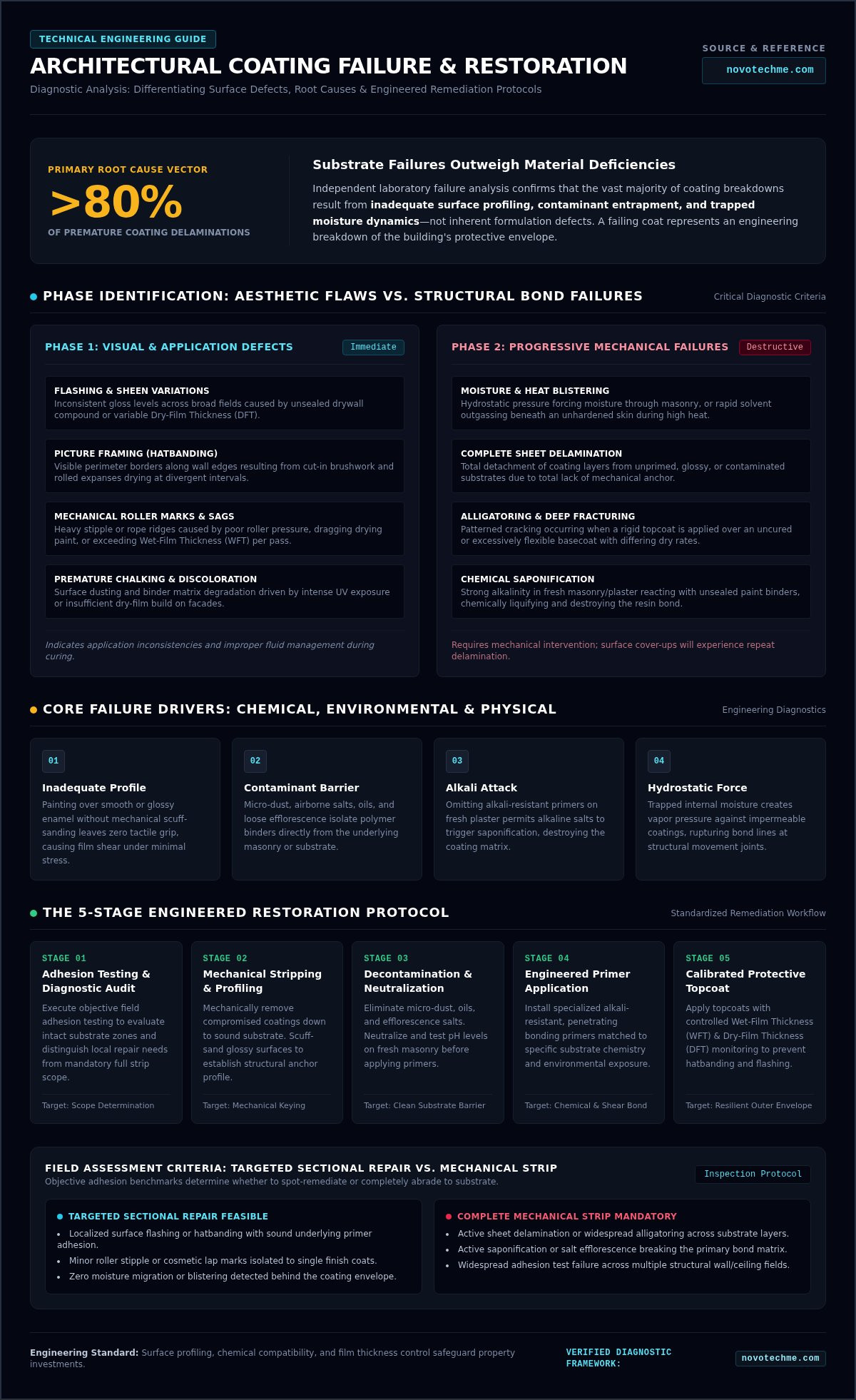
- Understand why inadequate surface profiling, contamination, and trapped moisture drive more than 80 percent of premature coating delaminations.
- Discover objective field adhesion testing methods to determine whether your building requires targeted sectional repair or a complete mechanical strip.
- Review the five-stage engineered restoration protocol required to achieve durable intercoat adhesion with specialized protective systems.
- Master key contractor vetting standards and technical scope requirements to prevent repeat failures and safeguard your property investment.
Critical Signs of a Bad Paint Job: Visual and Structural Defects
Defective architectural coatings manifest in two distinct phases: immediate aesthetic inconsistencies and progressive mechanical failures. While substandard contractors often dismiss early imperfections as minor cosmetic quirks, these anomalies routinely signal severe underlying bonding errors. Identifying the true signs of a bad paint job and how to get it fixed begins with distinguishing superficial application defects from fundamental failures in proper priming and substrate adhesion.
Visual defects become prominent under critical inspection. Key warning indicators include:
- Flashing and Sheen Variations: Inconsistent gloss levels across broad fields, typically caused by unsealed drywall compound or variable dry-film thickness (DFT).
- Mechanical Roller Marks: Heavy stipple, rope marks, or ridges left by low-quality sleeves, poor roller pressure, or dragging drying paint.
- Picture Framing (Hatbanding): Visible borders along wall edges, corners, and ceiling joints resulting from applying cut-in brushwork and rolled areas at different wet-film thicknesses or drying intervals.
- Premature Chalking and Discoloration: Surface dusting and uneven color fading that indicate polymer degradation, insufficient film thickness, or intense UV breakdown on exterior facades.
Critical structural transitions, such as gypsum ceiling perimeters and exterior movement joints, demand rigorous inspection. These interfaces concentrate building movement, causing poorly bonded films to crack and lift first.
Surface Imperfections: Lap Marks, Runs, and Inconsistent Sheen
Observing a surface under raking light reveals microscopic application inconsistencies immediately. Lap marks develop when an applicator fails to maintain a wet edge, rolling over a semi-dry boundary and doubling the dry-film build. Conversely, runs and sags demonstrate improper fluid mechanics, either caused by excessive solvent thinning or exceeding the manufacturer’s recommended wet-film thickness per pass. Picture framing along ceiling borders creates a jarring optical frame, indicating that the cut-in perimeter cured at a completely different rate than the rolled expanse.
Adhesion Failures: Blistering, Bubbling, and Peeling Surfaces
Physical film detachment represents an engineered breakdown of the coating matrix. Heat-induced dry blistering occurs when solvent vapors gas out rapidly beneath an unhardened outer crust under high temperatures. Moisture-driven blistering, by contrast, indicates hydrostatic pressure pushing liquid or water vapor out through masonry substrates. In severe scenarios, complete sheet delamination occurs, where entire coats peel away from unprimed or contaminated surfaces. Similarly, alligatoring develops when a hard, rigid topcoat is applied over an un-cured or flexible basecoat, fracturing the surface as the layers dry at divergent rates.
Recognizing these progressive structural breakdowns provides the diagnostic clarity needed to evaluate the signs of a bad paint job and how to get it fixed before structural masonry, wood, or interior gypsum suffer irreversible moisture damage.
Root Causes of Premature Coating Failure: Why Bad Paint Jobs Happen
Premature coating breakdown is rarely an intrinsic material defect. Independent laboratory assessments consistently prove that inadequate substrate preparation accounts for more than 80 percent of early bond failures. Understanding the root signs of a bad paint job and how to get it fixed requires examining chemical compatibility, moisture dynamics, and environmental exposure rather than simply blaming the paint formulation.
Inadequate Surface Preparation and Contaminant Entrapment
A coating requires a clean, profiled mechanical anchor. Applying film over micro-dust, airborne salts, oils, or loose efflorescence isolates the binder from the substrate. When contractors paint directly over glossy enamel without mechanical scuff-sanding, the new coat lacks tactile grip and shears away under low mechanical stress. Fresh plaster in masonry structures exhibits strong alkalinity; omitting an alkali-resistant primer causes saponification, where alkaline salts break down paint resins chemically. Established technical guides on exterior paint defects and failure analysis emphasize that surface profiling dictates coating longevity far more than the number of topcoats applied.
Environmental and Chemical Application Errors
Regional environmental stresses exacerbate contractor oversights. In the UAE, high solar irradiance and fluctuating coastal humidity create a punishing operating window. Coating a masonry or concrete surface with a moisture content higher than five percent traps water vapor beneath the film. When daytime exterior wall temperatures spike past 50°C, trapped moisture expands into intense hydrostatic vapor pressure, lifting the cured film into persistent blisters.
Direct sun exposure during application also triggers flash-drying. Solvents and water evaporate before the acrylic binder can properly coalesce into a monolithic sheet, leaving microscopic pinholes across the facade. High ambient humidity prevents full film curing, resulting in surfactant leaching and sticky surfaces that collect airborne sand. Engaging qualified teams for engineered protective painting systems ensures substrate moisture thresholds, ambient dew points, and intercoat curing windows are verified scientifically before any application begins. Recognizing these atmospheric triggers demystifies the technical signs of a bad paint job and how to get it fixed with engineered precision.
Assessing the Extent of Paint Damage: Repair vs. Full Strip
Remediation strategies must rely on objective diagnostic data rather than subjective visual sweeps. Determining the appropriate scope between localized spot blending and a full mechanical strip requires assessing the mechanical cohesion of existing coatings. Correctly identifying the signs of a bad paint job and how to get it fixed permanently hinges on structural substrate stability rather than cosmetic convenience.
Standardized Field Adhesion and Moisture Diagnostic Tests
Field technicians deploy cross-cut lattice testing (governed internationally by ASTM D3359) to evaluate coating adhesion quantitatively. By scribing a precision lattice through the film down to the substrate, applying pressure-sensitive tape, and pulling it sharply at a 180-degree angle, contractors can rate adhesion on an established scale from 0B (total flaking) to 5B (zero film detachment). Any score below 3B signals compromised bond integrity, indicating that applying new coats over the top will cause systemic shearing.
Simultaneously, technicians utilize digital pin and pinless moisture meters to detect internal dampness within concrete, plaster, or drywall partitions. When moisture readings exceed structural baselines, painting must halt immediately. If internal pipe bursts or groundwater penetration are the culprit, property managers should consult expert waterproofing companies in dubai to eliminate the hydro-pressure before coating begins.
Determining When Spot Repairs Suffice Versus Complete Stripping
The boundary between sectional repairs and full surface remediation follows clear mechanical metrics:
- Isolated Mechanical Scuffs and Minor Flashing: If coating failure represents less than 20 percent of the total elevation and the adjacent paint passes cross-hatch testing, targeted feathered sanding and spot-priming provide a sound, lasting correction.
- Widespread Adhesion Failure: When blistering, flaking, or crazing impacts over 20 to 25 percent of the wall plane, spot repairs inevitably fail. Thermal expansion will cause unstripped adjacent sections to lift shortly after recoating.
- Active Efflorescence and Salt Bloom: Never paint over active mineral salts. These crystalline deposits expand mechanically beneath films; complete chemical neutralization and full coating removal down to bare masonry are strictly non-negotiable.
When dealing with vintage properties or international facilities, projects must align with strict health guidelines such as the EPA Lead Renovation, Repair and Painting (RRP) certification to prevent toxic dust release during comprehensive stripping. These objective standards ensure property owners make informed investments when assessing the signs of a bad paint job and how to get it fixed cleanly.
How Professionals Fix a Defective Paint Job: Engineered 5-Stage Protocol
Rectifying a compromised architectural coating requires moving past cosmetic touch-ups to deploy an engineered, multi-phase system. When building owners observe the critical signs of a bad paint job and how to get it fixed permanently, our teams execute a methodical five-stage protocol designed to re-establish substrate integrity before applying resilient protective coatings.
Mechanical Removal and Deep Substrate Remediation
The restoration begins with stage one: total mechanical removal of compromised layers. Technicians strip friable, unbonded paint using rotary sanders equipped with point-of-source HEPA auto-start extraction units, capturing microscopic particulates without contaminating ventilation networks. For heavy exterior build-ups, low-temperature thermal or wet abrasive methods isolate sound render without fracturing the substrate.
Stage two stabilizes the surface. Applicators route dynamic masonry cracks into clean V-grooves, packing them with non-shrinking elastomeric repair mortars. For interior surfaces, we skim entire planes with mineral repair compounds or specialized gypsum jointing systems. This eliminates irregular surface profiles, creating a uniform foundation across the entire elevation.
Specialized Priming and Protective Finish Application
Stage three introduces deep-penetration barrier primers tailored to the substrate’s porosity and alkalinity. In regional construction, concrete and render often retain high salt concentrations; applying high-solids, alkali-resistant primers locks in migrating free lime and prevents saponification.
Stages four and five execute the intermediate build and finishing coats. Adhering to rigorous technical specifications for exterior building painting dubai projects, applicators apply advanced anti-carbonation and elastomeric systems in opposing cross-hatch passes. Technicians continuously monitor wet-film thickness to ensure the cured dry-film build meets exact engineering thresholds. Any exposed metal or structural steel receives certified anti-corrosive paint in the uae to shield against coastal salt spray and oxidation.
If your commercial facade or residential asset exhibits persistent adhesion failure, contact NovoTech to schedule a comprehensive structural coating assessment and secure lasting protection.
Selecting the Right Painting Contractor to Prevent Future Failures
Procuring restoration services based solely on the lowest tender inevitably perpetuates the failure cycle. Low-cost bids frequently achieve their margins by skipping mechanical prep, heavily diluting binders, or substituting cheap cosmetic paints for high-performance chemical barriers. Protecting structural assets from the recurring signs of a bad paint job and how to get it fixed requires vetting contractors through strict engineering and operational standards rather than generic commercial promises.
Technical Vetting: Scopes of Work and Warranty Clauses
Every commercial or residential contract must feature an unambiguous scope of work that details preparation levels and material chemistry. Essential line items include:
- Defined Substrate Profiling: Explicit requirements specifying dustless mechanical abrasion, V-groove crack chasing, and concrete moisture thresholds prior to priming.
- Chemical Brand Transparency: Specific product names, manufacturer chemistry data sheets, and verified coat counts rather than vague clauses like “paint as required.”
- Target Film Builds: Documented wet-film and dry-film thickness metrics calibrated to withstand environmental exposure.
- Remedial Warranty Terms: Clear coverage addressing material and labor against delamination, blistering, and chalking.
Reviewing previous project executions across environments like premium villa painting services in sharjah offers practical evidence of a contractor’s capability to deliver durable finishes under extreme coastal conditions.
Partnering with NovoTech for Engineered Surface Excellence
NovoTech delivers over 30 years of specialized UAE contracting experience across high-rise developments, commercial facilities, and luxury residential villas. We reject fast cosmetic cover-ups, approaching building envelopes with rigorous structural discipline. As an authorized applicator of advanced Terraco protective coating systems, our technical teams deploy specialized elastomeric finishes engineered to withstand intense solar radiation, thermal cycling, and high atmospheric salinity.
Our turnkey capabilities bridge both the external building envelope and interior architectures, managing structural repairs, anti-carbonation barriers, and specialized gypsum partition and ceiling restorations under single-source accountability. By combining precise substrate diagnostics with manufacturer-backed protective systems, NovoTech guarantees an enduring, pristine finish that permanently resolves the signs of a bad paint job and how to get it fixed.
Securing Long-Term Substrate Integrity and Protection
Treating architectural coatings as an engineered protective envelope rather than a cosmetic mask fundamentally changes how you preserve your property. Cosmetic cover-ups won’t solve recurring delamination. Successfully identifying the true signs of a bad paint job and how to get it fixed requires looking beyond surface aesthetics to address the physical mechanisms of failure: verifying mechanical adhesion profiles, measuring substrate moisture thresholds, and applying high-solids primers built for harsh thermal cycles.
Since 1993, NovoTech has delivered over 30 years of UAE contracting experience across high-rise envelopes, commercial facilities, and luxury villas. As an authorized Terraco coating applicator, our turnkey renovation teams combine precise diagnostic testing with specialized protective systems engineered to resist relentless solar radiation and coastal salinity. Schedule a technical site inspection with NovoTech to eliminate recurring coating defects and secure an enduring, high-performance finish for your building.
Frequently Asked Questions
Can you simply paint over peeling or bubbling paint to fix it?
No, painting over peeling or bubbling paint causes the new layer to detach rapidly. The underlying coating has lost its physical adhesion to the substrate. Adding fresh paint increases surface tension and weight, pulling the compromised base layer off even faster. Proper remediation requires mechanically scraping loose material, feather-sanding edges, addressing underlying moisture, and applying an engineered bonding primer before applying topcoats.
What causes paint to peel off the wall in large sheets?
Sheet delamination happens when an entire coating film fails to establish a mechanical or chemical bond with the substrate beneath it. This typically occurs when painters skip priming over bare drywall or plaster, apply latex over un-sanded glossy oil paints, or coat over chalk, dust, or efflorescence. Recognizing these severe signs of a bad paint job and how to get it fixed prevents structural masonry damage across Dubai properties.
How long should you wait between paint coats to avoid defects?
You should wait between two and four hours for standard water-based acrylics, and sixteen to twenty-four hours for oil-based coatings under standard conditions. In hot, humid climates like Dubai, surface touch-dry times can deceive applicators into recoating too quickly. Trapping uncured solvents or moisture beneath a premature second layer leads to wrinkling, solvent blisters, and ruined sheen consistency.
How do high heat and humidity ruin an exterior paint job?
Extreme heat causes paint to skin over rapidly, trapping evaporating water or solvents underneath and creating dry blisters. High humidity prevents acrylic binders from coalescing into a stable polymer film, which leads to surfactant leaching and gummy, sand-attracting surfaces. In Dubai’s coastal climate, applying coatings outside specified ambient windows breaks down film integrity, which quickly displays the hallmark signs of a bad paint job and how to get it fixed with engineered systems.
What is paint flashing and how do professionals eliminate it?
Flashing is an irregular variation in sheen or gloss across a painted wall, appearing as blotchy or dull patches. It stems from porous spackle absorbing paint binders unevenly or inconsistent roller pressure varying the dry-film thickness. Professionals eliminate flashing by applying a high-solids penetrating primer across the entire surface to standardize suction, followed by two uniform, full-coverage coats maintaining consistent wet edges.
Will pressure washing alone remove all damaged paint from an exterior wall?
No, pressure washing alone cannot remove all failing paint and often causes substrate damage if applied with excessive force. While high-pressure water cleans dirt, salt deposits, and loose flakes, it fails to profile sound edges. Professional remediation requires combining washing with mechanical scraping, HEPA-shrouded orbital sanding to feather hard transitions, and chemical stripping where severe inter-coat delamination spans broad masonry elevations.
How do I know if water leaks or rising damp caused my paint to bubble?
Moisture-induced paint blisters typically feel soft, contain trapped liquid, or reveal white, crystalline efflorescence salts when peeled back. Rising damp concentrates failure along the lower meter of exterior and interior walls, whereas plumbing leaks produce localized discoloration and damp spots. Certified contractors utilize digital pinless moisture meters to verify substrate dampness levels before recommending remedial waterproofing and protective re-coating.