In the UAE, an exterior paint job isn’t a cosmetic choice; it’s a critical structural barrier that typically fails every five to seven years due to the relentless UV-Salinity Cycle. For asset managers and villa owners, understanding how often to repaint building exterior in UAE is essential to prevent the deep degradation of the underlying substrate. The combination of intense UV radiation, abrasive sandstorms, and coastal humidity creates a uniquely hostile environment that standard finishes simply can’t survive. You’ve likely noticed how quickly vibrant facades turn dull or how salt-related corrosion begins to compromise your property’s perimeter.
We recognize that maintaining a premium property requires more than just aesthetic upkeep; it demands technical precision and long-term strategic planning. This 2026 maintenance guide provides the definitive schedule you need to protect your investment against the Middle East’s extreme climate. You’ll discover which high-performance materials, such as Terraco protective systems, offer the longest lifecycles and how to time your maintenance to avoid the high costs of structural remediation. We’ll examine specific requirements for high-rise structures and luxury villas, ensuring your property remains a testament to integrated excellence and operational reliability.
Key Takeaways
- Learn why standard paint lifecycles don’t apply here and how the regional UV-Salinity Cycle accelerates material degradation.
- Identify the critical signs of resin breakdown and moisture entrapment that signal an immediate need for professional intervention.
- Discover how often to repaint building exterior in UAE structures to optimize your maintenance budget and preserve asset value.
- Evaluate the technical benefits of high-performance coatings like Terraco that offer superior solar reflectance and anti-corrosive properties.
- Establish a routine cleaning protocol to eliminate abrasive sand and salt, significantly extending the operational life of your exterior finish.
Understanding the UAE Exterior Painting Cycle
The assumption that a facade coating should last a decade is a common misconception when applied to the Arabian Peninsula. While temperate climates allow for extended maintenance windows, the UAE’s environmental stressors necessitate a more rigorous schedule. We define the primary challenge as the “UV-Salinity Cycle.” This phenomenon describes the simultaneous chemical breakdown of paint resins by intense solar radiation and the physical intrusion of airborne salts. In this region, a paint film is a sacrificial barrier that actively depletes as it protects your asset.
Thermal expansion adds another layer of technical complexity. During peak summer, surface temperatures on a facade can exceed 60°C, only to drop significantly during the night. This constant expansion and contraction stresses the paint film, leading to micro-cracking and eventual delamination if the coating lacks high elasticity. Additionally, sand abrasion acts as a persistent mechanical force. Microscopic particles driven by high-velocity winds act as sandpaper, gradually stripping away microns of protective thickness and leaving the underlying substrate vulnerable to the elements.
The Impact of the UAE Climate on Exterior Finishes
UV degradation is particularly aggressive in Dubai. High-pigment dark colors absorb more thermal energy, which accelerates the breakdown of chemical bonds within the paint. This results in “chalking,” where the finish transforms into a powdery residue that no longer repels water. For coastal properties in Jumeirah or Sharjah, humidity presents a specific threat. Salt particles from the Arabian Gulf settle on surfaces and draw moisture into the substrate through hygroscopic action. This process often leads to blistering and salt-related corrosion that can compromise long-term structural integrity.
Standard Intervals: Villas vs. High-Rises
Determining how often to repaint building exterior in UAE assets depends largely on the structure’s classification and its proximity to the coast. We recommend the following maintenance intervals based on three decades of regional experience:
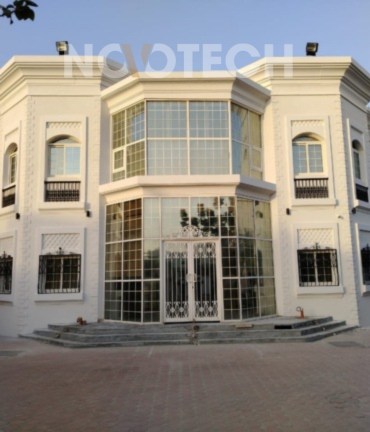
- Luxury Villas: A 5 to 7 year cycle is the professional standard. This maintains the aesthetic premium expected in high-end residential communities while ensuring the building envelope remains sealed.
- Commercial High-Rises: These structures typically follow a 7 to 10 year cycle. Because these projects involve complex access logistics, we utilize industrial-grade protective systems designed for maximum lifecycle durability.
- Industrial Structures: Facilities located in high-corrosion zones or near heavy manufacturing may require intervention every 3 to 5 years to prevent concrete carbonation or metal fatigue.
Adhering to these timelines is a strategic business decision. By refreshing the protective layer before the “UV-Salinity Cycle” reaches the substrate, owners avoid the significantly higher costs associated with deep structural repairs and specialized masonry restoration.
5 Critical Signs Your Building Exterior Needs Repainting
Determining how often to repaint building exterior in UAE assets requires more than a calendar; it demands a technical assessment of the coating’s physical state. While the environmental stressors discussed previously dictate a general 5 to 7 year window, specific visual and structural indicators often signal the need for immediate intervention. Ignoring these signs can lead to deep-seated masonry damage that a simple coat of paint cannot fix.
Visual Indicators of Surface Degradation
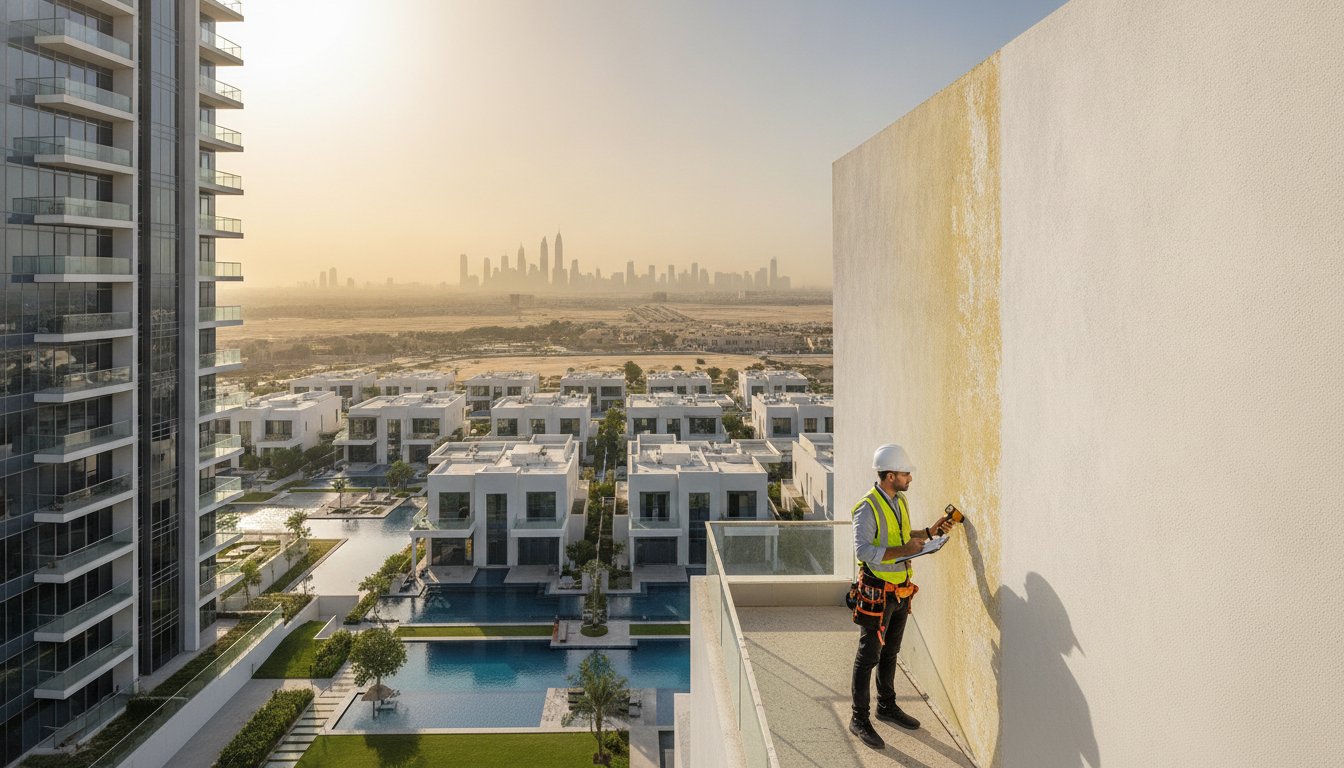
The most common precursor to failure is chalking. You can verify this by performing a “rub test”: swipe your hand across the facade. If a white, powdery residue transfers to your skin, the paint’s resin has broken down due to intense UV exposure. This residue is actually the paint’s binder disintegrating, leaving the pigment unsupported and the substrate exposed.
Thermal stress often manifests as “alligatoring,” a pattern of deep, interconnected cracks that resemble reptile skin. This occurs when the top layer of paint loses elasticity and can no longer expand with the building’s structure during Dubai’s extreme temperature shifts. Additionally, keep a sharp eye out for efflorescence. These white, crystalline salt stains on your masonry indicate that moisture is migrating through the wall, carrying salts to the surface. It’s a clear warning that your current protective system has been breached.
- Blistering and Peeling: These bubbles indicate trapped moisture or poor adhesion from a previous application. In the UAE’s high humidity, these pockets quickly expand and burst.
- Fading and Discolouration: Beyond the loss of curb appeal, significant fading suggests the chemical integrity of the coating is compromised, directly impacting property valuation.
- Hairline Cracks: Even the smallest fissures act as entry points for airborne salts and moisture, initiating a cycle of internal decay.
Structural Risks Beyond Aesthetics
Paint failure is the first step toward concrete carbonation. When the protective film fails, carbon dioxide penetrates the concrete, lowering its pH level and causing the internal steel reinforcement to rust. This “rebar corrosion” leads to expansive pressure, which eventually causes large chunks of concrete to spall or break away. This is a common issue for coastal properties where salinity levels are high.
Technical data suggests that early intervention is a strategic financial move. Refreshing your facade at the first sign of chalking or hairline cracking can help you avoid the high costs of structural remediation. Many industry professionals report that timing a repaint correctly can save property owners up to 60% on long-term renovation expenses compared to waiting for structural failure. If you’ve identified these signs, our team provides specialized exterior building painting in Dubai to restore your property’s defensive barrier.
We don’t just cover up problems; we analyze the substrate to ensure the new coating system provides a durable, anti-corrosive seal. Addressing these five signs today ensures your building remains structurally sound and visually prestigious in the years ahead.
Choosing Climate-Proof Materials for UAE Exteriors
Standard water-based acrylic paints, while effective in temperate climates, often degrade within 24 months when exposed to the Middle East’s extreme conditions. The selection of high-performance materials is the single most significant factor in determining how often to repaint building exterior in UAE properties. We prioritize coatings with a high Solar Reflectance Index (SRI), also known as Albedo. These materials reflect a greater percentage of solar energy away from the facade, which reduces the thermal load on the building and prevents the resin binder from “cooking” and becoming brittle in the summer sun.
For structures experiencing significant thermal movement, elastomeric coatings are the technical standard. These are significantly thicker than traditional paints and possess an elongation property that allows them to bridge hairline cracks as they expand and contract. To ensure structural longevity, we also utilize anti-carbonation coatings. These specialized films create a one-way breathable barrier that prevents carbon dioxide and chlorides from reaching the concrete, effectively stopping the rebar corrosion cycle before it begins.
The Terraco Advantage for Regional Buildings
As authorized specialists, we frequently recommend Terraco coatings because they’re specifically engineered for the Arabian Peninsula’s environment. These systems offer superior UV resistance and are available in various textured finishes. Beyond aesthetics, these textures are functional; they help hide minor surface imperfections and provide a larger surface area for heat dissipation. It’s vital to use an authorized applicator for these systems. Manufacturer warranties often depend on documented surface preparation and specific dry-film thickness measurements that only experienced teams can guarantee.
Anti-Corrosive and Protective Systems
Coastal environments in Dubai and Abu Dhabi demand more than just masonry protection. Exposed metal elements, such as balcony railings and HVAC supports, require specialized anti-corrosive paint solutions to prevent oxidation and salt-pitting. We integrate these into a holistic facade protection strategy that includes high-grade waterproofing membranes for ledges and parapet walls. By utilizing this multi-layered approach, we extend the operational life of the coating and the structural components it shields. This technical precision is what allows us to maintain the 7 to 10 year cycles required for high-value commercial assets and high-rise structures.

How to Extend the Life of Your Exterior Paint
Extending the lifecycle of a facade coating isn’t a matter of chance; it’s the result of a disciplined maintenance protocol. While the environmental variables discussed earlier establish the baseline for how often to repaint building exterior in UAE assets, proactive care can significantly delay the onset of structural decay. We focus on removing the catalysts of degradation before they penetrate the protective film. By implementing a scheduled maintenance programme, property owners can push a standard five-year cycle toward a seven or eight-year interval without compromising protection.
Annual pressure washing serves as your primary defensive measure. Airborne salts and fine desert sand accumulate on ledges and textured surfaces. If left undisturbed, these particles act as an abrasive during wind events and create a hygroscopic layer that traps moisture against the paint. A low-pressure wash removes these corrosive elements without damaging the coating’s bond. Additionally, immediate spot repairs of minor cracks prevent the “domino effect” where moisture ingress at one point causes widespread delamination across the entire facade.
Landscaping also plays a critical role in paint longevity. Ensure that automated irrigation systems aren’t spraying directly onto the building’s facade. The constant wet-dry cycle, combined with the mineral content of recycled water, often causes localized blistering and mineral staining. This specific type of damage often requires premature repainting of the ground floor level even if the upper floors remain in excellent condition.
Annual Maintenance Checklist
A structured inspection helps identify technical failures before they escalate into structural repairs. We recommend a yearly review of the following elements:
- Sealant and Caulk: Inspect joints around windows and expansion gaps. Failed sealant is the leading cause of moisture entrapment behind paint films.
- Dust Accumulation: Clean sand buildup from decorative elements and window sills where salt concentration is highest.
- AC Drainage: Verify that air conditioning condensate pipes are clear and draining away from the walls. Constant dripping is a primary cause of vertical staining and paint peeling.
Professional Inspections
For high-rise structures, a visual check from the ground is insufficient. We utilize bi-annual professional surveys to assess the building envelope’s health. Advanced techniques, such as thermal imaging, allow our teams to detect hidden moisture pockets behind the paint that aren’t yet visible to the naked eye. Identifying these anomalies early allows for targeted intervention. For asset managers seeking a comprehensive oversight partner, we provide tailored services through our established building maintenance companies in Dubai.
If you’re noticing signs of wear, don’t wait for a total failure. Contact our specialists today to schedule a technical facade assessment and preserve your property’s integrity.
NovoTech: Expert Exterior Painting for the UAE
NovoTech isn’t just a service provider; we’re a strategic partner with over 30 years of operational history in the Middle East. We understand that determining how often to repaint building exterior in UAE assets is a calculation based on technical data and environmental exposure rather than a guess. Our extensive portfolio includes some of the most challenging exterior building painting in Dubai, where we’ve perfected the balance between aesthetic excellence and structural protection. We view every project as an engineering challenge that requires a customized solution to survive the region’s unique UV-Salinity Cycle.
Safety and regulatory compliance form the backbone of our operations. We strictly adhere to Dubai’s rigorous high-rise painting regulations, ensuring all cradle operations and safety protocols meet municipality standards. This commitment to technical excellence extends to our residential division. Luxury property owners frequently engage us for villa painting in Dubai because they require a finish that survives intense coastal humidity without losing its premium luster. Our reputation is built on quiet competence and the ability to handle large-scale, comprehensive projects with total ownership.
Our Proven Multi-Step Application Process
Precision starts with preparation. We don’t simply apply paint over old layers; we restore the substrate to its optimal state. Our process begins with sandblasting or specialized chemical cleaning to ensure the surface is free of corrosive salts and loose debris. This rigorous preparation ensures maximum adhesion for the primer, which we match specifically to the substrate and its environmental exposure. The final coating is applied with industrial precision, ensuring uniform thickness and a durable seal that resists the abrasive force of sandstorms and the degradation of solar radiation.
Request a Professional Site Survey
We provide a complimentary assessment of your building’s current exterior health to help you determine the most efficient maintenance window. Our seasoned experts deliver customized coating recommendations based on your property’s specific orientation and UV exposure levels. This data-driven approach ensures you aren’t overspending on unnecessary maintenance or risking structural failure through neglect. Contact NovoTech for an expert consultation to secure your investment with a climate-proof strategy that reflects the high standards of your asset.
Secure Your Asset with a Strategic Maintenance Schedule
Maintaining a premium property in the UAE’s high-salinity environment requires a shift from reactive repairs to technical lifecycle management. We’ve established that the regional UV-Salinity Cycle dictates how often to repaint building exterior in UAE structures, which typically falls within a five to seven year window. By selecting advanced materials with high solar reflectance and adhering to a rigorous annual cleaning protocol, you effectively protect the building’s structural integrity against carbonation and rebar corrosion. These proactive steps ensure that your facade remains a high-value asset rather than a structural liability.
NovoTech brings over 30 years of regional experience to every project, serving as recognized high-rise and luxury villa specialists. As an authorized Terraco applicator, we provide the technical precision and specialized material expertise necessary to ensure your building envelope remains a resilient defensive barrier. Don’t wait for visible structural failure to compromise your investment’s operational value. Get a Professional Exterior Painting Quote from NovoTech today to implement a climate-proof maintenance strategy. We look forward to ensuring your property reflects the high standards of your business or lifestyle.
Frequently Asked Questions
Does the UAE heat affect the colour of exterior paint?
Yes, high thermal absorption accelerates pigment degradation and resin breakdown. In the UAE’s extreme climate, darker hues often experience rapid fading as they absorb more solar energy than lighter alternatives. We utilize high-performance coatings with a superior Solar Reflectance Index to mitigate this effect. Choosing the right material significantly impacts how often to repaint building exterior in UAE assets, as it preserves the aesthetic integrity and protective properties of the facade for longer durations.
How much does it cost to repaint a building exterior in Dubai?
Pricing for professional painting services is determined by the specific technical requirements of the project. Factors influencing the final fee include the total surface area, the complexity of the building’s geometry, and the type of specialized protective coatings required. We provide fixed-price contracts based on a comprehensive site survey. This ensures that every aspect of the project, from surface preparation to the final application, is accounted for within the strategic budget of the property owner.
Is it better to repaint a villa in summer or winter in the UAE?
The optimal window for repainting is during the cooler months, typically from October through April. During this period, the lower humidity levels and moderate temperatures facilitate a more stable curing process for the paint film. While modern high-performance systems can be applied year-round, summer applications require meticulous management of surface temperatures to prevent flash-drying. Professional teams often adjust their operational schedules to avoid the peak thermal intensity of the afternoon sun.
What is the best type of paint for buildings near the coast in Sharjah?
Coastal structures in Sharjah require advanced anti-corrosive and salt-resistant coating systems. High-salinity environments accelerate masonry degradation and rebar corrosion; therefore, an elastomeric or acrylic-silicone hybrid is often the technical standard. These materials provide a breathable yet impermeable barrier against moisture and salt ingress. As authorized Terraco applicators, we recommend systems specifically engineered for the Arabian Gulf’s coastal conditions to ensure long-term structural durability and colour retention.
Can I use interior paint for my villa exterior if it is a high-quality brand?
No, you should never substitute interior paint for an exterior application, regardless of the brand’s quality. Interior formulations are designed for climate-controlled environments and lack the UV stabilizers, biocides, and elastic resins necessary to survive the UAE’s external stressors. Using interior paint on a facade will result in rapid delamination, chalking, and cracking within months. It fails to provide the essential barrier required to protect the underlying masonry from thermal expansion and abrasive sand.
How long does a professional exterior painting project take for a high-rise?
The duration of a high-rise project is dictated by the building’s scale and the complexity of the required surface preparation. A comprehensive project typically spans several weeks or months, accounting for the setup of specialized access equipment and rigorous cleaning protocols. We prioritize a methodical approach that ensures each layer of the protective system is applied at the correct dry-film thickness. This precision is vital for maintaining the intended maintenance lifecycle of the structure.
Do I need a permit for repainting my building exterior in Dubai?
Yes, repainting projects in Dubai frequently require formal approvals from the Dubai Municipality or the relevant community developer, such as Emaar or Nakheel. These regulations ensure that the aesthetic changes align with urban planning standards and that safety protocols for high-rise work are strictly followed. Professional contractors handle these administrative requirements as part of the project lifecycle. It’s essential to verify these permits before commencing work to avoid operational delays or legal non-compliance.
Why is my exterior paint chalking after only three years?
Early chalking is a definitive sign of resin binder failure, often caused by the use of standard paints that lack sufficient UV resistance. When the binder degrades, the pigment is released as a powdery residue. This indicates that the protective barrier has been compromised, leaving the substrate vulnerable. To avoid this, it’s critical to understand how often to repaint building exterior in UAE properties using specialized, climate-proof materials designed to withstand three decades of regional environmental stressors.